
First Time at a Dermatology Clinic in Seoul? How the Consultation Actually Works
A first visit to a dermatology clinic in Seoul usually follows the same path: you book ahead by website or messaging app, register with your passport, fill in a health questionnaire, have your skin examined by a doctor, and then talk through a treatment plan with a consultation coordinator. The doctor's diagnosis should come before any treatment choice, and you are free to leave with a written plan and decide later.

Booking a Dermatology Clinic in Seoul
Seoul has become one of the busiest places in the world to see a skin doctor as a visitor. According to figures released by Korea's Ministry of Health and Welfare in April, about 2.01 million international patients were treated in the country in 2025, and dermatology accounted for 62.9 percent of them. The upside of that popularity is that many clinics are now set up for first-timers who don't speak Korean. The downside is that the well-known ones fill up, so a little planning goes a long way.
Most clinics that see international patients take bookings through their own website, a KakaoTalk channel, email, or a messaging app such as WhatsApp or LINE. A short message is enough: your name, the dates you are in Seoul, the concern you want looked at (not the treatment you think you need), and the language you would like to use. Some neighborhood clinics still accept walk-ins, but a booked first visit is calmer and gives the clinic time to arrange an interpreter.
Timing matters more than most travelers expect. Book your first consultation early in the trip rather than on your last afternoon, so there is room for a follow-up visit or for redness to settle before you fly. Clinic hours also shift around public holidays; Hangeul Day on October 9 is the next one this autumn, and our guide to Korean public holidays and clinic trips covers the year's other dates.
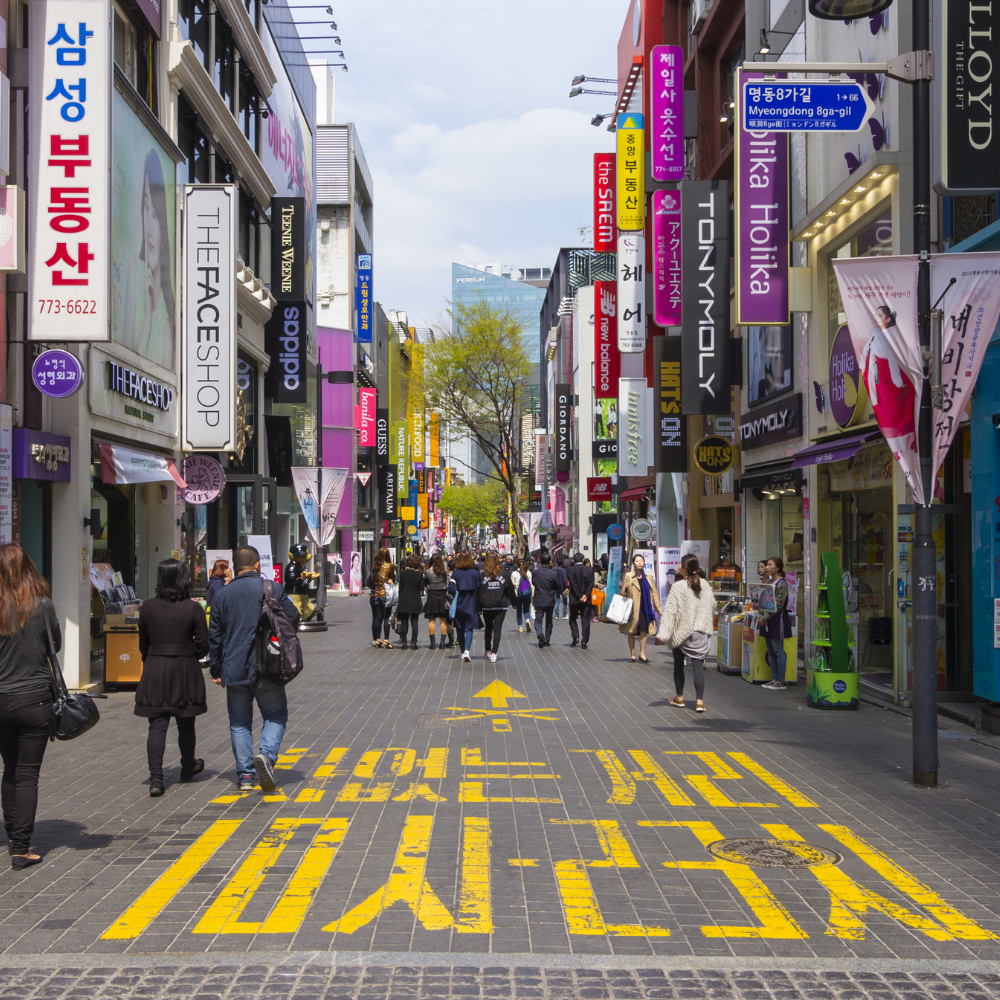
Language support comes in three layers. Larger clinics in districts like Gangnam and Myeongdong often employ coordinators who speak English, Chinese or Japanese. If yours doesn't, the government-backed Medical Korea Support Center (1577-7129) offers multilingual guidance for foreign patients and can help arrange interpretation, and the Korea Travel Hotline at 1330 provides round-the-clock interpretation by phone. For the wider picture of how clinics, hospitals and insurance work for visitors, see our explainer on how foreigners get medical care in Korea.

Consultation Day, Step by Step
Clinics differ in style, but a first visit to a Seoul dermatology clinic tends to unfold in the same order. Knowing it in advance takes most of the nerves out of the day.
Reception and registration. Bring your passport; clinics generally need it to register a visitor as a patient. Arrive ten or fifteen minutes early with a clean face if you can, or expect to be shown to a cleansing station to remove makeup.
The questionnaire. You will fill in a health form, often available in English. Be thorough. Medications, allergies, pregnancy or breastfeeding, a history of cold sores or keloid scarring, recent retinoid or acne medication, and any procedures you have had in the past year all change what is safe to do.
Photos or skin analysis. Many clinics photograph your face or use an imaging device that maps pigmentation, redness and texture. It is a useful record, and a good way to compare progress later.
The doctor's examination. This is the heart of the visit. The doctor looks closely at your skin, asks how long the concern has been there and what you have tried, and gives a diagnosis. It can be shorter than visitors expect, so have your main question ready.
The consultation coordinator. In many Korean clinics the treatment plan is then explained by a consultation coordinator, called sangdam siljang (상담실장). This person walks you through the recommended treatments, the number of sessions, scheduling, aftercare and costs. It is a normal part of how clinics work here, and a good coordinator makes the practical side much clearer. Clinical questions, though, belong with the doctor, so ask to speak with them again if anything medical is unclear.
Treatment, now or later. Some treatments can be done the same day. Others need a test, a prescription to start first, or simply a decision that you take back to your hotel.

Why Diagnosis Comes Before Treatment
Many visitors arrive with a treatment already in mind, often one they saw online. The trouble is that the same complaint can have several causes, and each cause calls for a different approach.
Take brown spots. Freckles, sun spots, melasma and the marks left behind by old breakouts can look alike in a mirror, but they behave very differently. Melasma in particular is known to flare with heat and aggressive treatment, which is why it is usually handled gently and patiently. A treatment that clears one kind of spot can make another kind darker.
The same is true elsewhere on the face. Persistent redness may be sensitivity, broken capillaries or rosacea. Small bumps that look like acne can turn out to be something else entirely, such as a yeast-related folliculitis that responds to different care. Enlarged pores, dullness and early laxity can overlap too. A doctor who examines your skin first can tell these apart, and that gives any plan its best chance of being both safe and useful.
In Korea you will also notice that clinic signs vary. A clinic whose name itself ends in pibugwa uiwon (피부과의원) is run by a doctor who completed specialist training in dermatology; other licensed physicians may list dermatology as one of their treatment areas instead. Both are common across Seoul. What matters most on the day is that a doctor examines your skin and explains what they see before anything is booked.

Questions to Ask Before You Say Yes
Write these down before you go, or keep them on your phone. They work in any clinic and in any language, and a good clinic will be glad you asked.
- What is my diagnosis, in plain words?
- Why is this treatment the right fit for my skin, and what are the alternatives?
- Who will perform the treatment, and will the doctor be involved on the day?
- Which device or product will be used, and at what intensity for my skin type?
- How many sessions are realistic, and how far apart should they be?
- What will my skin look like for the next few days, and when can I wear makeup, swim, go to a sauna or fly?
- Which aftercare products do I need, and can I keep using my own skincare?
- Who do I contact if I have a reaction after I have gone home?
- Can I have the plan, and a record of what was done, in writing?
Then the most useful sentence of all: "I'd like to think about it." Clinics in Seoul are used to visitors on tight schedules, so coordinators often suggest booking on the spot, sometimes with a package of sessions. That can be convenient, but there is no obligation. A consultation is complete on its own. You can walk out with a written plan, sleep on it, compare it with what your doctor at home has told you, and come back later in the week if it still feels right.
If you do go ahead, a few simple steps in the days before help the visit go smoothly, and our guide to prepping your skin before a clinic visit walks through them.

What One Consultation Can't Do
A first consultation is a snapshot. It is the start of a plan, and a few things about it are worth knowing before you build a trip around it.
It rarely settles everything. Pigmentation, acne scarring and laxity are usually treated over several sessions spaced weeks apart. Some clinics will suggest a lighter first session to see how your skin responds. If your stay is short, ask what can sensibly be done now and what would be better continued at home.
Your itinerary and your downtime have to agree. Even gentle treatments can leave a few days of redness, flaking or small marks. That may collide with a beach day, a jjimjilbang visit, a long hike in the sun or a wedding you are attending. Tell the clinic your exact plans and your flight date, and let that shape the timing.
Aftercare continues after you leave Korea. Once you fly home, the clinic can't see your skin. Ask how follow-up questions are handled, keep the aftercare instructions, and take a written record of the diagnosis, the device or product used and the settings, so a doctor at home can pick up where Seoul left off.
It can't replace the bigger picture. A clinic visit on holiday works best alongside, not instead of, the care you already have. If you are being treated for a skin condition at home, bring your notes and mention any prescriptions you use.

Dr. Beau's Note
A good first consultation often ends with fewer treatments than you walked in asking for. That usually means a doctor looked closely, found the real cause, and chose one clear step instead of five hopeful ones. If you feel rushed toward a long list on day one, slow the conversation down and ask which single treatment matters most for your skin right now.
This article is general information, so please follow the advice of the doctor who examines you.