Hongdae, Seoul: What to Do in the City's Youth Capital
Hongdae is Seoul's youth and street-culture district, built around Hongik University and famous for three things: daytime shopping and cafe streets, the leafy Gyeongui Line Forest Park, and a night scene of buskers, pocha bars, and clubs that runs until sunrise. It sits on Subway Line 2 and the airport line at Hongik University Station, which makes it many travelers' first — and favorite — Seoul neighborhood. Here is how to plan a day that catches both of its personalities.
Why Hongdae Feels Different
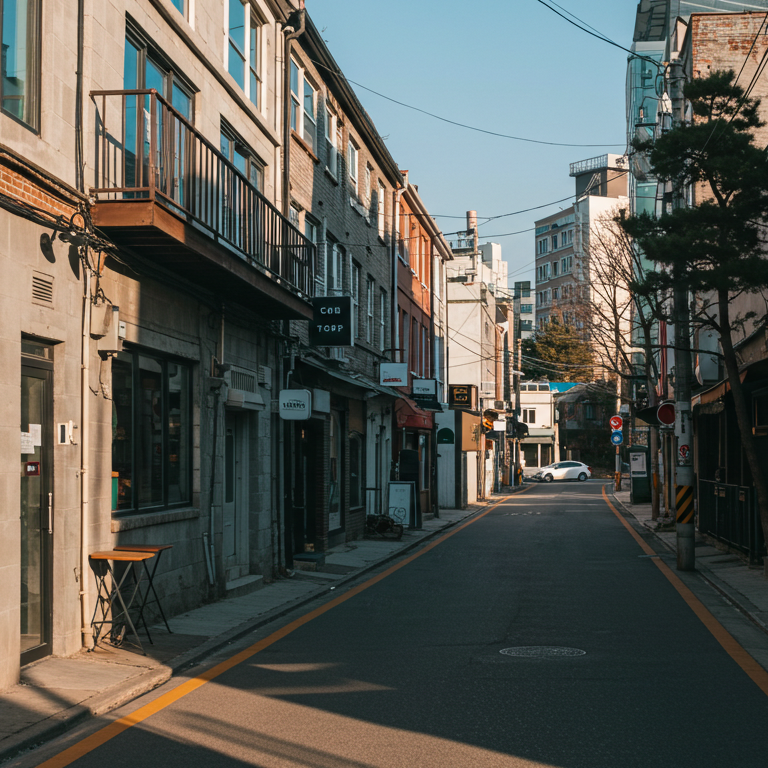
Every big city has a shopping district and a nightlife district; Hongdae is what happens when both grow up around an art school. The neighborhood takes its name from Hongik University, long Korea's most famous fine-arts program, and decades of art students needing cheap studios, cheap food, and places to perform gave the area its DNA: murals in alleys, indie labels above convenience stores, and a general assumption that someone nearby is making something.
That history still sets the tone. Where Gangnam polishes and Myeongdong sells, Hongdae performs. The main pedestrian streets work like an open stage — buskers claim corners in the evening, dance crews rehearse in front of shop windows, and the crowd is noticeably young, since the district also serves several surrounding universities. For many international visitors it is the first neighborhood in Seoul that feels less like sightseeing and more like joining something.
It is also bigger than it looks. "Hongdae" now spills into Yeonnam-dong to the north (cafe territory) and Hapjeong and Sangsu to the south (quieter bars, design shops), so a good visit is really a slow drift through three or four micro-neighborhoods that happen to share a subway station.
Hongdae by Day: Streets, Cafes, and a Park on Old Rails
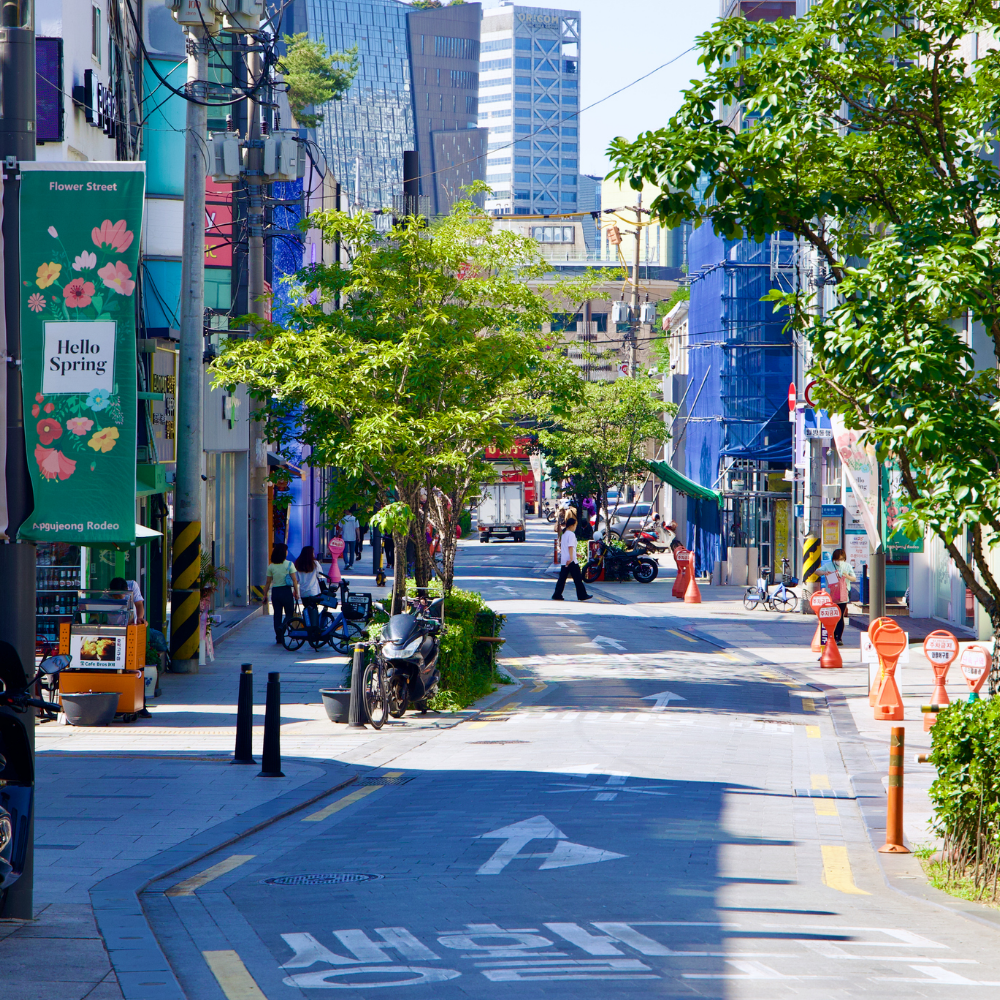
Daytime Hongdae is built for wandering. The pedestrian shopping street running from Hongik University Station toward the campus is the spine — fast fashion, vintage stores, K-beauty shops, and the four-cut photo booths that have become a ritual of their own (we wrote a whole piece on Korea's photo-booth culture, and Hongdae is its capital). Prices skew student-friendly, which makes this one of the better districts in Seoul for clothes shopping without luxury-mall sticker shock.
When the streets get loud, the neighborhood offers an exit: the Gyeongui Line Forest Park, a long ribbon of trees and lawns laid over a buried railway line. Locals call the stretch near Yeonnam-dong "Yeontral Park," and on a clear afternoon it fills with picnic mats, dogs, and guitars. Walking it north from the station drops you into Yeonnam-dong's cafe alleys — the part of Hongdae where the coffee is taken as seriously as the music.
Build your afternoon as a loop: shopping street first, then the park, then cafe recovery in Yeonnam-dong. By the time you finish your second americano, the buskers will be setting up.
Hongdae After Dark
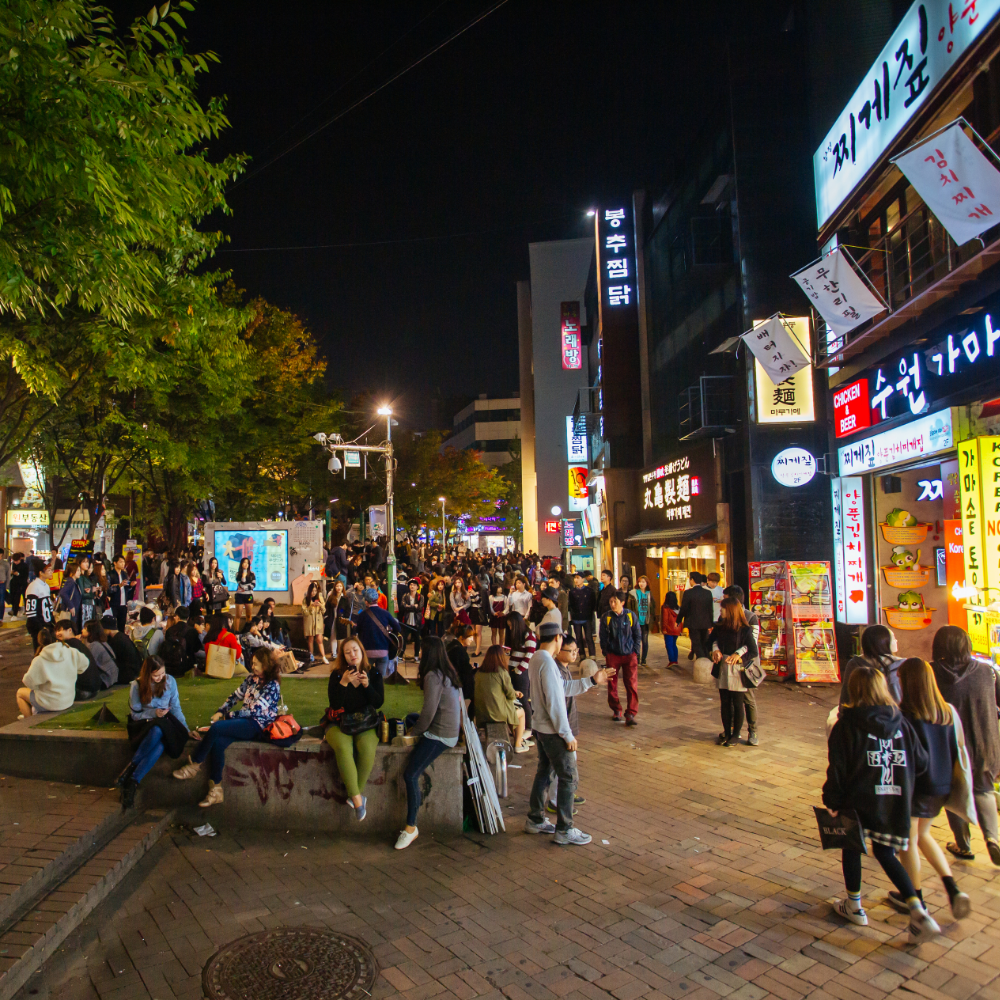
Hongdae's second shift starts around sunset, when the busking corners light up and the crowd thickens. The performances are free, unscheduled, and genuinely good — this is a district where half the performers are conservatory students and the other half are chasing an agency audition. Circle the main pedestrian street and the playground area near the university gate and you will hit several stages' worth of music in an hour.
From there the night forks by taste. There are pocha-style bars for soju and snacks, craft beer rooms toward Hapjeong, noraebang on every second floor, and the club cluster that made Hongdae's Friday nights famous — with genres from hip-hop to indie rock, generally at student-friendly cover charges. It is a different flavor of night than the upscale scenes across the river; our Seoul after dark guide maps how the districts compare.
Two practical notes: weekend nights are genuinely crowded, with the peak between ten and midnight, and most clubs check ID at the door — carry your passport, since foreign IDs other than passports are often refused.
Getting There and Timing It Right
Hongdae is one of the easiest districts in Seoul to reach. Hongik University Station sits on Subway Line 2 (the green circle line), the Gyeongui-Jungang line, and — crucially for arrivals — the AREX airport line, meaning you can ride from Incheon Airport to the middle of the neighborhood without transferring. Exit 9 is the classic starting point; the crowd flowing out of it will carry you to the main street. A T-money transit card makes all of this frictionless — our Korean public transport guide covers how it works.
Timing changes the neighborhood you get. Weekday afternoons are the calm version: open shops, empty park benches, short cafe queues. Friday and Saturday evenings are the full spectacle, and Sunday afternoon splits the difference. If you want photographs without crowds, come before noon; if you want the busking, come after seven.
One last planning note: Hongdae makes an excellent base, not just a stop. With the airport line, Line 2's loop through the city, and a night scene outside your door, many visitors book their whole Seoul stay here — and spend their taxi budget on something better.
Dr. Beau's Note
Neighborhoods, like skin, have a barrier function — the thing that keeps their identity intact under stress. Hongdae's is the art school. Rents rise, chains move in, trends churn, and yet every evening the buskers reset the district back to what it actually is.
My advice is to schedule nothing after 7 p.m. there. Hongdae rewards the unplanned hour more than any district in Seoul.