
Noraebang Nights: A First-Timer's Guide to Korean Karaoke
A noraebang — literally "song room" — is Korea's private-room answer to karaoke: you rent a room by the hour with friends, or by the song in a solo coin booth, and sing without an audience of strangers. Rooms come with tambourines, disco lights, and machines loaded with enormous English-language songbooks, and a session typically costs a few thousand won per person. Here is how the ritual works, what to expect at the counter, and the small etiquette that makes the night sing.

Why Korea Sings in Private
The first thing to understand about noraebang is what it is not: it is not a bar where you sing to strangers. The Korean model is a corridor of private rooms — small ones for two friends, halls for office dinners — each with its own machine, screens, microphones, and a door that closes. The audience is only ever people you came with, which changes everything about how willing people are to actually sing.
The second thing to understand is where it sits in a Korean night out. Noraebang is rarely the destination; it is the classic "second round" or "third round" — the place a group migrates after dinner and drinks, when the evening needs a shared activity that is not more sitting and talking. Company dinners end there, first dates test their nerve there, and friend groups treat it as the default plan when no one has a better one.
The rooms themselves run from humble to theatrical: standard neighborhood spots with vinyl couches and a tambourine basket, and "luxury" noraebang in nightlife districts with velvet interiors and ceilings full of lights. The machinery of joy is identical in both.

How a Noraebang Visit Works
The mechanics are simple. At the counter you rent a room by the hour — in tourist-heavy districts expect very roughly fifteen to twenty-five thousand won per hour for a standard room, split among the group, with prices lower in residential neighborhoods and higher for luxury rooms. Staff walk you to your door, and the hour is yours: unlimited songs, as loudly as the soundproofing allows.
Inside, the remote or tablet is your songbook. Machines from the two major Korean systems carry tens of thousands of tracks, including deep English-language catalogs — search by artist or title, queue songs freely, and toggle the interface to English if you need it. Scores flash after each song for comedy purposes only, and the two microphones plus tambourines cover a whole room's worth of participation.
Two happy quirks to know. Many rooms grant "service" — bonus minutes added to your clock, a small institutional kindness that appears more often on slow nights. And most spots sell drinks and snacks to the room; alcohol policies vary by venue, so treat each counter's rules as the law of that particular republic.

Coin Noraebang: Singing Alone, Gloriously
The purest modern form of the culture is the coin noraebang: closet-sized booths, usually for one or two people, where you pay by the song — typically two songs for a thousand won or so, or small bundles for pocket change — instead of renting by the hour. Slip in, put on the headphones or use the booth speakers, and sing four songs on the way home the way another country might grab a coffee.
What makes coin booths remarkable is the total absence of social weight. Nobody is waiting, nobody is listening, and solo singing carries zero stigma — booths cluster around universities, subway stations, and the side streets of Hongdae, and a steady stream of people duck in alone between appointments. It is practice room, therapy session, and vocal booth in one, for the price of a snack.
This comfort with doing things alone is its own corner of Korean culture — the honjok lifestyle we explored in our piece on solo living — and the coin noraebang may be its most cheerful institution. If a full room with friends feels like a performance, the booth is where Korea actually practices.

Songs, Etiquette, and Making It Great
The unwritten rules are few and humane. Queue one song at a time rather than stacking five; pass a microphone to anyone who so much as hums; shake a tambourine for whoever is singing, especially if they are struggling. Skipping your own song halfway (there is a button for it) is standard practice, not failure — noraebang optimizes for momentum, not performances.
Song strategy matters more than skill. Open with something everyone knows; save ballads for late in the hour when the room has warmed up; and know that duets and group anthems will always outperform a technically perfect solo. English-speaking visitors will find the classics deeply stocked — decades of pop, rock, and this year's hits — and attempting one K-pop chorus, however roughly, is the fastest friendship accelerant in the country.
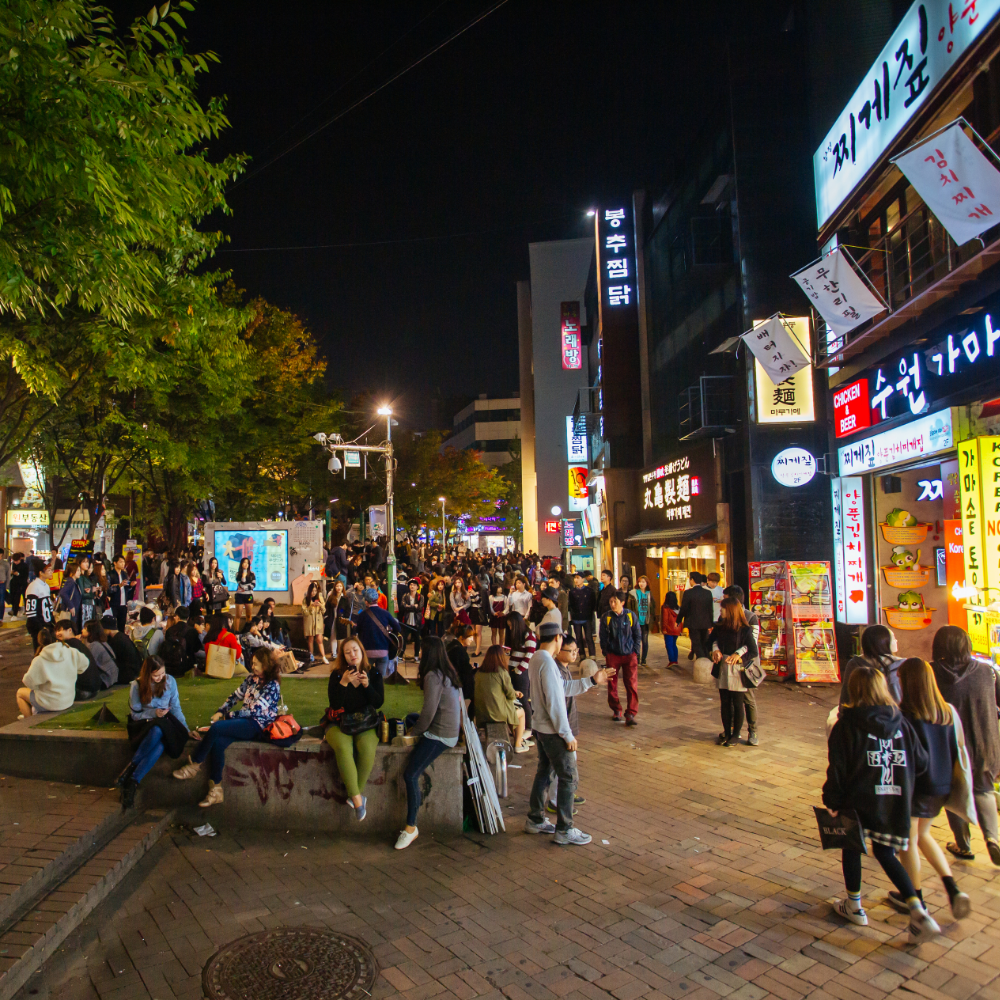
Where to try it: noraebang mark themselves with glowing signs and are unmissable in every nightlife district — the after-dark neighborhoods in our Seoul night guide all have them in density. The night ends the same way across Korea: hoarse, slightly sweaty, and oddly bonded with everyone who shared the room.

Dr. Beau's Note
Foreign friends always ask me how Koreans — famously reserved with strangers — become the loudest singers in Asia the moment a door closes. That door is the answer. Korea engineered a space where embarrassment is structurally impossible, and got a nation of singers in return.
My only practical advice is medical-adjacent: the water bottle is not decoration. An hour of enthusiasm is rougher on a voice than people expect, and tomorrow's meetings will thank you.