
Busan in Winter: What to Do, Eat and Wear, With a Three-Day Course
Busan is one of Korea's mildest big cities in winter: from December to February, daytime highs usually sit around 8 to 10°C and nights hover just above freezing, with snow on only a day or two a month. That makes it a city for clear-sky beach walks, evening light festivals, the Saturday drone show over Gwangalli, hot fish-cake skewers, pork rice soup and seed-filled hotteok. Pack a warm padded jacket and windproof layers for the coast, and plan two or three days split between Haeundae, Gwangalli and the old port around Nampo-dong.

How Cold Is Busan in Winter, and What Should You Wear?
Busan sits on the southeast coast, and the sea keeps it milder than most of Korea. Winter here means bright, dry days and cold, windy evenings rather than deep snow. The Korea Meteorological Administration's 1991 to 2020 averages look like this:
| Month | Average high | Average low | Days with snow |
|---|---|---|---|
| December | 10.4°C | 2.0°C | Rare |
| January | 8.2°C | -0.1°C | About 1 to 2 |
| February | 10.2°C | 1.5°C | About 1 |
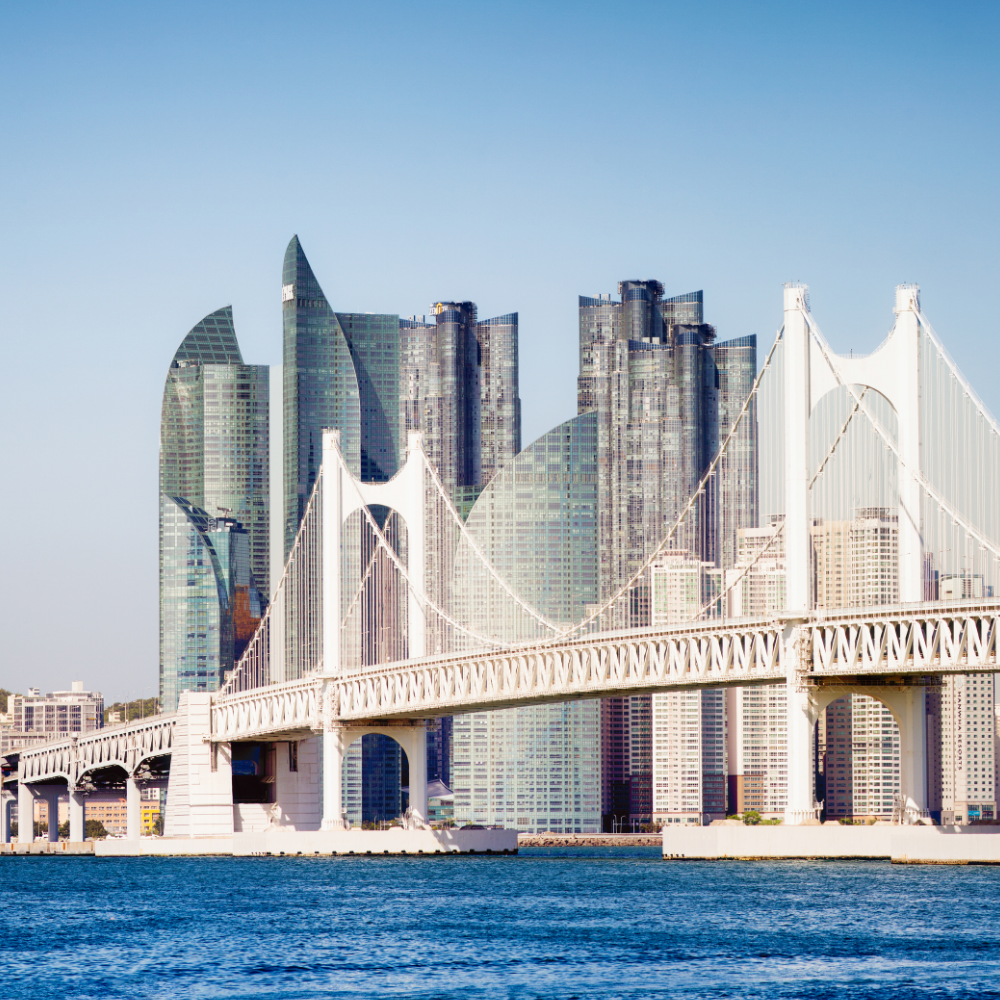
Those numbers hide the wind. On the beaches, on Gwangan Bridge viewpoints and at clifftop spots like Taejongdae, a sea breeze can make 5°C feel well below freezing after dark. Dress in layers:
- A warm padded jacket as your top layer. A hip-length one is usually enough. Busan rarely needs the ankle-length coats you see in Seoul in January.
- A thin thermal or knit layer underneath, so you can open up in heated subways, cafes and markets.
- Hat, scarf and gloves for evening light festivals and the drone show, when you will stand still by the water.
- Comfortable, grippy shoes. Busan is a hill city. Gamcheon and Huinnyeoul villages are mostly stairs.
Winter days are short. The sun sets before half past five in late December, so plan outdoor sightseeing for the morning and early afternoon, and save the evening for lights.

What Is There to Do in Busan in Winter?
Busan's winter calendar is built around light.
- Gwangalli M Drone Light Show. Every Saturday evening over Gwangalli Beach. In the October to February season, the shows run at 7 p.m. and 9 p.m. and last around 10 to 12 minutes. Watching is free from anywhere on the beach. Shows can be cancelled for weather or events, so check Busan's official tourism channels on the day.
- Haeundae Blue Line Park. The Sky Capsule and Beach Train along the old coastal railway between Mipo, Cheongsapo and Songjeong run through the winter. Book ahead online for weekends.
- Hot springs and spas. Spa Land in Shinsegae Centum City, which uses natural hot spring water, is the easy choice on a cold afternoon. Check current hours and fees on the official site before you go.
- Haeundae Light Festival. Last season's 12th edition ran from November 29, 2025 to January 18, 2026 around Haeundae Beach and Gunam-ro, lit from 6 p.m. to 11 p.m. and free to enter, according to Busan's city event listings. Dates for this season's 13th edition haven't been announced yet.
- Gwangbok-ro Winter Light Tree Festival. The festival along Gwangbok-ro shopping street in Nampo-dong ran from December 5, 2025 to February 22, 2026 last season, free and lit every evening. This season's dates haven't been announced yet.
On New Year's Day, crowds gather on Haeundae and Gwangalli beaches for the first sunrise of the year. Arrive early, dress for an hour outdoors and expect busy subways. If you are in Busan in early November instead, our guide to the Busan Fireworks Festival covers the best spots on the same beach.

What Should You Eat in Busan in Winter?
Busan's food is at its best when it is cold outside. These are the dishes to plan around:
- Eomuk, Busan fish cake. Busan is the home of Korean fish cake, and in winter you will find skewers simmering in broth at every market stall. Take a skewer, drink a paper cup of the broth, and pay by counting your sticks at the end. The bakery-style fish-cake shops in Yeongdo and Nampo-dong sell the fancier versions, stuffed with cheese, shrimp or vegetables.
- Dwaeji gukbap, pork rice soup. Milky pork-bone broth with sliced pork, served with rice, chives and salted shrimp to season it yourself. It is Busan's comfort food and a filling, inexpensive breakfast or lunch.
- Ssiat hotteok, seed-filled pancakes. Fried sweet pancakes split open and stuffed with sunflower and pumpkin seeds, sold from stalls around BIFF Square in Nampo-dong. Eat them hot and mind the syrup.
- Crab at Gijang Market. Winter into spring is snow crab season, and the market in Gijang, northeast of Haeundae, is lined with tanks of snow crab and king crab. Prices change daily and are by weight, so ask before the crab goes in the pot.
- Jagalchi Fish Market. Choose fresh seafood downstairs and have it prepared at a restaurant upstairs, a classic Busan meal for a group.
Nampo-dong puts several of these in one walk: BIFF Square for hotteok, Gukje Market for snacks, Jagalchi for seafood. Our one-day Busan itinerary maps that route in detail.

A Three-Day Busan Winter Course
This course groups Busan by area so you are not crossing the city twice a day, and it puts the outdoor stops in daylight and the lights after dark. From Seoul, the fastest KTX trains take about two and a half hours to Busan Station. Book early for weekends, and see our guide to booking KTX as a foreign visitor for the sites, apps and timing.
| Day | Morning | Afternoon | Evening |
|---|---|---|---|
| Day 1: Old port | Arrive at Busan Station, drop bags, dwaeji gukbap for lunch | Huinnyeoul Culture Village in Yeongdo, then Jagalchi Fish Market | BIFF Square hotteok, Gukje Market and the Gwangbok-ro lights in season |
| Day 2: Haeundae | Sky Capsule from Mipo to Cheongsapo, Cheongsapo lighthouse walk | Haeundae Beach and Dongbaek Island coastal path, then Spa Land at Centum City | Haeundae Light Festival in season, or Gwangalli for the bridge view |
| Day 3: East coast | Haedong Yonggungsa, the seaside temple, early before the crowds | Crab lunch at Gijang Market | Back to Busan Station for the train, or a Saturday drone show at Gwangalli |
Two practical notes. If your trip includes a Saturday, keep that evening for Gwangalli, because the drone show only runs that night. And base yourself either near Busan Station or Seomyeon for easy train access, or near Haeundae if lights and beaches are the point of the trip. Buses and the subway connect everything on this list. A transit card makes transfers simple.

Sol's Note
Winter is the best answer for anyone who thinks they know Busan from summer photos. The beaches empty out, the air is clear enough to see the far end of Gwangan Bridge, and a paper cup of fish-cake broth at a market stall tastes better at 4°C than it ever does in August.
The one thing to respect is the wind after sunset. Plan your evenings around one outdoor stop, not three, and keep a warm cafe in mind for the walk back.