
What Is a PC Bang? A Traveler's Guide to Korea's Gaming Rooms
A PC bang is a Korean gaming room where you rent a high-spec computer by the hour, usually for around 1,000 to 2,000 won, and order ramyeon, fried rice or drinks straight to your seat. Most are open 24 hours. As a visitor you can skip membership: choose the non-member option at the entrance kiosk, pay by cash or card, and type the number on your receipt into any free PC. Smoking is banned inside, and under-19s must leave by 10pm.

What a PC Bang Is, and What Everyone Is Playing
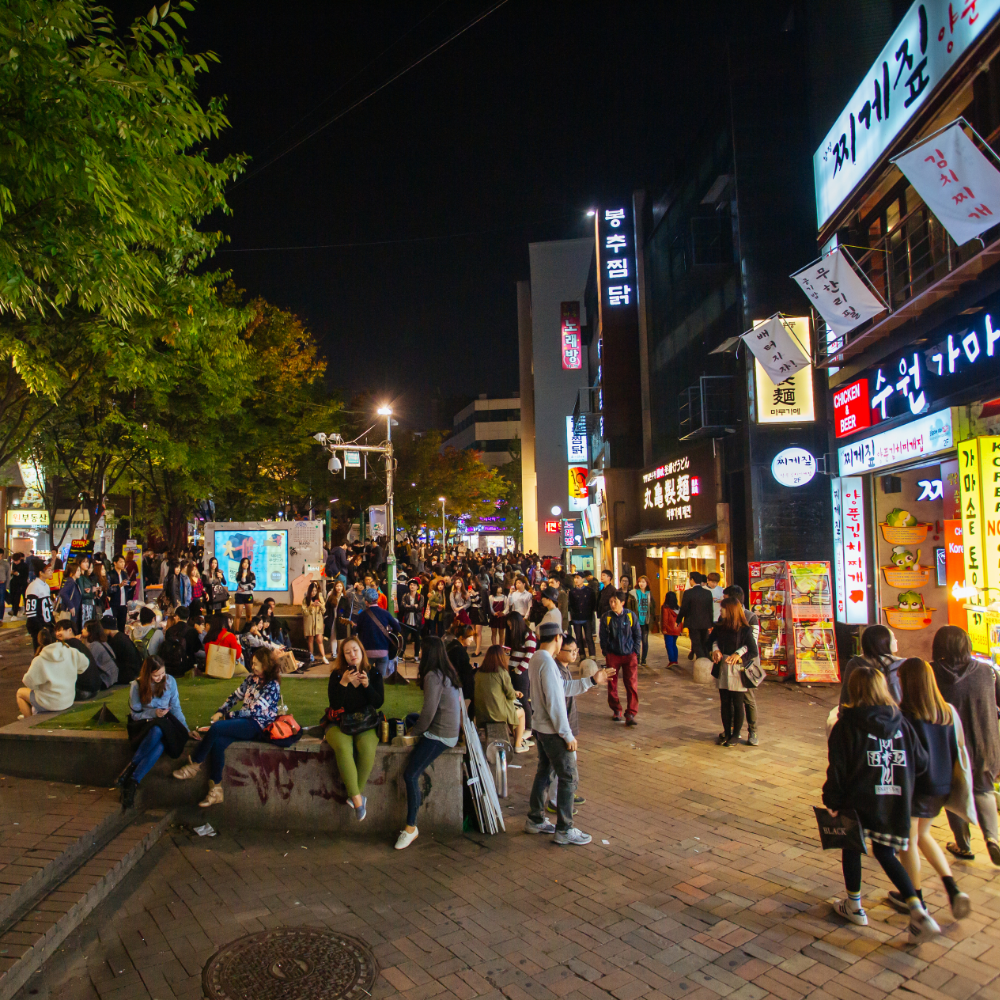
It is one in the morning on a side street off a busy subway exit. The cafes have stacked their chairs, the convenience store is doing its night-shift trade, and up a flight of stairs a sign is still glowing. Behind the door, a long room hums with fans and mechanical keyboards. Rows of large monitors light up faces in headsets, a tray of instant noodles goes past, and nobody looks remotely ready to go home. This is a PC bang, and for a lot of Koreans it is as ordinary a place to spend an evening as a pub or a cinema.
Bang means room, so the name simply means "PC room." In practice it is a gaming hall where you rent a powerful computer by the hour. The machines are the draw: current graphics cards, high-refresh monitors, gaming mice and headsets, and a fast wired connection, all kept up to date so that the latest games run smoothly. Many PC bangs never close, and most charge roughly 1,000 to 2,000 won an hour for a standard seat, which makes an evening of gaming cheaper than a cocktail.
Visitors have noticed. Shinhan Card's Big Data Institute found that foreign tourists' PC bang use in January to July 2025 rose 36% on the same period a year earlier, and the Korea Tourism Organization reported that visitor spending on what it calls K-leisure, a category that covers PC bangs and karaoke rooms, grew 35.8% in the first quarter of 2026. Some come for the games, some for the food they have seen on TikTok, and some simply want to see the room where Korea's esports culture grew up.
As for what is on the screens: League of Legends has sat at the top of the PC bang charts compiled by the analytics service Gametrics for years, and you will see it on more monitors than anything else. Around it you will find Valorant, FC Online, Battlegrounds, Overwatch 2, Sudden Attack, MapleStory and Lost Ark. You log in to your own game account as usual, so bring your password and your two-factor app. Some titles, League among them, run on a paid PC bang license that each shop chooses to carry, so if there is one game you came for, check that its icon is on the launcher before you buy a long block of time.

How to Use a PC Bang Without Speaking Korean
Almost every PC bang now runs on a self-service kiosk by the entrance, and the system is the same from Hongdae to Busan. You buy time first, then sit down. The kiosk screen offers two paths, member and non-member. Membership brings lower rates and lets you keep unused time, but signing up usually involves verifying a Korean phone number. For a traveler, the non-member option is the one you want.
Tap non-member, pick an amount of time, and pay. Most kiosks take Korean cash, and many accept cards; if a foreign card is declined, the counter staff can usually sell you time directly. The kiosk prints a receipt with a short log-in number. Check the seat map on the kiosk or the wall for a free PC, sit down, type the number into the log-in screen, and your clock starts. When you are done, use the log-out or end-session button on the screen so the remaining minutes stop running.
Two things trip up first-timers. Many kiosks are still Korean-only, so look for a language button in a corner of the screen, and if there is none, show the staff a translation app; this is a question they hear often. And a few PC bangs, especially late at night, check ID at the counter, so carry your passport or a photo of it.

Ordering Food to Your Seat
Ask Korean friends about PC bangs and many of them will talk about the food before the games. Every seat has a food-order button on the screen that opens a picture menu. Tap what you want, and a few minutes later someone sets it down beside your keyboard. Depending on the shop, you pay on the screen by card or hand cash or a card to the staff member who brings it.
The menus have grown far beyond a cup of noodles. Expect several kinds of ramyeon, tteokbokki, kimchi fried rice, Spam fried rice, cutlets, fries and sotteok sotteok, the skewer of alternating rice cakes and sausage. The dish people film most is jjapaghetti, the black-bean instant noodle, finished with melted cheese and a fried egg on top. Drinks get the same attention, with fruit ades, iced teas, slushies and milkshakes made to order at a counter that can look more like a cafe than a snack bar.
It all costs about what you would pay at a casual eatery, and the appeal is the combination: a hot meal, a cold drink and the next match without leaving your chair. If you love this kind of late-night eating, our Korean convenience store food guide covers the other place Korea does it best.

Premium PC Bangs, Couple Seats and Team Rooms
If your picture of an internet cafe is a dark room with smoky carpets, the new generation of PC bangs will surprise you. The big chains compete on space and design: bright interiors with arched partitions and pendant lights, wide aisles, and floors split into zones. A typical layout has standard seats, a premium zone with bigger monitors and reclining chairs, and couple seats where two people sit side by side behind a low divider, which is why a PC bang has become a perfectly normal date.
Groups can book a team room, a glass-walled pod of five or so PCs set up for squads who play together, and some shops add first-class recliners for long sessions. Esports branding is part of the scene too. One chain carries the name and colors of the pro team Nongshim RedForce, and in Hongdae a PC bang run by a professional esports team has become a stop for fans from around the world. If you are already planning a night in Hongdae, its streets around Hongik University Station are one of the densest PC bang neighborhoods in Seoul.
Premium seats cost more per hour than standard ones, and team rooms are usually priced by the room or the seat, so check the rate on the kiosk before you choose. PC bangs also have a practical side for young travelers: K-pop fans use their fast wired connections for concert ticketing, and many shops have a printer at the counter for boarding passes and e-tickets.

House Rules and Etiquette
The most important rule is the law on smoking. Smoking has been banned inside PC bangs for more than a decade, and that includes e-cigarettes. Some shops have a sealed smoking booth, and that is the only place to light up; otherwise, step outside. The second rule concerns age. Under Korean law, under-19s cannot stay in a PC bang between 10pm and 9am, which is why the late-night crowd is adults and why staff may ask for ID after ten if you look young.
The rest is courtesy. Keep your headset on and your voice down, even when your team is losing; the person at the next seat is in a different match. Do not leave a seat for long with your session running, and log out when you go. When you finish eating, stack your dishes and wipe the desk, or carry the tray to the return shelf if the shop has one.
A PC bang also fits neatly into a Korean night out. Friends often meet at one after dinner, play a few rounds, then move on to a noraebang to sing, or the other way round. An hour of gaming costs less than a coffee, so there is little to lose by trying.

Haru's Note
Watch the counter of a PC bang for an hour and you will see that it is not really about computers anymore. Most Koreans have a decent PC at home. They come for the company: classmates who arrive together and sit in a row, couples sharing a plate of fried rice between matches, an office worker unwinding alone in the corner.
That is why I think a PC bang is worth a visit even if you never play. Buy an hour, order the cheesy noodles, and look around. It is one of the few places where you can see how young Korea actually spends its evenings, and nobody will mind that you are watching instead of winning.