
Retro Streets of Korea: Where Time, Neon, and Nostalgia Meet
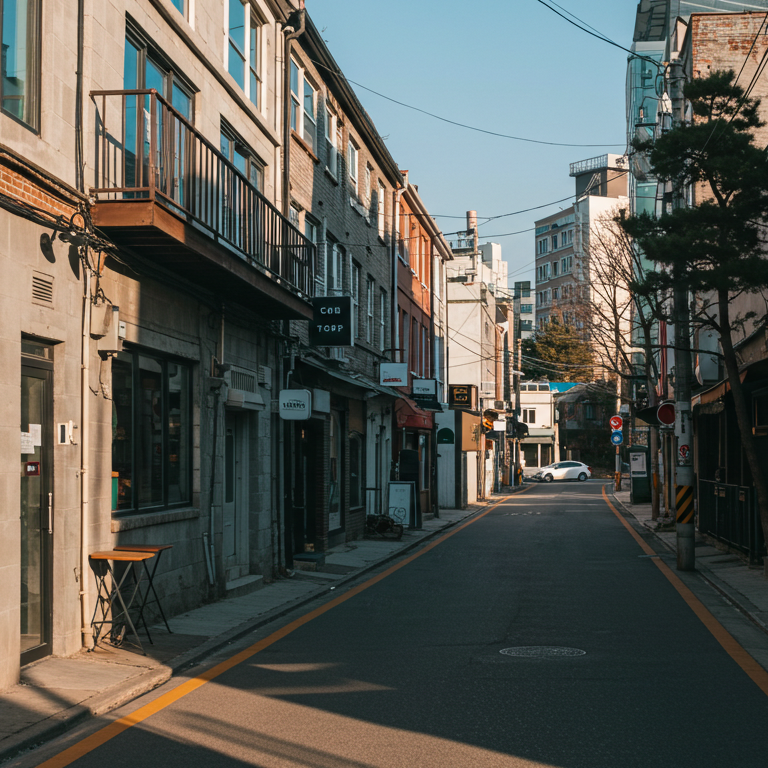
Korea's retro districts are not preserved — they are surviving, which is exactly their appeal and their deadline. Euljiro's neon bars operate inside a working metal-shop district that redevelopment is dismantling block by block; Ikseon-dong's cafe maze occupies 1920s hanok built as compact housing; Daegu keeps a 350-year-old herbal medicine street beside a missionary hill; and Haebangchon still runs barbershops with hand-painted signs above the Itaewon lights. Go soon, go respectfully, and check the specific bar or cafe still exists the week you visit.

1. Euljiro 3-ga: Seoul's Hidden Neon Jungle
Euljiro is the retro district that never intended to become one. By day it remains what it has been since the 1960s: a working grid of metal fabricators, tile merchants, lighting wholesalers and print shops, with handcarts in the lanes and the smell of machine oil. The bars came later, quietly — young owners renting cheap upper floors and back rooms, keeping the industrial exteriors as they found them — and the district locals nicknamed Hipjiro was born behind unmarked steel doors.
The pleasure is the finding. Addresses lead to stairwells; stairwells lead to a room of vinyl and Nogari beer above a shuttered tool shop. The classic evening pairs the old-school institutions — the open-air beer alley where office workers have eaten dried fish under fluorescent light for decades — with the newer listening bars and cocktail rooms hidden among them.
The honest caveat is the deadline: Euljiro sits inside one of central Seoul's most active redevelopment zones, and whole blocks of the district have already gone to towers, with more scheduled. This is not a reason to skip it — it is the reason to go now, and to check that a specific bar still exists the week you visit rather than trusting any list, including this one.

2. Ikseon-dong Hanok Alley
Ikseon-dong's maze reads as ancient and is actually something more interesting: one of Seoul's first planned hanok estates, built in the 1920s by the pioneering Korean developer Jeong Se-kwon, who bought aristocratic land and packed it with small, affordable hanok so ordinary Koreans could keep living — and building Korean — in a colonial-era city centre. The narrowness is original; these were compact homes for working families, not villas.
After decades as an overlooked, ageing quarter slated for demolition, the alleys were rediscovered in the mid-2010s and became what they are now: a dense weave of cafes, dessert houses, craft shops and restaurants inside restored wooden frames, where you drink coffee under exposed rafters beside a courtyard the size of a dining table.
It is unapologetically popular — weekend afternoons are shoulder-to-shoulder — so treat it like Bukchon's commercial younger sibling: come on a weekday morning for the architecture and the photographs, or on a weekday evening when the lanterns are on and the tour groups are gone. And look up: the roofline view from within the lanes, tiles against glass towers, is the whole neighbourhood's thesis in one frame.

3. Daegu: Yangnyeongsi Herb Alley & Cheongna Hill
Daegu holds the deepest time layer on this list. Yangnyeongsi, the herbal medicine market often called Yakjeon alley, has traded medicinal roots, barks and dried botanicals since the 1600s — three and a half centuries of the same commerce on the same street. The scent arrives before the storefronts do: a wall of ginseng, licorice and jujube that no other shopping street in Korea produces. A dedicated museum anchors the district and explains what the sacks and drawers actually contain.
Ten minutes' walk away, Cheongna Hill changes centuries: the early-1900s brick houses of American missionaries stand among trees above the city, beside the March 1st Movement stairway where independence protesters once slipped between districts. Together with the nearby Gyesan Cathedral, the hill forms Daegu's "modern culture" walking route — a compact, quietly moving circuit through the city's early-modern layer that most itineraries skip entirely.
The pairing is the point: one street selling what Korea sold before modernity, one hill built at the moment modernity arrived, both walkable from Banwoldang in an afternoon — and Daegu is under two hours from Seoul by KTX.

4. Haebangchon, and How to Do Retro Right
Haebangchon — "liberation village," settled by refugees after 1945 on the slope behind Itaewon — is the list's living neighbourhood: steep stairways with flaking rails, corner shops and decades-old salons with hand-painted signage, now interleaved with brunch cafes and craft beer rooms. The mix is genuinely unresolved — gentrification and memory sharing the same staircase — and the Namsan views from the upper lanes are among the city's best free evenings.
Wherever you go on this list, the same small code applies, because every one of these districts is somebody's workplace or home:
- These are working streets. Euljiro's daytime is real industry — stay clear of carts and welding, and save the bar crawl for after the shutters drop. Yangnyeongsi's shops are pharmacies of a kind, not photo sets.
- Photograph buildings, not interiors or residents. The hand-painted barbershop sign is fair game from the street; the barber's customers are not.
- Spend where you shoot. A coffee, a beer, a bag of dried jujube — the economics of these streets are fragile, and the visitors who buy something are the argument against demolition.
- Do the retro rituals properly: an LP bar request written on paper, a cup at an old-style dabang coffee house where they survive, the four-cut photo booth in a vintage frame on the way out. The newtro wave — Korea's remix of its own 20th century — is best enjoyed as a participant.

Dr. Beau's Note
Photograph these streets in the morning and drink in them at night — they are two different districts wearing one address. Euljiro at 10am is welders and handcarts under bare sun, honest and unglamorous; Euljiro at 10pm is neon on wet asphalt. Ikseon-dong at 8am belongs to delivery scooters and roof tiles; by 2pm it belongs to queues. Every retro district in Korea runs this double life, and most visitors only ever meet the evening version. The morning one is emptier, realer, and photographs better — and it is the one that will disappear first.