
How Seoul Runs After Dark: A Visitor's Guide to Running Crews and Routes
Seoul's running crews are informal groups, from friends' clubs to a free city-run program, that meet on weekday evenings along the Han River, Cheonggyecheon Stream and Namsan. Visitors can join a drop-in crew or run the same routes solo. Autumn, from September to November, is the best season, and the etiquette is simple: run in small packs, keep to the pedestrian lane, and let the slowest runner set the pace.

Why Seoul Started Running Together
Walk along the Han River on a weeknight in September and you will see it: small groups in matching tops stretching under a bridge, a coach calling out a warm-up, a line of headlamps moving east as the office towers behind them go dark. Running in Seoul used to be a solitary habit, something you did before work with one earbud in. Over the past few years it has become one of the city's most social pastimes, and the running crew, or reoning keuru, is the unit that made it so.
A crew is simply a group that runs together on a fixed schedule. Some are a handful of colleagues who meet after work; others are large clubs with pace groups, weekly routes and a following on social media. Most are free to join. What they share is a shape of evening that suits the city well: finish work, take the subway to a riverside park, run five to ten kilometers with people you may only know by first name, then eat together or head home.
It works in Seoul for practical reasons as much as cultural ones. The city is dense, but it is threaded with long, flat, well-lit paths along the river and its tributary streams, and the subway drops you within a short walk of most of them. Running needs little equipment and little money, and for many people in their twenties and thirties it has become a way to meet others without the pressure of a bar or a formal club. It sits comfortably beside the older weekend ritual of Korean hiking culture: the mountain on Saturday, the river on a Tuesday night.
The city itself has leaned in. Since 2022 the Seoul Metropolitan Government has run a free program called the 7979 Seoul Running Crew. The name is a small pun: chil-gu, "seven-nine," sounds close to chingu, the Korean word for friend. This season it meets every Thursday evening from 7 to 9 p.m. through October, with coached sessions at three bases matched to ability: the Gwanghwamun and Cheonggye Plaza area for beginners, Banpo Hangang Park for intermediate runners, and Yeouido Park for those who want a harder session. Coaches teach form and pacing, and the city frames the whole thing around what it calls "runtiquette," a word that tells you a great deal about how Seoul thinks about running in shared space.

Four Routes Beyond the Usual Riverbank
The Han River paths run for kilometers along both banks, and any stretch of them makes a good run. But if you want to see how varied the city's running geography is, these four routes each show a different side of Seoul.
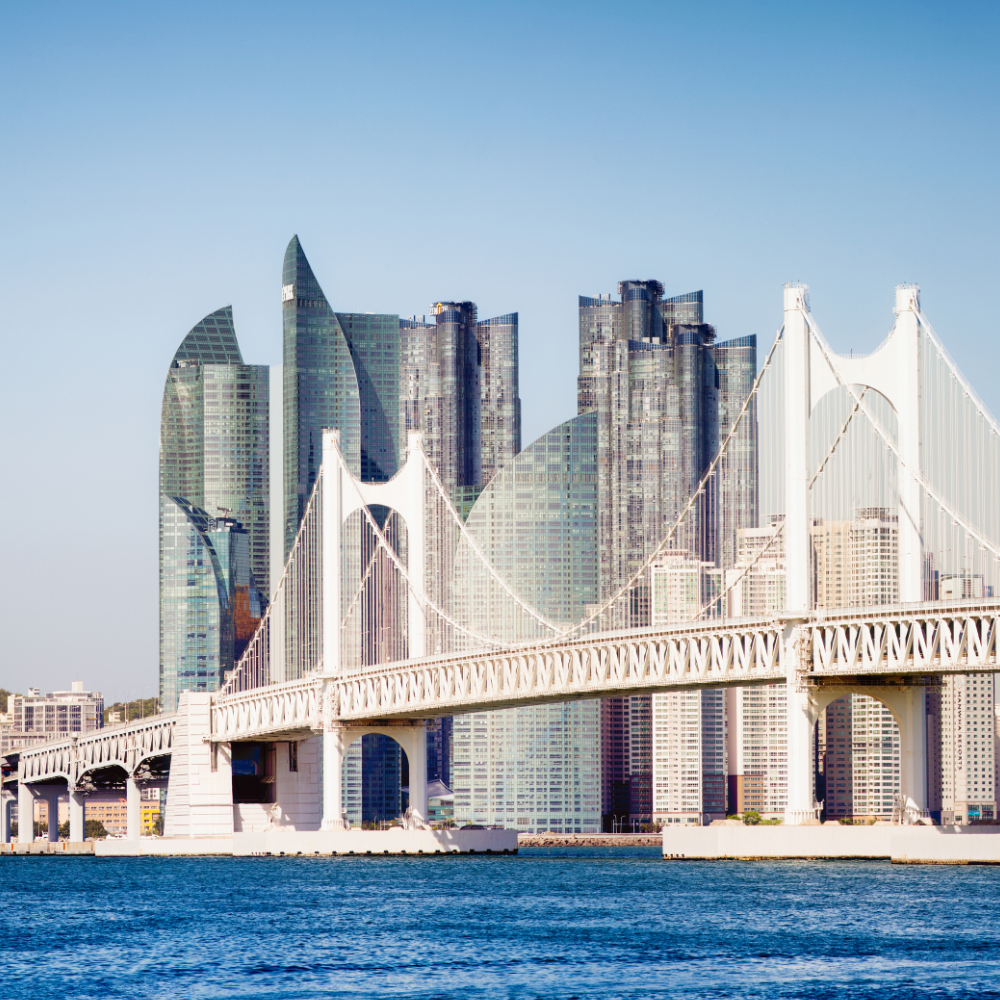
Banpo Hangang Park and Jamsu Bridge. Banpo, on the south bank, is the closest thing Seoul has to a running crossroads. The park is wide, the path is smooth, and Jamsu Bridge, the low bridge tucked beneath Banpo Bridge, lets you cross to the north bank on foot and loop back. Through October the Moonlight Rainbow Fountain still plays along Banpo Bridge in the evenings, and during this autumn's car-free festival season Jamsu Bridge closes to traffic on Sundays through late October, which turns the crossing into a broad, open deck over the water.
Cheonggyecheon Stream. Downtown, the restored Cheonggyecheon runs for roughly eleven kilometers east from Cheonggye Plaza, set below street level and crossed by more than twenty bridges. It is the most atmospheric run in the city center: stepping stones, willow branches and the sound of water, with office towers overhead. The path is narrow in places and busy with walkers in the evening, so treat it as an easy, conversational run rather than a place for speed. Early morning is when it belongs to runners.
Namsan. For hills, go to Namsan, the mountain park in the middle of the city. The paved roads that wind around it are largely closed to private cars, which makes them a favorite for crews who want a climb without traffic. The route up toward N Seoul Tower is steep but short, and in October the road is lined with changing leaves. Plan on walking a stretch or two; almost everyone does.
Seoul Forest and the Jungnangcheon junction. On the east side, Seoul Forest offers shaded loops that connect to the riverside path where the Jungnangcheon stream meets the Han. It is a good choice for a gentler morning run, and it ends a short walk from the cafes of Seongsu.

Runtiquette: The Unwritten Rules of the Path
Seoul's running paths are shared with walkers, families, cyclists and people simply sitting by the water, and the local running scene has developed a clear set of manners to match. None of it is complicated, and following it is the quickest way to look like you belong.
Know your lane. Along the Han River, cycle lanes and pedestrian paths usually run side by side and are marked on the ground. Runners belong on the pedestrian side. Bikes move fast here, especially in the evening, and drifting into the cycle lane is the most common mistake visitors make.
Run small. Crews tend to break into packs of a few runners rather than moving as one wide group, and they fall into single file when the path narrows or when passing walkers. Some riverside parks have posted guidance asking groups to keep to a handful of runners, and most crews now plan their routes that way.
Keep it quiet and covered. Loud cheering, clapping to set a rhythm and shouting at people to move aside are frowned upon. So, for the most part, is running shirtless, even on warm nights. A light tee is the local norm.
Pass with care. Overtake on the left with a little space, and slow down around children, dogs and anyone taking photos. A quick nod or a soft jamsimanyo, "excuse me," goes a long way.
Pace for the slowest. This is the rule that says the most about Seoul crew culture. Group runs are generally paced so no one is left behind, and faster runners loop back rather than disappearing ahead. If you join a crew, expect the run to feel more like a shared outing than a race.

How to Run Seoul as a Visitor This Autumn
You do not need to live in Seoul to be part of this. Autumn is the ideal time to try: from mid-September through November the humidity of summer lifts, evenings are cool, and the light over the river turns gold well before seven.
Joining a crew. Several English-speaking crews publish their weekly routes and meeting points on social media and welcome drop-in runners, usually with a few pace groups so you can find one that suits you. The city's 7979 Seoul Running Crew is free and runs through October, but sign-up happens early in the week through Seoul's public reservation website, which is mainly in Korean, and sessions are capped at around sixty people. If you are only in town for a few days, a drop-in crew is the easier option.
Running solo. The Han River paths are simple to navigate alone. Pick a riverside park near a subway station, run out along the water and turn back when you like; the bridges make natural distance markers. Riverside convenience stores sell water and sports drinks, public restrooms are spread along the parks, and many of them stay lit late into the evening. If you want to linger afterward, the same parks are where Seoul holds its Han River night picnic culture.
What to bring. Your usual running shoes, a light layer for late October evenings, a transit card, and your phone for maps. A small amount of cash or a card is useful for a drink afterward. Evening runs start around 7 p.m. for most crews, so plan dinner after, not before.
The big day in the calendar. Autumn is also race season. The JTBC Seoul Marathon is scheduled for Sunday, November 1, starting at Sangam World Cup Park and finishing at Olympic Park, with the 10K finishing at Yeouido Park. Even if you are not racing, the weeks leading up to it are when the riverbank is busiest with crews in training, and there is no better time to see the city's running culture at full strength.

Dr. Beau's Note
What I like most about Seoul's evening crews is the timing. Running after sunset spares your skin the strongest UV of the day, which is one reason the habit fits so neatly into a Korean routine. Morning runners are a different story: autumn sun is still strong, and sweat moves sunscreen around, so a water-resistant formula and a cap are worth the extra minute.
The part most visitors skip is the cool-down for the face. Rinse off sweat soon after the run rather than letting it dry on your skin on the subway home, then follow with a light moisturizer, since the dry autumn wind arrives quickly in Seoul. If you have a skin condition that reacts to heat or sweat, check with a professional before changing your routine.