
Surfing in Korea: Inside Yangyang, the Country's Wave Capital
Yes, you can surf in Korea — and the place to learn is Yangyang, a small county on the East Sea about two and a half hours from Seoul. Its sandy beach breaks, dense cluster of surf schools, and summer-to-autumn season make it the easiest place in the country to stand on a board for the first time, with English-friendly lessons and rental gear available at the main beaches.

Can You Actually Surf in Korea?
It is one of the most common questions foreign travelers ask about the Korean coast, and the answer is a clear yes. The East Sea — the body of water along Korea's northeastern shore — produces steady, rideable waves for much of the year, and almost every popular break is a sandy-bottomed beach break. That detail matters more than it sounds: sand is forgiving. Falling, which every beginner does constantly, carries none of the drama of a reef or rock bottom, which is why instructors here are comfortable putting complete novices in the water on day one.
The rhythm of the season is simple. Summer brings warm water and small, gentle waves — knee to waist high on most days — which is exactly what a first-timer wants. From early autumn, swells generated by distant typhoons arrive and the waves grow taller and more powerful, drawing experienced surfers from across the country. Most surf schools run structured beginner programs from roughly June through October, so the window for learning is long and the conditions during it are famously kind.

How a Quiet Fishing County Became Korea's Surf Capital
Yangyang was, until recently, known mostly for pine mushrooms, salmon, and the kind of quiet that coastal Gangwon-do does so well. Two things changed its trajectory. The first was the Seoul–Yangyang expressway, completed in 2017, which cut the drive from the capital to around two hours and turned the East Sea into a weekend destination. The second was a generation of young Koreans who came for one lesson, fell for the lifestyle, and kept coming back — some of them permanently, opening surf shops, guesthouses, and beach bars along the shore.
Today dozens of surf schools cluster around the county's main beaches, and travel media have taken to calling Yangyang the "Bali of Korea." The nickname is playful, but the culture underneath it is real: board racks outside cafes, wetsuits drying on guesthouse railings, and a laid-back pace that feels genuinely different from Seoul. Stretches of coastline that spent decades behind military fencing have been opened and reborn as surf beaches, giving the area a raw, uncrowded character that older resort towns lost long ago.

The Beaches: Where to Paddle Out
Each of Yangyang's surf beaches has its own personality. Jukdo Beach is the heart of the scene — the most established schools, the densest cluster of shops and cafes, and a lineup that stays lively through the season. Neighboring Ingu Beach shares the same stretch of coast with a slightly slower, more local feel, and the two are close enough to walk between. Both offer lessons and board rentals within steps of the sand.
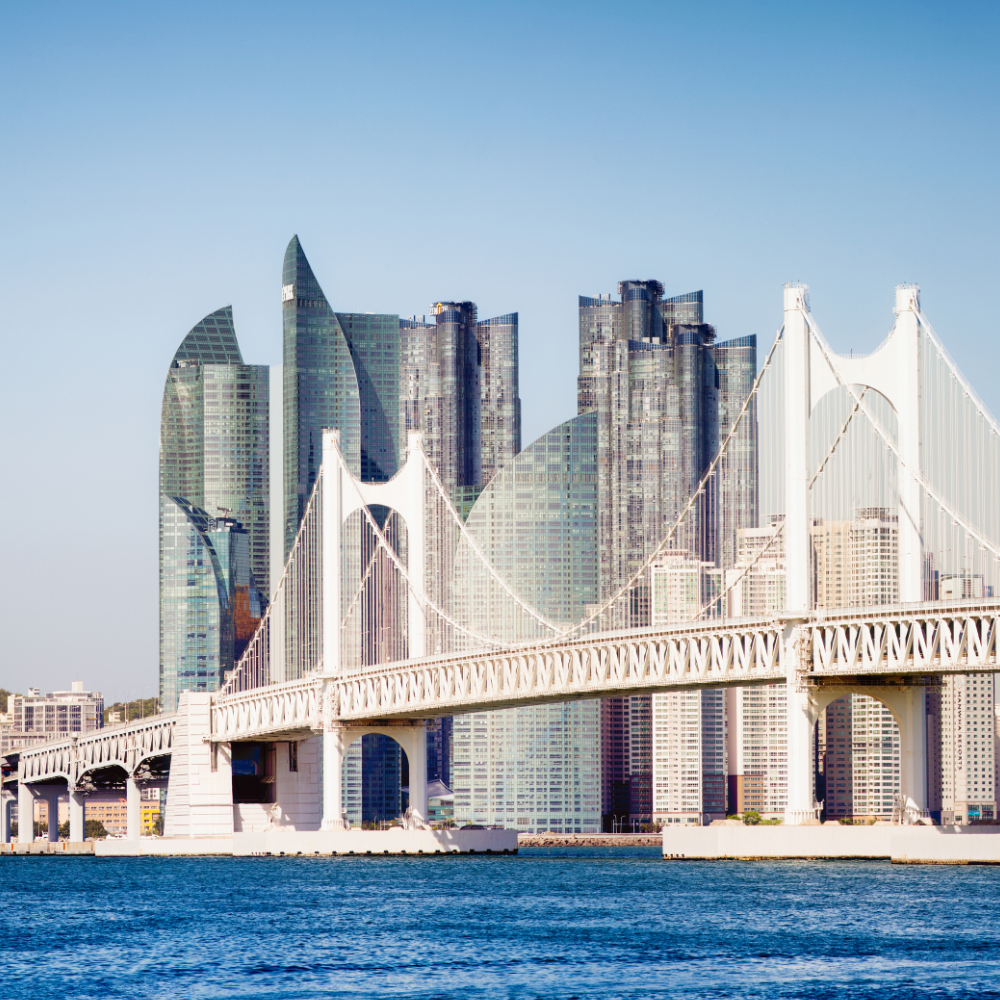
Further north, Surfyy Beach occupies a long stretch of shore near Hajodae that was once a restricted military zone. It has been reimagined as a dedicated surf beach with a curated, almost tropical atmosphere — straw parasols, beanbags, and beginner-friendly whitewash close to shore. Families and non-surfers tend to gravitate to Naksan Beach, a long ribbon of pale sand backed by pine forest, with the temple of Naksansa on the headland above its northern end. If you want to compare Korea's two coastal personalities, the intimate East Sea beaches here make a fascinating contrast with the broad city sands in our local's guide to Busan's beaches.

Your First Lesson: What to Expect
A first surf lesson in Yangyang follows a reassuringly standard format. You book a beginner package — competition among schools has kept pricing consistent, with most two-hour packages including board and wetsuit falling roughly in the ₩60,000–80,000 range — then spend the first half hour on the sand learning to paddle, pop up, and fall safely. The rest of the session happens in waist-deep whitewash, where an instructor steadies your board, calls the wave, and pushes you into it. Most people stand, briefly and euphorically, within the first hour.
You do not need to speak Korean. The larger schools at Jukdo and Surfyy Beach have English-speaking staff, and lessons lean heavily on demonstration; booking a day or two ahead through a school's website or a travel platform is enough. Getting there is equally simple: express buses run from Seoul to Yangyang in around two to two and a half hours for roughly ₩18,000–25,000, and local buses connect the terminal to the beaches. If you are new to intercity travel here, our guide to using Korea's public transportation like a local covers the apps and cards that make the trip effortless. Bring sunscreen, a change of clothes, and modest expectations — the sea handles the rest.

Beyond the Waves: Temples, Markets, and Slow Evenings
What makes Yangyang linger in the memory is how naturally the surf trip expands into something else. On the headland above Naksan Beach stands Naksansa, a temple founded in 671 by the monk Uisang and rebuilt many times since — most recently after a devastating wildfire in 2005. Its seaside pavilion and the serene Haesugwaneumsang, a towering white statue of the Bodhisattva of Compassion gazing out over the water, offer one of the coast's great contemplative views. Watching the sunrise here, salt still in your hair from yesterday's session, is a distinctly Korean way to end a surf trip. If that atmosphere appeals, a templestay at a Korean Buddhist temple takes the experience a level deeper.
Food is the other reward. The harbors along this coast serve mulhoe — chilled raw fish in an icy, tangy broth that tastes engineered for post-surf appetites — alongside grilled fish and, in autumn, Yangyang's prized pine mushrooms. Evenings are unhurried: beach bars string lights along the sand, cafes stay open late, and the crowd swaps wave stories until the sea goes dark. It is a small town doing a rare thing — offering travelers both adrenaline and stillness in the same day.

Dr. Beau's Note
People love the idea that seawater is good for the skin, and after a surf trip many swear their complexion looks better. My reading is less romantic: what tends to improve is circulation, stress, and sleep — the surfing, not the sea. Salt water and hours of reflected UV are genuinely demanding on skin, and the habit worth copying from experienced surfers is not ocean bathing but discipline: they reapply sunscreen diligently and rinse off soon after leaving the water.
If you take one thing from them, take that. A water-resistant sunscreen reapplied between sessions, a fresh-water rinse, and a simple moisturizer afterward tend to matter far more than any "sea mineral" folklore. If your skin reacts badly to sun or salt, see a professional rather than self-treating.