
Things I Wish I Knew Before Traveling to Korea: Beauty, Etiquette, and Hidden Hacks
Download Naver Map or KakaoMap before you land, because Google Maps cannot give you walking or transit directions in Korea. Buy a T-money card at any convenience store. Carry a little cash in small notes for market stalls even though cards work almost everywhere else. Bring your passport to any clinic appointment — it is required for registration, though the VAT refund that once applied to cosmetic procedures no longer does. And know that the tax-free shopping you have read about applies to retail purchases, not to treatments.

Sort These Before You Land
Four things, and the first one surprises almost everyone.
Google Maps will not navigate you here. For regulatory reasons concerning the export of mapping data, Google Maps in Korea gives you almost no walking directions and unreliable public transport routing. It is not a temporary glitch and it will not resolve while you are here. Download Naver Map or KakaoMap, both of which have English interfaces, before you arrive. Searching a place by its Korean name returns far better results than a transliteration, so copy and paste rather than typing.
Get a T-money card. Sold at any convenience store and at airport machines, topped up with cash, and used by tapping on and off buses and subways nationwide. It also works in most convenience stores and many taxis. This single card removes almost all friction from moving around.
Sort connectivity. An eSIM arranged before departure is usually simplest; a pocket Wi-Fi router or a physical SIM collected at the airport also work. Do not plan to rely on public Wi-Fi, since almost everything — maps, translation, payments, ordering — assumes you are online.
Install a translation app. Papago handles Korean noticeably better than the general-purpose alternatives, and its camera mode reading a menu or a label is the function you will use most.

Beauty, Clinics and Shopping
On clinics. Bring your passport to any appointment — clinics require it for patient registration, and it is checked. What has changed is the money: the value-added tax refund that once applied to certain cosmetic procedures for foreign visitors is no longer available, so budget on the quoted price rather than expecting a rebate afterwards. The tax-free shopping you have read about is a retail scheme and applies to goods, not to treatments.
Beyond that, book ahead rather than assuming walk-in availability, ask which doctor performs the procedure, and leave buffer days before your flight instead of scheduling a clinic visit for the day you fly. Anything under general anaesthetic entitles you to request operating-theatre recording under Korean law.
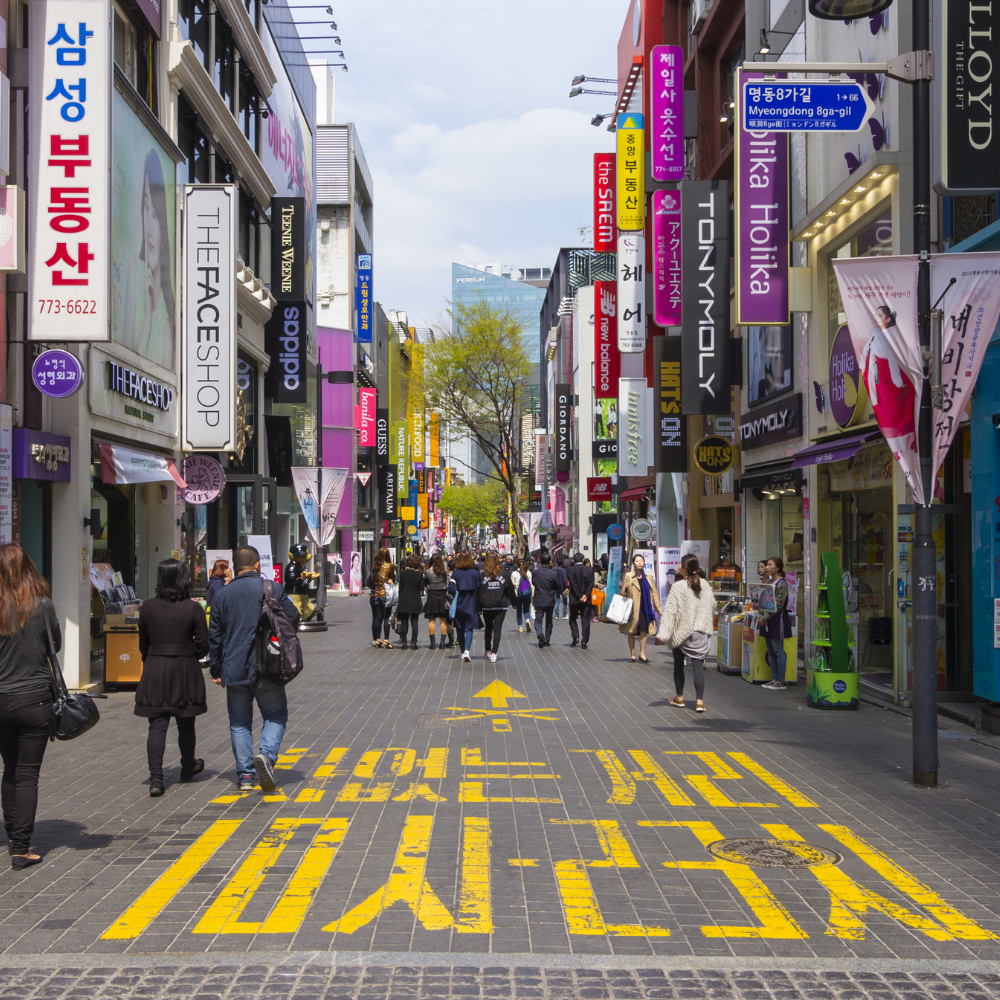
On shopping. Olive Young is the obvious starting point and genuinely convenient, with plenty of English signage and staff who are used to visitors. Two things worth knowing: prices vary between branches and promotions rotate constantly, so the flagship stores in Myeongdong and Gangnam are not automatically cheapest; and the tax refund for retail purchases generally requires a minimum spend in a single transaction, so consolidating a haul into one visit is worth doing. Keep the receipts and allow time at the airport.
On your skin while you are here. Korean summers are humid and the air is not always clean, while winters are dry and heated interiors compound it. Whatever your usual routine, bring a plain barrier moisturiser and reapply sunscreen properly. If you are having any treatment during the trip, pause retinoids and acids in the days beforehand.

The Etiquette That Actually Matters
Most etiquette advice about Korea is either obvious or overstated. These are the ones that come up daily and that visitors genuinely get wrong.
- Two hands. Give and receive with both hands — money, cards, a business card, a drink — or with one hand supporting the other forearm. This single habit does more for how you are received than anything else on this list.
- Quiet on public transport. Phone calls on the subway are genuinely unusual. Keep your voice down and take calls off the train.
- Priority seating stays empty. The marked seats at the ends of subway cars are left free even when the carriage is full. Sitting in them is noticed.
- Shoes off in homes, in many traditional restaurants with raised floors, in guesthouses and in temple buildings. Look for a step up or a rack of slippers.
- Pouring. When drinking with others, you pour for them and they pour for you; filling your own glass first is the small thing that marks you out. Hold the bottle with two hands when pouring for someone older.
- Chopsticks stay flat. Never stand them upright in a bowl of rice — it echoes a funeral rite.
- Tipping is not customary anywhere: restaurants, taxis, salons, hotels. Offering one causes confusion rather than pleasure.
- Age shapes language. You are not expected to navigate this in Korean, but understanding that someone asking your age is establishing how to speak to you — not being intrusive — explains a question that otherwise feels odd.
The broader principle: emotional volume is kept low in public. Visible frustration, loud disagreement and demonstrative affection all read as more disruptive here than they might at home.

Practical Things Nobody Mentions
- Cards work almost everywhere — almost. Korea is close to cashless, but traditional market stalls, some small restaurants and street vendors take cash or bank transfer only. Carry a modest amount in small notes and break large ones at a convenience store.
- Foreign cards fail more often than you expect. Some ticket machines, kiosks and transport top-up points reject overseas cards. Have cash as a fallback and tell your bank you are travelling.
- Ordering is increasingly by kiosk. Many casual restaurants and cafes now use touchscreen ordering, often Korean-only. The camera in your translation app handles it; so does pointing at the picture.
- Public toilets are everywhere and clean — subway stations, department stores, cafes — but paper is not guaranteed inside the cubicle. Carry tissues. In older buildings, look for the bin instruction before flushing paper.
- Convenience stores are infrastructure, not just shops: hot food, ATMs that accept foreign cards more reliably than most, phone charging, transit top-ups, umbrellas, and basic toiletries at two in the morning.
- Sizing runs small in Korean clothing and shoes relative to European and American sizing. Try things on.
- Summer is genuinely humid and the rainy season is real; winter is genuinely cold and dry. Neither is a reason not to come, but both change what you pack more than the temperature figures suggest.
- Emergency numbers: 119 for fire and ambulance, 112 for police. The 1330 tourist helpline offers free interpretation around the clock and is genuinely useful when something goes wrong.

Dr. Beau's Note
Save the number 1330 to your phone before you land. It is the tourist helpline, it is free, it runs around the clock, and the staff will interpret a live phone call between you and whoever you are struggling to communicate with — a taxi driver, a pharmacist, a clinic receptionist, a landlord. Almost no visitor knows it exists, and the people who find out usually find out from someone helping them after something has already gone wrong. Two minutes now saves a genuinely bad afternoon later.