Which Lifting Treatment to Get? The Top 5 Questions a Personalized Face Design Consultation Answers
Which lifting treatment to get is one of the most common questions visitors bring to a clinic in Seoul. This column explains why the answer depends on your face more than on any device, how a personalized face design consultation works through five questions and what to look for in a lifting-focused clinic before you decide.

Key Summary
The answer to which lifting treatment to get comes from your face, not from a list of devices. A personalized face design consultation looks at where the face has changed, how much laxity there is, which layer each area needs, which direction support should follow and how the plan fits your time in Seoul. Once those five questions are answered, the choice of treatment usually follows on its own.
Which lifting treatment to get is a question I hear in almost every consultation with visitors to Seoul. Many people arrive having read about several devices, watched videos and saved a few names on their phone, yet still feel unsure. Each treatment sounds convincing on its own, and the descriptions online rarely say which face it suits.
As a doctor who places particular emphasis on lifting, I find that the confusion usually comes from starting at the wrong end. People compare devices first and look at their own face last. In this column, I would like to turn that order around. I will explain why the decision is harder than it looks, which treatments are usually considered for each concern, how a personalized face design consultation works through five questions and what to look for in a clinic before you decide.
Why Is It Hard to Know Which Lifting Treatment to Get?
It is hard to know which lifting treatment to get because the face does not age in one layer, and each lifting treatment works mainly in its own layer. Two people who both say their face looks tired can have very different reasons behind it.
Near the surface lies the dermis, the layer that gives skin its firmness, largely thanks to collagen. Beneath it lies the subcutaneous tissue, with its fat compartments, and below that a fibrous support layer that links the facial muscles to the skin. Deeper still, small ligaments hold tissue to the bone. With time, each of these layers changes at its own pace. In one person the skin thins and creases; in another, the support layer loosens and the jawline softens; in a third, fat shifts downward and the cheeks look flatter.
Because of this, a treatment that suits one face can feel disappointing on another. The question is not which device is strongest, but which layer in your face needs support. When that is clear, many options drop away and the right ones become easier to see.
Research points in the same direction. Contini et al. (2023) reviewed studies of microfocused ultrasound for facial tightening and noted that the response was weaker in people with severe laxity or a body mass index above 30. Dierickx (2006), writing about deep heating for skin rejuvenation, stressed that careful patient selection and realistic expectations matter. Both observations lead back to the same step: reading the individual face before choosing a method.

Which Lifting Treatments Are Usually Considered for Each Concern?
Lifting treatments are usually considered according to the concern you see in the mirror and the layer behind it. Starting from the concern, not the device name, keeps the conversation tied to your face.
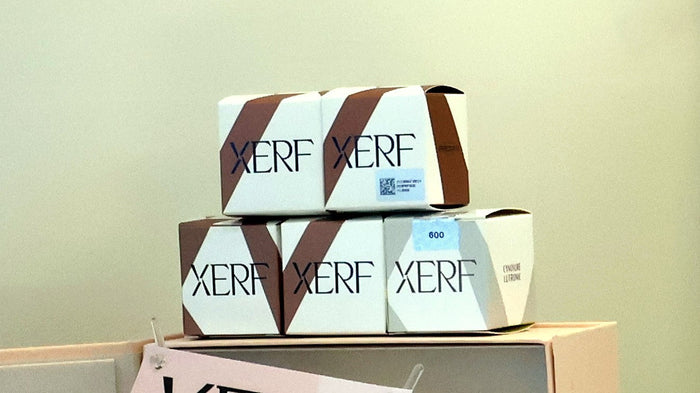
Focused ultrasound devices such as Ultherapy PRIME and Shurink Universe place small points of heat at set depths, reaching down to the fibrous support layer. Monopolar radiofrequency devices such as Thermage FLX and XERF warm a broader volume of the dermis. EMFACE combines radiofrequency with stimulation of the facial muscles and uses no needles. Potenza Dia Lifting delivers radiofrequency through fine microneedles, with depth and intensity adjusted for each area. Thread lifting supports tissue that has moved downward along a planned direction.
The table below shows how these options are often matched to common concerns. It is a starting point for a consultation, not a ranking.
| What you notice | Layer often involved | Options often discussed |
|---|---|---|
| Heaviness along the jaw and under the chin | Fibrous support layer and fat | Focused ultrasound at deeper settings |
| Thin, crepey skin over the cheeks | Dermis | Monopolar radiofrequency across a wide area |
| Loose texture with enlarged pores | Dermis, close to the surface | Microneedle radiofrequency |
| A face that looks flat and less toned | Dermis and facial muscles | Radiofrequency with muscle stimulation |
| Cheeks that have clearly moved downward | Tissue beneath the skin | Thread lifting, often alongside an energy device |
Most faces show more than one of these concerns at once. That is why a single answer such as "get ultrasound" or "get radiofrequency" rarely fits. A plan usually combines options, each placed where it is needed. Deciding where each one goes is the work of the consultation.
How Does a Personalized Face Design Consultation Choose the Treatment?
A personalized face design consultation chooses the treatment by answering five questions about your face in order, so that the device is decided last. At Chai Clinic, this begins with a MarkVu skin measurement, which gives each area a starting point beyond what the eye alone can see.
Where has the face changed? The face is examined from the front and both sides, and the two halves are compared. Small differences in height between the left and right cheek, or a jawline that softens on one side, often explain why a person feels something is off.
How much laxity is there? Gently lifting the cheeks and jawline by hand shows how far the tissue moves and how quickly it settles back. This helps judge whether a non-surgical approach is suitable and what can reasonably be expected.
Which layer does each area need, and how much? Skin thickness, fat and bone structure differ from zone to zone. The depth, energy and number of shots are set for each area, so thinner skin near the eyes receives a gentler setting than a fuller lower face.
In which direction should support go? Tissue descends along its own lines. Planning the direction of support keeps the result in proportion with the rest of the face, especially when threads are part of the plan.
In what order, and over how many visits? Your days in Seoul and your flight home shape the plan. Some steps fit into one visit, while others are better left for a later trip, once the first changes can be judged.
The fourth question is easiest to understand with threads. Hong et al. (2024) described the basic concepts behind facial thread lifting, including fixing points, hanging points and the direction in which tissue is pulled. Their diagram below shows how a short-thread design is laid out on the side of the face. The same thinking about direction also guides where energy devices are placed.

When these five answers are in place, the treatment often becomes clear. Design comes first, and the device follows the design. It also means the plan can be explained to you step by step, so you understand why each part is there and why some options were left out.
A Typical Case
A common situation is someone in their late thirties visiting Seoul for six days who arrives with a list of four lifting devices and asks which one to choose. In the consultation, the measurement shows thin skin over the cheekbones, while the lower face has fuller tissue and a jawline that has softened slightly more on the left. Lifting the tissue by hand shows that it moves easily and settles back slowly, which suggests mild to moderate laxity. The plan places focused ultrasound along the jawline and under the chin, with a little more attention on the left, and gentle radiofrequency across the cheeks, all on the same day. Threads are discussed and set aside for now, and a review is planned for their next trip, when the gradual change can be judged before anything else is added.
What Should You Look For in a Lifting Clinic Before You Decide?
Before you decide, look for a clinic whose way of working allows a plan to be designed around your face. Many visitors search for a lifting specialist clinic for this reason. In Korea, the word specialist on a doctor's profile refers to board certification in a medical field, and lifting is not one of those fields, so the phrase is easier to read as a search for a clinic with a strong lifting focus. These points show that focus in practice.
✓Is the skin measured before the number of shots and energy levels are set? A measurement gives the plan a basis beyond appearance.
✓Is the whole face designed for proportion and balance, not one area alone? Changing one zone in isolation can make the rest look out of step.
✓Can the clinic choose among devices that work at different layers? A range of options lets the plan follow your face.
✓Does the doctor who designs the plan also carry it out? When one person plans and treats, decisions about depth and direction carry through.
Chai Clinic places particular emphasis on lifting and keeps Ultherapy PRIME, Thermage FLX, XERF, Shurink Universe, EMFACE, Potenza Dia Lifting and thread lifting among its options. Before any plan, the skin is measured with MarkVu, and treatment is designed around the proportions and balance of each face. The director, an official XERF ambassador who has completed the XERF Master Course, handles each case from consultation to treatment, uses genuine products in the correct amounts and does not put together packages on a first visit.
For visitors, it also helps to share photos and your travel dates when you arrange a consultation, so the plan can fit your stay from the start. When an accurate diagnosis is needed, it is best to talk with our medical team first.
Designing a Face Starts With Seeing It Whole
When I draw a portrait in pencil, I never begin with an eye or a mouth. I begin by looking at the whole head, the tilt of the jaw and the distance between features, because a single detail drawn with great care can still sit in the wrong place.
I have kept this habit since I began drawing faces during the pandemic years, and it has quietly shaped the way I design lifting. Before I think about any device, I look at how the face has shifted as a whole, where the lines have dropped and which side has changed more than the other.
For me, a good lifting plan is like a portrait that still looks like its subject. The aim is not a new face, but your own face with its balance restored and its character kept.
I would be glad to look at your face with you and design that plan together.
- Dr. Wonjin Jo, Director, Chai Clinic -
About Chai Clinic
Chai Clinic is a skin clinic in Hapjeong-dong, Mapo-gu, in the Hongdae area of Seoul, about 100 m from Hapjeong Station Exit 8. It has been part of the neighborhood for ten years, and its director has 18 years of medical practice. The clinic places particular emphasis on lifting and chooses among devices according to the layer and purpose each one serves. Every consultation begins with a MarkVu skin measurement, and treatment is designed around the proportions and balance of the individual face, with the aim of keeping each person's character. The director handles each case from consultation to treatment, uses genuine products in the correct amounts and does not put together packages on a first visit. You can arrange a consultation through Chai Clinic on BeautiPin.
Choosing a lifting treatment becomes much simpler when you begin with your own face. When a consultation shows you where the face has changed, which layer needs support, in which direction and in what order, the treatment names no longer compete with each other and begin to make sense. We hope this helps you arrive in Seoul with clear questions and leave with a plan that feels like your own.
References
Contini M, Hollander MHJ, Vissink A, et al. A Systematic Review of the Efficacy of Microfocused Ultrasound for Facial Skin Tightening. Int J Environ Res Public Health. 2023;20(2):1522. doi:10.3390/ijerph20021522
A review of 16 studies of microfocused ultrasound for facial tightening.
Cited in the section on why the choice is hard, and in the FAQ, on how response varies with laxity and over time.
Dierickx CC. The role of deep heating for noninvasive skin rejuvenation. Lasers Surg Med. 2006;38(9):799-807. doi:10.1002/lsm.20446
A review of deep dermal heating for noninvasive tightening.
Cited in the section on why the choice is hard, on patient selection and realistic expectations.
Hong GW, et al. Basic concepts in facial and neck thread lifting procedures. Skin Res Technol. 2024;30(4):e13673. doi:10.1111/srt.13673
An invited review of the basic concepts behind facial and neck thread lifting.
Cited in the consultation section, on planning the direction of support.
That's all from Chai Clinic. Thank you for reading.