HIFU Lifting in Seoul: What Should You Consider?
HIFU lifting places small points of heat at chosen depths beneath the skin to support a firmer contour without incisions. Here is how the depths differ, who it tends to suit, what a session feels like and what to consider before you book in Seoul.

Key Summary
HIFU lifting uses high-intensity focused ultrasound to place small points of heat at chosen depths beneath the skin, from the dermis down to the fibrous layer above the facial muscles, while the surface stays intact. It tends to suit early to moderate loosening, the change builds gradually over the following months, and the depths for each area are decided after the face has been assessed.
You might notice it in a photo a friend takes on a night out. The line under your jaw looks less crisp, and the cheeks seem to rest slightly lower than they did a few years ago. In that moment, a treatment without needles or incisions often sounds right, and high-intensity focused ultrasound is usually the name that comes up.
HIFU lifting is widely offered in Seoul, and the word covers devices that work in slightly different ways. This guide explains why depth matters, what a session feels like, who tends to be a good candidate and what to consider before you book.
What Changes Beneath the Skin When the Face Starts to Loosen?
The face loosens because the layers that hold it up change at different depths, and rarely all at once. In the dermis, the layer just under the surface, collagen and elastic fibers are renewed more slowly with age. The skin becomes thinner and less able to spring back, so fine lines stay visible longer after you smile. Years of sun exposure speed up this change.
Below the dermis lies a layer of fat, and below that the superficial muscular aponeurotic system (SMAS), a fibrous sheet that connects the facial muscles to the skin and helps hold the cheeks and jawline in place. When it softens, tissue settles lower, the jawline loses some definition and the fold beside the mouth looks deeper.
This layered picture is why lifting treatments are described by depth. A concern that sits mostly in the dermis calls for a different plan from one that also involves the deeper support, and many faces show a little of both. Energy-based treatments warm tissue at a chosen level, and the skin then repairs the area and rebuilds part of its support over time.

Which Layers Can HIFU Lifting Reach, and How Do the Depths Differ?
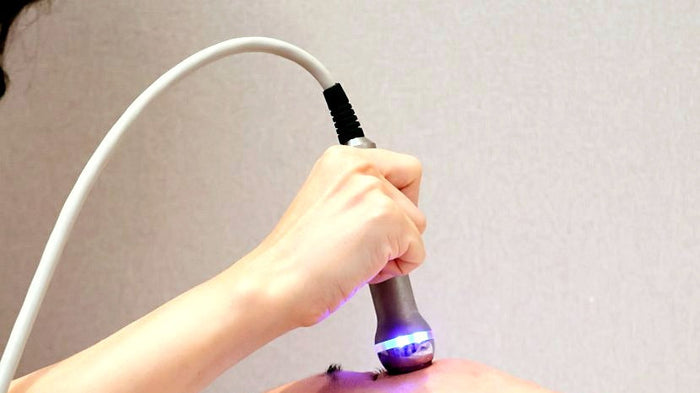
HIFU lifting can reach several layers because each tip, or each setting, is designed to focus energy at a fixed depth. The ultrasound passes through the surface and gathers at that depth, forming tiny points of heat while the surface itself is left intact.
Shurink Universe, made by Classys, is a HIFU device whose tips are designed to target three levels: the upper dermis, the subcutaneous layer at 3 mm and the fascia layer at 4.5 mm. It also has dedicated tips for the eye area and the neck. Ultherapy PRIME, made by Merz, is a micro-focused ultrasound (MFU) device that, according to the manufacturer, creates points of heat at set depths, including the fascia layer. Each is chosen for what it does in a given area. The table below is a reference for choosing depth, not a ranking.
| Depth | What sits there | Often considered for |
|---|---|---|
| Upper dermis | Collagen and elastic fibers that keep the surface springy | Early loss of firmness and fine texture |
| 3 mm, subcutaneous layer | The fat layer that gives the lower face its fullness | Soft contours along the jaw and lower cheeks |
| 4.5 mm, fascia layer | The fibrous support above the facial muscles | Sagging that involves the deeper support of the cheeks and jawline |
| Eye and neck tips | Thinner skin that calls for a gentler approach | The area around the eyes and the neck, planned separately |
The depth is chosen to match where the loosening sits, and most plans combine more than one depth across the face. The subcutaneous layer shows why. Along a heavy jawline, energy at this level may be part of the plan, while over cheeks that are already slim it may be kept light so that fullness stays where the face needs it.
Focused ultrasound is one group among several. Monopolar radiofrequency devices such as Thermage FLX and XERF warm the dermis more broadly, and they are sometimes planned alongside ultrasound.

How Does a HIFU Lifting Session Feel, and How Does Change Unfold?
A HIFU lifting session usually feels like a series of brief, deep pulses of warmth, and the change it starts unfolds slowly over the following months. The visit begins with an assessment and a skin measurement, the doctor marks the depth each area needs, and a numbing cream, a type of topical anesthetic, is commonly applied. Energy is then delivered in lines, one area at a time, and the ache with each pulse is often stronger where skin sits close to bone, such as along the jaw.

Chan et al. (2011) studied focused ultrasound in Asian skin and recorded discomfort during treatment as severe in about 54% of sessions. Redness and swelling were common and temporary, small bruises appeared in up to a quarter of sessions, and no lasting or delayed problems were found over six months of follow-up. Comfort depends on the settings, the area treated and how well numbing is prepared, so it is worth telling the doctor how you usually handle discomfort. Our medical team adjusts the energy and spacing area by area, and treatment can pause whenever you need a moment.
Right after treatment, the skin may look slightly pink and feel tender. A tighter look that evening mostly reflects mild swelling. The more lasting response comes later, as the warmed tissue heals and the skin gradually rebuilds collagen over the following months.

A Typical Case
Among visitors who ask about HIFU lifting, a familiar pattern starts with a phone camera. Photos from a rooftop bar show a jawline heavier than expected, and the reaction is often, 'It is just the angle, I will think about it next year.' When the concern is assessed early, the loosening often sits mostly in the upper layers, and the plan can stay light, with a few depths chosen for the jawline and cheeks. When it waits several more years, the deeper support may have softened as well, and the plan tends to involve more areas or another approach alongside ultrasound. Both paths are reasonable, yet the scope of what is planned usually grows with time, and a single short visit may no longer cover it.
Who Is a Good Candidate for HIFU Lifting?
A good candidate for HIFU lifting usually has early to moderate loosening, with skin that still has some thickness and deeper support that has begun to soften without dropping a great deal. A jawline that has started to soften while the cheeks still feel fairly firm, and a preference for gradual, needle-free change, are common reasons the conversation turns to ultrasound.

Ling and Zhao (2023) reviewed thirteen studies of micro-focused ultrasound for the face and found that the share of people rated as improved was 77% at 90 days and 69% at 180 days. A clear majority responded, and that share eased over the months. The useful questions before booking are how loose the skin is now and how a later session would be timed. The medical team reads research like this carefully when judging whether ultrasound suits a particular face and how far apart sessions should be.
HIFU lifting is not the right starting point for everyone. When sagging is advanced, or when the skin has become very thin, ultrasound alone may not give the change you are hoping for, and thread lifting or a combination of approaches may be discussed instead. If you are pregnant, or if the skin in the treatment area is inflamed or irritated, mention it before the assessment. When an accurate diagnosis is needed, it is best to talk with our medical team first.
What Should You Consider Before Booking HIFU Lifting in Seoul?
Before booking HIFU lifting in Seoul, the most useful things to consider are how your plan will be set and who will carry it out. Similar device names appear at many clinics, so the difference shows in the planning.
✓Is your skin measured before the depths and the number of shots are chosen? A measurement gives each area a starting point beyond what the mirror shows.
✓Will the doctor who assesses you also perform the treatment? Depth decisions hold together when one person carries them from consultation to treatment.
✓Can you confirm that genuine tips and the planned number of shots are used? Each tip is built for a set depth, so the plan works as intended when the stated tip and amount are actually delivered.
✓Does the plan look at the balance of the whole face? Lifting one area in isolation can make another look heavier, so the jawline, the cheeks and the area around the eyes are judged together.
It also helps to notice how the consultation feels. A clinic that recommends what your face needs now, without bundling several treatments together, leaves later decisions open until your skin has responded.

Where the Shadows Fall on a Face

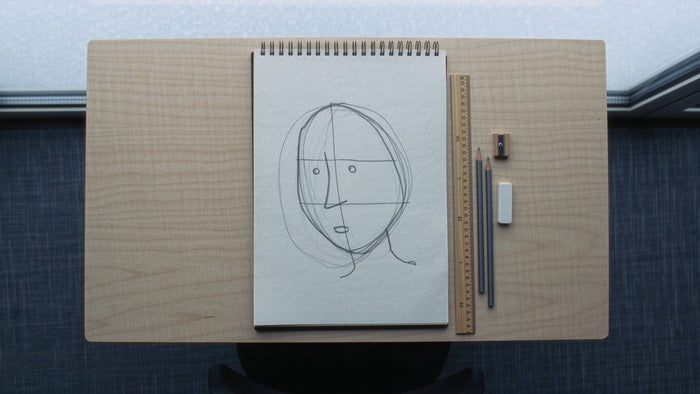
When I draw a face in pencil, the outline is the easy part. The real work is in the shading, in noticing exactly where a shadow begins under the cheekbone or along the jaw, because a small shift there changes the whole expression.
Drawing portraits has been my habit since the pandemic years, and it shapes how I look at a face before lifting. I watch which way the tissue has moved and where new shadows have formed.
With ultrasound, that observation becomes a map of depths. One part of the jawline may need the deeper fascia setting, while the cheek beside it is kept lighter so that its fullness stays. I would like your face to keep its own character, with its lines gently supported rather than redrawn.
- Dr. Wonjin Jo, Director, Chai Clinic -
About Chai Clinic
Chai Clinic is a skin clinic in Hapjeong-dong, Mapo-gu, a short walk from Hongdae, and it has been ten years since the clinic opened. The clinic places particular emphasis on lifting, with Ultherapy PRIME and Shurink Universe alongside radiofrequency options. Every consultation begins with a MarkVu skin measurement, and treatment is designed around the proportions and balance of the individual face. The director handles each case from consultation to treatment, uses genuine products in the correct amounts and does not assemble packages on an initial visit. You can arrange a consultation through Chai Clinic on BeautiPin.
Seeing your reflection change can feel unsettling when you still feel the same inside. Taking time to understand what sits beneath that change is a calm and sensible place to begin. Whatever you decide while you are in Seoul, we hope you go home feeling at ease with the face you see in the mirror.
References
Chan NP, Shek SY, Yu CS, et al. Safety study of transcutaneous focused ultrasound for non-invasive skin tightening in Asians. Lasers Surg Med. 2011;43(5):366-375. doi:10.1002/lsm.21070
A clinical study of focused ultrasound skin tightening in Asian patients.
Cited in the section on how a session feels, on discomfort and short-lived reactions.
Ling J, Zhao H. A Systematic Review and Meta-Analysis of the Clinical Efficacy and Patients' Satisfaction of Micro-focused Ultrasound (MFU) Treatment for Facial Rejuvenation and Tightening. Aesthetic Plast Surg. 2023;47(5):1806-1823. doi:10.1007/s00266-023-03384-1
A meta-analysis of thirteen studies of micro-focused ultrasound for the face.
Cited in the section on good candidates, on how response changes over the months.
That's all from Chai Clinic. Thank you for reading.