
HIFU vs Radiofrequency Lifting in Seoul: How the Two Energy Types Work
Written by CHAI Clinic
HIFU and radiofrequency both heat the skin to firm it, but they deliver that heat in very different ways. Here is how each one works, which layers it reaches, how it feels, and how a doctor in Seoul decides between them or uses both.

Key Summary
HIFU (high-intensity focused ultrasound) gathers energy into small points of heat at set depths, down to the fibrous layer that supports the face. Radiofrequency warms a broad volume of the skin itself. The first is usually considered for loosening that sits deeper along the jaw and lower face, the second for thinning, crepey skin and overall firmness. Neither is simply stronger; they work at different layers, which is why many plans in Seoul use one, the other or both.
CHAI Clinic at a Glance
Location: 3F, Delight Square 2 (Building B), 14 World Cup-ro 3-gil, Mapo-gu, Seoul, in the Hongdae and Hapjeong area
Nearest station: Hapjeong Station Exit 8, about 100 m away
Hours: Monday, Tuesday, Thursday and Friday 10:00 to 20:00; Saturday 10:00 to 15:00; closed Wednesday and Sunday
Director: Dr. Wonjin Cho, 18 years of medical practice
HIFU devices: Ultherapy Prime, Shurink Universe
Radiofrequency devices: Thermage FLX, XERF
Who consults and treats: the director, from consultation through treatment
Languages: English and Chinese consultation channels (WhatsApp, WeChat, Instagram, Xiaohongshu)
For visitors: the same treatments and pricing for international and local patients
Clinic profile: CHAI Clinic on BeautiPin
HIFU vs radiofrequency lifting in Seoul is one of the comparisons visitors make most often, usually after seeing device names such as Ultherapy, Shurink, Thermage and XERF side by side. The names change from clinic to clinic, but underneath them sit only two energy types. Once you know how those two work, most device lists become much easier to read.
This column explains the difference in plain terms: how each energy reaches the skin, which layers it acts on, what a session feels like, and which concerns usually point to one, the other or both. It ends with how the choice is made at CHAI Clinic in Hongdae, where both types are used.
What Is the Difference Between HIFU and Radiofrequency Lifting?
Both treatments firm the skin with heat, and both rely on the same repair process afterward: warmed fibers contract, and over the following months the tissue renews part of its collagen. The difference lies in how the heat is delivered.
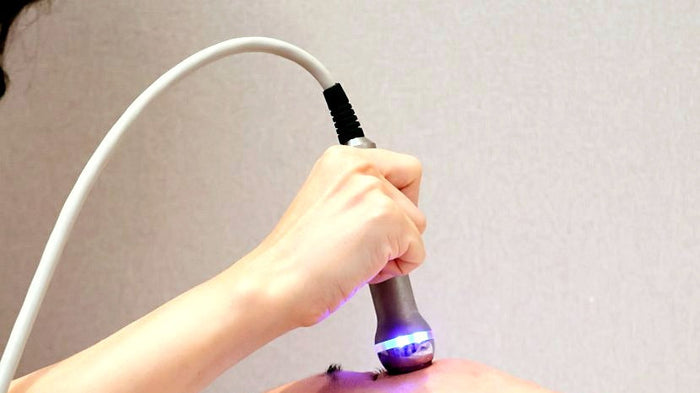
High-intensity focused ultrasound works like a lens. Sound waves pass through the surface without heating it much and meet at a chosen depth, where they create tiny points of heat. The tissue between those points is left untouched. Radiofrequency works more like a warm stone. Electrical energy flows into the skin and turns into heat across a broad volume, with the surface cooled to protect it. Neither involves needles or incisions, and both usually fit into an ordinary day.
| HIFU | Radiofrequency | |
|---|---|---|
| Energy | Focused ultrasound | Electrical current that turns into heat |
| Pattern of heat | Small points at a set depth | Broad warming of the skin |
| Main target | Deeper support layers and the skin above | The dermis and the tissue just below |
| Devices at CHAI Clinic | Ultherapy Prime, Shurink Universe | Thermage FLX, XERF |
This table is a map, not a ranking. HIFU and radiofrequency are two tools for two different layers, not a weaker and a stronger version of the same thing.
Which Layers Does Each Energy Type Reach?
Facial skin loosens at several depths at once. The surface thins, the dermis loses density, and the fibrous layer that holds the cheeks and jaw in place stretches. Each energy type is better placed for some of these layers than others.
HIFU is set by depth. Its transducers or cartridges target fixed levels, such as about 1.5 mm in the upper dermis, about 3.0 mm in the deeper skin and tissue below, and about 4.5 mm at the fibrous layer above the facial muscles. Shurink Universe offers tips for each of these levels, including tips for the eye area and neck, and Ultherapy Prime adds an ultrasound image so the doctor can see the layers before treating.

Marquardt et al. (2025) followed skin treated with micro-focused ultrasound at 1.5, 3.0 and 4.5 mm and found that, by 90 days, the treated tissue showed more fibroblasts, more mature collagen and new elastic fibers. That gradual remodeling is why change after HIFU builds over months.
Radiofrequency is set by volume and energy rather than by a single depth. Thermage FLX warms the dermis broadly. XERF mixes two frequencies, 6.78 MHz and 2 MHz, so heat can reach from shallow layers to deeper ones, and it offers three depth settings and ten energy levels.

Carruthers et al. (2014), reviewing monopolar radiofrequency from their own experience and the literature, described it as a way to tighten skin without incisions or a recovery period, and linked good results to following recommended methods.

How Do HIFU and Radiofrequency Feel, and What Is Recovery Like?
The two energy types also feel different. HIFU is usually described as a series of short, deep prickles or a dull ache along each line, strongest over bone, such as the jaw and brow. Radiofrequency is usually described as a wave of heat that rises and then fades as the cooling takes over, felt more broadly across the skin.
How strong either feels depends on the area, the depth or energy chosen, and the person. In a meta-analysis of micro-focused ultrasound, Ling and Zhao (2023) reported an average pain score of about 3 out of 10 across studies, with wide individual differences. For both types, the doctor can slow the pace or adjust the energy in sensitive areas, and numbing ointment, a topical anesthetic, is applied for at least 30 minutes before the eye area is treated.
Recovery is similar for both. Mild redness, warmth or swelling may appear for a few hours, and most people continue light plans the same day. Clinics usually suggest avoiding saunas, intense exercise and heavy drinking for a short while afterward. The visible change for both builds gradually over the following months, not on the treatment day.
There are also times to wait with either one: active inflammation in the area, a recent filler or thread treatment in the same place, pregnancy, or, for radiofrequency, metal implants or electronic devices in the body. When an accurate diagnosis is needed, it is best to talk with our medical team first.
Which One Suits Your Face, or Do You Need Both?
The choice follows where the change sits. A few common patterns help as a starting point:
✓A softer jawline, heavier lower cheeks or fullness under the chin often points to deeper support, where HIFU is usually considered first.
✓Thin, crepey or less springy skin across the cheeks and neck often points to the dermis, where radiofrequency is usually considered first.
✓Both at once, which is common after the late thirties, may call for a plan that uses both energy types in a sensible order.
✓Heavy, descended tissue may be better served by threads or surgery than by either energy type alone.
When both are used, they can be done on the same day or spaced across visits, depending on the skin and the schedule. The aim is not to stack devices but to match each one to a layer that needs it. A plan can also change over the years, for example starting with radiofrequency for the skin in the thirties and adding HIFU later as deeper support begins to loosen.
A Typical Case
A familiar case is a visitor in her early forties who arrives asking which is better, HIFU or radiofrequency, because she has read conflicting advice online. In the consultation, the side view shows that her jawline has softened and the area under the chin has become fuller, while the skin across her cheeks looks thinner and finely creased. The plan uses HIFU at a deeper setting along the jaw and under the chin, and radiofrequency across the cheeks and neck for the skin itself, with lighter settings over the cheekbones. She feels the HIFU lines most along the jaw, so the pace slows there. She leaves with mild warmth across the lower face and a short note on when the change usually becomes visible.
How Is the Choice Made at CHAI Clinic in Seoul?
Because CHAI Clinic in Hongdae uses both energy types, the consultation does not start from a device. It starts from the face. Each consultation begins with a MarkVu skin measurement, and the director looks at the face from the front and the side to see where loosening sits and how the proportions of the whole face hold together.
From there, the plan is built layer by layer: HIFU where deeper support has stretched, radiofrequency where the skin itself has thinned, and the depth or energy chosen zone by zone. The director, an official XERF ambassador who has completed the XERF Master Course, carries out every case from consultation to treatment, genuine products are used in the correct amounts, and packages are not put together on a first visit.
A few questions are worth asking anywhere you book:
✓Does the clinic offer both energy types, so the choice follows your face rather than the equipment on hand?
✓Is your skin measured before depths and energy are chosen?
✓Does the doctor who plans the session also perform it?
CHAI Clinic sits in Hapjeong-dong, in the Mapo District, about 100 m from Hapjeong Station Exit 8. For a deeper look at one side of the comparison, our column on HIFU lifting in Seoul covers focused ultrasound on its own.
Point and Shade
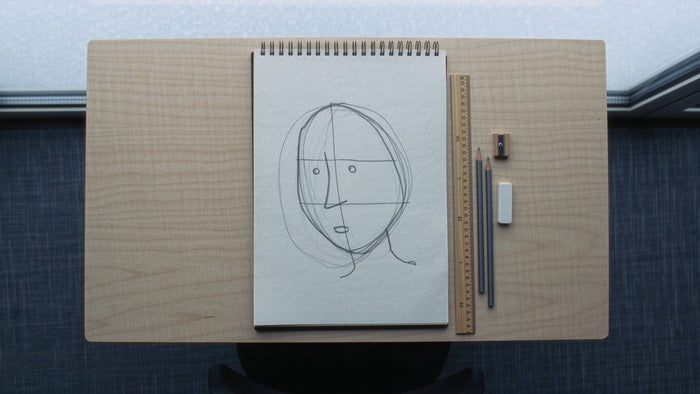
A pencil portrait is built from two kinds of marks. There are sharp points and short strokes that fix the structure, the corner of a jaw or the edge of a cheekbone, and there are broad, soft layers of shading that give the skin its surface.
HIFU and radiofrequency remind me of those two marks. Focused ultrasound places precise points where the structure needs support. Radiofrequency lays down a softer, wider warmth across the skin itself. A face rarely needs only one kind of mark.
My aim is not to draw a different face, but to let the one you have sit a little more firmly in its own lines.
That is why I begin with the face, and only then choose the tool.
- Dr. Wonjin Cho, Director, CHAI Clinic -
About CHAI Clinic
CHAI Clinic is a skin clinic in Hapjeong-dong, Mapo-gu, in the Hongdae area of Seoul, about 100 m from Hapjeong Station Exit 8. It has been ten years since the clinic opened, and it places particular emphasis on lifting, with both focused ultrasound devices, Ultherapy Prime and Shurink Universe, and radiofrequency devices, Thermage FLX and XERF. Each consultation begins with a MarkVu skin measurement, and treatment is designed around the proportions and balance of the individual face. The director handles each case from consultation to treatment and does not put together packages on a first visit. You can find the clinic's details and arrange a consultation through CHAI Clinic on BeautiPin.
HIFU and radiofrequency both firm the skin with heat, but one places it in precise points at set depths and the other spreads it across the skin. Loosening along the jaw tends to point to HIFU, thinning and crepey skin to radiofrequency, and many faces need a little of both. In Seoul, the useful question is not which device is stronger, but which layer of your face needs attention.
References
Marquardt K, et al. Microfocused Ultrasound With Visualization Induces Remodeling of Collagen and Elastin Within the Skin. J Cosmet Dermatol. 2025;24(1):e16638. doi:10.1111/jocd.16638
A tissue study following the stages of skin response after micro-focused ultrasound at three depths.
Its Figure 7 appears in the section on which layers each energy type reaches.
Carruthers J, Fabi S, Weiss R. Monopolar radiofrequency for skin tightening: our experience and a review of the literature. Dermatol Surg. 2014;40 Suppl 12:S168-173. doi:10.1097/DSS.0000000000000232
A review, drawn from clinical experience, of how monopolar radiofrequency is used to tighten skin without incisions.
Cited in the section on which layers each energy type reaches.
Ling J, Zhao H. A Systematic Review and Meta-Analysis of the Clinical Efficacy and Patients' Satisfaction of Micro-focused Ultrasound (MFU) Treatment for Facial Rejuvenation and Tightening. Aesthetic Plast Surg. 2023;47(5):1806-1823. doi:10.1007/s00266-023-03384-1
A meta-analysis of 13 studies on micro-focused ultrasound, including average pain scores.
Cited in the section on how each treatment feels and in the FAQ.
That's all from CHAI Clinic. Thank you for reading.