Hongdae Lifting Clinic: How a Plan Is Built Layer by Layer
How a lifting clinic in Hongdae matches each approach to the layers of the face, why plans often combine more than one, what research says about how skin responds over time and what to look for when you compare clinics in the area.

Key Summary
A Hongdae lifting clinic that places emphasis on lifting usually keeps several approaches, because the face loosens at different depths. Focused ultrasound reaches the fibrous support layer, radiofrequency warms the dermis and threads give physical support. A plan that matches each area to its layer, leaves time for the skin to respond and is reviewed before anything is added tends to suit the face more closely than one device used everywhere.
Search for a Hongdae lifting clinic and you will find many places offering the same well-known device names. What the names do not tell you is how a clinic decides which device goes where. The face does not loosen evenly. The skin surface, the dermis beneath it and the firm support layer deeper still can each change at their own pace, and a lifting plan makes the most sense when it follows that pattern instead of a single device.
This guide looks at lifting from that angle. It explains why the layer matters, which approaches reach which depth, how a lifting-focused clinic in Hongdae combines them in one plan and what to look for when you compare clinics in the area. If you are in Seoul for a short stay, it also helps you know what to ask so that a first consultation is genuinely useful.
Why Does Lifting Depend on Which Layer Has Loosened?
Lifting depends on the layer because the face is held up by several layers that age differently. Near the surface, the dermis gives skin its firmness through collagen and elastic fibers, and these are renewed more slowly with age. Beneath the fat sits the superficial musculoaponeurotic system, often called the SMAS, a fibrous layer that links the facial muscles to the skin and helps hold the cheeks and jawline in place. When this deeper layer loosens, tissue drifts lower and the lower face loses some of its line.
These changes rarely happen at the same pace. Some people have thinner, finely creased skin on the cheeks while the jawline still holds well. Others keep firm skin but notice heaviness along the jaw because the deeper support has softened. The signs on the surface can look similar while the cause sits at a different depth, which is why two people asking for the same thing can need quite different plans.
Thickness matters too. Skin around the eyes and forehead is thinner than skin over the cheeks, and the amount of fat under the jaw varies from person to person. A plan that ignores these differences tends to treat every area the same way, while a plan built on them sets depth and energy separately for each zone of the face.
This is also why a description of a concern is only the starting point. "My face looks tired" or "my jawline has dropped" tells the doctor where to look, but the decision about which layer to treat comes from examining the face itself, from the front and from each side, and comparing how the two halves have changed.

Which Lifting Approaches Work at Which Depth?
Lifting approaches work at different depths because each one delivers energy, or physical support, in its own way. Knowing the main groups makes it easier to follow a consultation and to see why a clinic suggests one approach for one area and another approach elsewhere.
Focused ultrasound passes through the skin surface and gathers at a set depth, where it creates small points of heat. Ultherapy PRIME places these points at chosen depths that include the fibrous support layer. Shurink Universe is described as using different tips for the upper dermis, the layer about 3 mm down and the fascia layer at about 4.5 mm, with dedicated tips for the eye area and the neck.
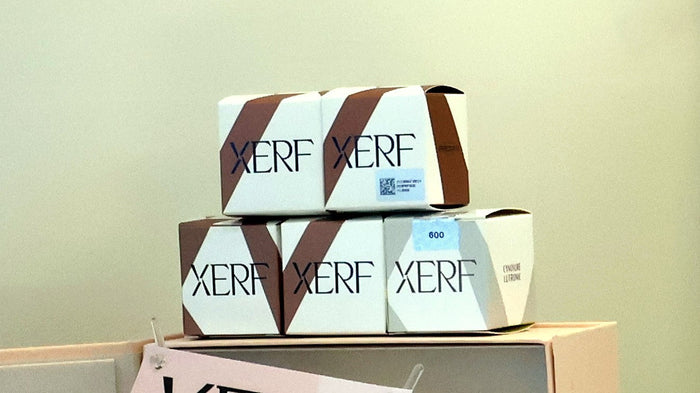
Monopolar radiofrequency warms a broad volume of the dermis instead of focusing on points. Thermage FLX works this way, and XERF combines two frequencies to carry heat from shallower to deeper layers, with adjustable depth settings and surface cooling. Microneedle radiofrequency, used in Potenza Dia Lifting, delivers energy through fine needles whose depth, intensity and spacing can be set area by area. Thread lifting works differently again, placing threads under the skin to support tissue that has moved lower.
The table below is a reference for understanding a plan, not a ranking.
| Approach | Main depth | Often considered when |
|---|---|---|
| Focused ultrasound | Set points of heat, down to the fibrous support layer | Deeper support has softened and the jawline has lost definition |
| Monopolar radiofrequency | Broad heating of the dermis | Skin feels thinner or less firm across a wider area |
| Microneedle radiofrequency | Adjustable depth through fine needles | Texture and firmness are both a concern in one area |
| Thread lifting | Support placed under the skin | Tissue has moved lower and needs physical support |
None of these approaches reaches every layer on its own. A clinic that keeps several approaches can choose among them for each face, and the choice follows the depth where each area has changed, not the device that happens to be available.
How Does a Hongdae Lifting Clinic Combine Layers in One Plan?
A Hongdae lifting clinic combines layers by first deciding where each area has loosened and then assigning an approach, a depth and an energy level to each zone. The result is closer to a map of the face than a menu of devices.
The first step is an assessment. The skin is measured before the consultation, and the doctor then looks at the cheeks, the jawline and the area around the eyes, comparing one side with the other. That assessment decides which layer each area needs. A typical combination might pair focused ultrasound along the jawline, where deeper support has softened, with radiofrequency across the cheeks, where the dermis has thinned. The forehead and the area around the eyes, where skin is thinner, are set more gently and handled as separate zones.
Timing is part of the combination as well. Some approaches can be done on the same day, while others are spaced so that the skin has time to respond before the next step. For visitors, this means a plan may be built around one trip, or spread across two visits so that the second step can be adjusted after the first has settled.

Marquardt et al. (2025) examined skin after micro-focused ultrasound delivered at three depths and described a sequence of tissue responses: an early inflammatory stage, a stage in which new tissue is built and a remodeling stage, with more fibroblasts, mature collagen and new elastic fibers seen at 90 days. This was a tissue study, and some of the authors were affiliated with the manufacturer, so it explains how change develops, not how large it will be. The practical point is that the skin keeps responding for months, which is why a combined plan leaves time between steps and reviews the result before adding more.
This timeline also shapes how the plan is explained to you. A clear plan says which approach is used in which zone, what is expected over the following weeks and when the face will be looked at again. If a second approach is part of the idea, you should know from the start whether it is planned for the same day or held back until a review.
A Typical Case
A common situation at consultation is someone in their late thirties who mentions that their jawline looks softer in photos while their cheeks feel slightly thinner than they used to. The assessment shows that the deeper support along the jaw has loosened a little, while the dermis over the cheeks has thinned. The plan places focused ultrasound along the jawline and lower cheeks and radiofrequency across the mid-face, with the area around the eyes set more gently. Because the person visits Seoul twice a year, the plan is reviewed at the next trip instead of adding a second step straight away. At that review, the doctor looks at how each zone has responded before deciding whether anything else is needed.

What Should You Look For in a Lifting Clinic in Hongdae?
When you compare lifting clinics in Hongdae, the most useful differences are in how treatment is planned, since many clinics in Seoul offer similar devices. A few questions at consultation make that planning visible before you commit to anything.
Dierickx (2006), reviewing deep heating for non-invasive skin rejuvenation, noted that patient selection and realistic expectations are central, and that debate about how much these treatments achieve has continued. That observation still applies today. A clinic that explains what lifting can and cannot do for your face is giving you the information you need to decide with confidence.
✓Can the clinic choose between approaches that work at different depths? A range of approaches lets the plan follow your face instead of a single device.
✓Is your skin measured before depth and energy are set? A measurement gives each zone a starting point beyond what the mirror shows.
✓Does the doctor who assesses you also perform the treatment? When one person plans and treats, the zone-by-zone decisions carry through to every area.
✓Are genuine tips and the planned amount of energy used? Asking how this is confirmed is a reasonable question at any clinic.
Location is a practical factor too. Clinics around Hongdae and Hapjeong are easy to reach on Seoul Subway Lines 2 and 6, and a clinic close to a station makes it simpler to come back for a review on a later trip. Notice how the first consultation feels as well. A clinic that recommends what your face needs now, without putting together a package on the first day, leaves later decisions open until your skin has responded. When an accurate diagnosis is needed, it is best to talk with our medical team first.
Drawing What Lies Beneath the Surface
When I draw a face in pencil, I start long before the details. I sketch the structure first: where the cheekbone sits, how the jaw turns and how the weight of the face rests. The surface only looks right when the structure under it is right.
I have been drawing faces since the pandemic years, and the habit has changed the way I plan lifting. Before choosing a device, I try to see which part of the structure has shifted. Sometimes it is the skin itself, sometimes the support underneath, and often a little of both in different places.
Matching each layer to its own approach is how I try to keep a face looking like itself. The aim is not a new shape, but the balance the face already had.
Every face has its own structure, and I would like to plan around yours.
- Dr. Wonjin Jo, Director, Chai Clinic -
About Chai Clinic
Chai Clinic is a skin clinic in Hapjeong-dong, Mapo-gu, in the Hongdae area of Seoul, about 100 m from Hapjeong Station Exit 8. It has been in the neighborhood for ten years and places particular emphasis on lifting, with approaches that work at different layers, including Ultherapy PRIME, Shurink Universe, Thermage FLX, XERF, Potenza Dia Lifting and thread lifting. Each consultation begins with a MarkVu skin measurement, and treatment is designed around the proportions and balance of the individual face. The director handles each case from consultation to treatment, uses genuine products in the correct amounts and does not put together packages on a first visit. You can arrange a consultation through Chai Clinic on BeautiPin.
Device names are easy to compare, but the plan behind them is what shapes how a face looks in the months that follow. Taking time to understand which layers have changed keeps the decision clear and your own. We hope your time in Hongdae leaves you feeling comfortable in your own face, now and in the seasons ahead.
References
Marquardt K, et al. Microfocused Ultrasound With Visualization Induces Remodeling of Collagen and Elastin Within the Skin. J Cosmet Dermatol. 2025;24(1):e16638. doi:10.1111/jocd.16638
A tissue study of skin after micro-focused ultrasound at three depths.
Cited in the section on combining layers, on how the skin keeps responding for months.
Dierickx CC. The role of deep heating for noninvasive skin rejuvenation. Lasers Surg Med. 2006;38(9):799-807. doi:10.1002/lsm.20446
A review of deep heating methods for non-invasive skin tightening.
Cited in the section on choosing a clinic, on why realistic expectations matter.
That's all from Chai Clinic. Thank you for reading.