
K-Drama Filming Locations in Korea: Where Your Favorite Scenes Come to Life
Some K-drama locations are worth crossing the country for and some are a photograph you could have taken from your sofa. The difference is whether there is anything there besides the frame. The Jumunjin breakwater in Gangneung, the Changdeokgung Secret Garden, the zelkova tree in Changwon and the open set at Nonsan all reward the journey; several famous interiors are studio builds you cannot enter, and two of the most-visited spots are residential streets where people live. This is which is which, what it costs, and what to reserve in advance.

What Makes a Location Worth the Trip
Filming-location tourism has a failure mode that nobody warns you about: you travel two hours, stand in the right spot, take the photograph, and discover there is nothing else to do. The scene lasted ninety seconds and the place is a bus stop.
The locations that hold up share one of three qualities. Either the place was already remarkable and the drama merely pointed at it — a palace garden, a stretch of coast, an ancient tree. Or the production built something you can enter, as with the permanent open sets constructed for historical series. Or the location anchors a neighbourhood with enough around it to fill the afternoon, so the scene becomes one stop rather than the whole errand.
It is also worth knowing what is not visitable. A large share of the interiors you remember — apartments, offices, the more elaborate sets of high-budget productions — are studio builds that were struck after filming. Some are on closed studio lots. Cafes and restaurants that appeared in a series change hands, rebrand or close, and a location list written three years ago will send you to a shop that is now a phone repair counter. Verify anything commercial before you set out.

The Locations Worth a Day
In Seoul.
- Changdeokgung and its Secret Garden (Huwon) — the backdrop of a great many historical series. The main palace is walk-in, but the Huwon is accessible only on a timed guided tour with limited daily places, and it books out. Reserve online well ahead, particularly in autumn.
- Gyeongbokgung and Gyeonghuigung — the standard sageuk backdrops. Free entry to Gyeongbokgung if you arrive in hanbok, which is why the rental shops cluster at the gates.
- Bukchon Hanok Village — endlessly filmed, and an actual residential neighbourhood. The district has posted visiting-hour guidance and quiet signage at residents' request; the lanes are people's front doors.
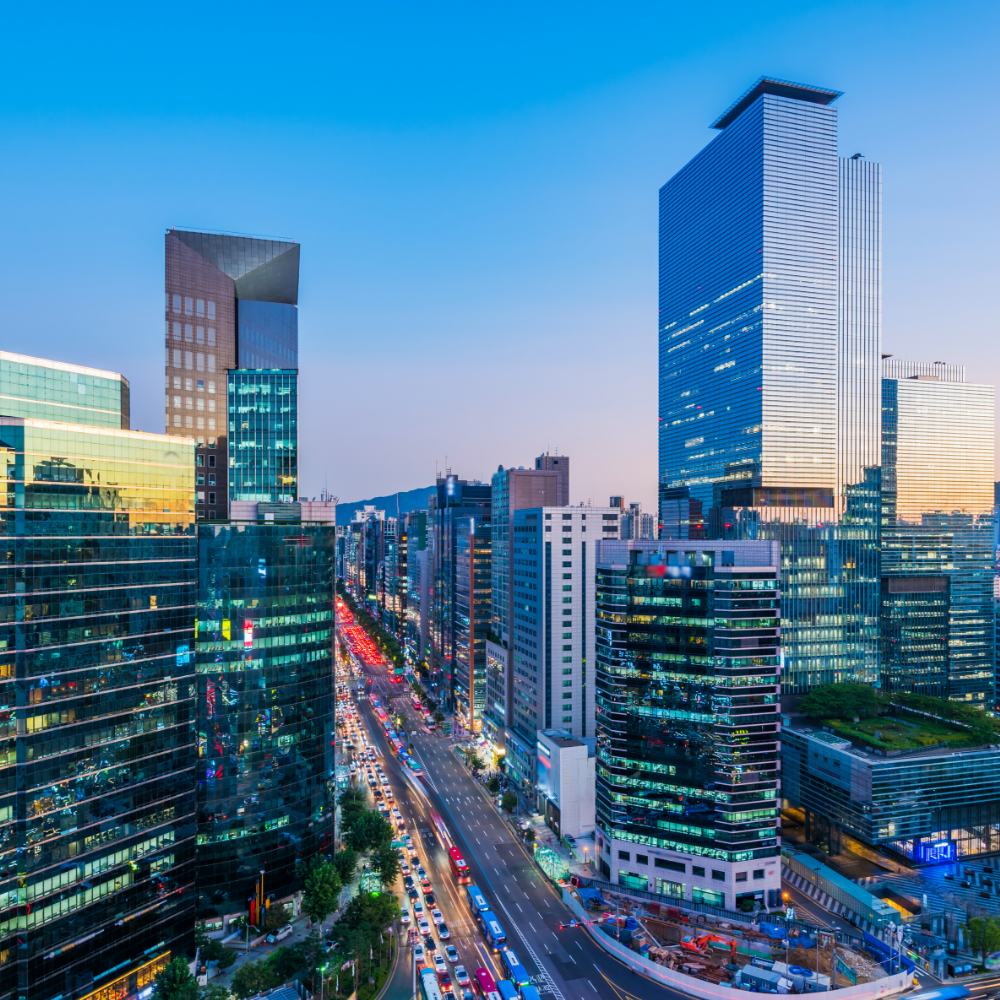
- Noksapyeong overpass and Itaewon — the night skyline shot from Itaewon Class. Free, atmospheric after dark, and surrounded by places to eat, which is what makes it a good stop rather than a detour.
- Dongdaemun Design Plaza — used constantly for contemporary series. Open, free to walk, and worth it in the evening when the exterior is lit.
- Yongma Land — a small amusement park in Jungnang District that closed in 2011 and was never demolished. It has become a paid photography location, with a modest admission charged at the gate, and its faded carousel has appeared in a long list of dramas and music videos. Cash, sensible shoes, and no expectation of facilities.
On the east coast. The Jumunjin breakwater near Gangneung carries a replica of the bus stop from Goblin, and there is usually a queue of people taking the same photograph with a bouquet. It is genuinely lovely, the sea is right there, and Gangneung has coffee-roasting culture and Gyeongpo beach to fill the rest of the day — which is the only reason to make it a trip rather than a stop.
Further afield. The zelkova tree at Bukbu-ri in Changwon, made famous by Extraordinary Attorney Woo, is a designated protected natural monument several centuries old; visitors are kept at a respectful distance to protect the root zone, which is the point rather than an inconvenience. Sunshine Studios in Nonsan is a permanent open set built for Mr. Sunshine and charges admission — a rare case where the set itself is the destination. Cheongha in Pohang stood in for the seaside village of Hometown Cha-Cha-Cha and remains a working harbour town.

Getting There, Booking and Cost
Reserve the things that require reserving. The Changdeokgung Secret Garden tour is the main one — limited capacity, timed slots, sells out in peak season. Palace admission itself is inexpensive, and the combined palace pass is worth it if you intend to see more than two.
Use Korean map apps. Google Maps has limited walking and transit routing in Korea for regulatory reasons. Naver Map or KakaoMap in English will actually get you there, and searching a location's Korean name rather than its English one returns far better results.
The east coast is a train journey, not a day's improvisation. The KTX to Gangneung runs from Seoul Station and Cheongnyangni and takes under two hours, then a local bus or taxi to Jumunjin. Book the train in advance on weekends and in summer. Treat it as an overnight if you want the coast to be worth it.
Southern locations need planning. Changwon and Nonsan are reachable by KTX plus a local connection, and are day trips only if you leave early. Pairing them with a broader Busan or Daejeon itinerary makes more sense than a there-and-back from Seoul.
Costs are mostly small. Outdoor locations — breakwaters, bridges, streets, plazas — are free. Palaces charge a modest entry fee. Yongma Land and Sunshine Studios charge admission at the gate. The expense is transport, not access.
Guided drama tours exist and are worth considering if you want several sites in one day without solving the transport puzzle. They trade flexibility for efficiency, which suits a short trip and frustrates a long one.

Etiquette, and What Not to Expect
Two of the most photographed locations in Seoul are places where people live. Bukchon is a residential hanok neighbourhood, and the Ihwa mural village on Naksan is a hillside community of ordinary homes. Both have experienced the strain of very large visitor numbers, and residents have at times removed murals or requested restrictions in response. None of this means you are unwelcome — it means the ordinary rules of someone else's street apply. Keep your voice down, particularly in the morning and evening. Do not photograph into windows, gates or courtyards. Stay off private steps. Take your rubbish with you.
At working locations — harbours, markets, temples — the same principle holds. People are doing their jobs, and a fishing boat is not scenery to its crew.
If you encounter an active shoot, look for the barriers and the crew managing them. Productions film on public streets frequently, and access is closed while cameras roll. Wait, stay behind the line, and do not photograph performers at work.
Manage the expectations. Popular spots have queues, and the famous bus stop shot involves waiting your turn among people doing exactly the same thing. Weather does not cooperate with the version you remember, which was shot at the right hour with lighting. Interiors are frequently unvisitable. And a scene that was two minutes long is, in person, two minutes long — which is why the locations recommended here are the ones with a town, a coastline or a palace attached.
Bring a screenshot of the frame you want. It genuinely helps with composition, and it also helps when asking someone for directions.

Dr. Beau's Note
Pick one location and build the day around the place rather than the scene. The travellers who come back disappointed are the ones who tried to collect six sites across a city, spent the day on trains, and got six photographs of themselves looking tired. The ones who enjoyed it went to Gangneung, took the bus stop picture in ten minutes, and then spent the afternoon on the beach with a coffee because they were already there. The drama is what gave you the idea. It does not have to be the itinerary.