
Korean Body Care Rituals: Beyond Face-Centric Beauty
Korean body care starts from a premise the bathhouse taught: the body's skin is skin, entitled to the same logic as the face — gentle cleansing, occasional deliberate exfoliation, and moisture layered on damp skin rather than dabbed on dry. The tradition behind it is the seshin scrub culture of the jjimjilbang; the modern expression is body essences, oils and quietly scented lotions from Korea's niche brands. The routine takes three minutes after a shower, and the towel-dry-then-lotion habit is the single change that does most of the work.

Why Korean Beauty Is Expanding to Body Care
Korea did not discover body care recently — it institutionalised it generations ago. The bathhouse is the origin point: communal bathing, long soaks, and the seshin full-body scrub made skin below the neck a matter of routine maintenance long before any brand sold a body serum. What has changed is that this tradition met modern K-beauty formulation culture, and the two produced a new category.
Three currents pushed it. The wellness turn in Korean consumer culture reframed the shower from hygiene to decompression — the evening body routine now occupies the mental slot the face routine claimed a decade earlier. The niche fragrance boom gave body products an identity beyond function; scent became the way a generation signs its presence, quietly, at close range. And formulation spillover meant the textures and actives refined for faces — essences, ampoule-style hydration, fermented ingredients — migrated downward, replacing the thick, sticky body creams people avoided using with layers light enough to dress over.
The result reads less like an extension of skincare and more like the face routine's philosophy applied at full scale: prevention over correction, hydration as the base condition, and a daily ritual small enough to survive real life.

Key Steps in a Korean Body Care Routine
The everyday version has four moves, and the order borrows directly from facial layering:
Cleanse without stripping. A moisturising, low-irritation body wash in warm — not hot — water. The Korean italy towel scrub mitt exists for deliberate exfoliation sessions, not for daily washing; daily friction is how winter itch starts.
Exfoliate deliberately, once or twice a week. Options run from the traditional scrub towel (used on well-soaked skin, with real restraint) to salt and sugar polishes to the newer body-acid formats — mists and lotions with mild BHA or AHA for rough arms and breakout-prone backs. Pick one lane; stacking a scrub mitt on top of acid products is the body version of the over-exfoliation everyone already commits on their face.
Layer moisture on damp skin. The defining Korean habit: within a couple of minutes of the shower, while skin is still slightly damp, a body essence or light lotion first — and on dry-skin days or in winter, an oil or richer cream pressed over it to seal. Thin to thick, exactly as the face learned.
Adjust by season. Korea's climate forces the habit: cooling gels and after-sun textures in the humid summer, balms and oils when the dry heated winter arrives, and sunscreen on exposed body skin in the sunny months — the forearms and neckline age on the same schedule as an unprotected face.

Ingredients and Brands Leading the Trend
The ingredient list is recognisably Korean. Mugwort (ssuk), the bathhouse herb, appears in calming washes and soaks. Rice bran and fermented rice water carry the traditional brightening association into lotions. Centella does for stressed body skin what it does for faces. Hinoki and pine bring the scent register of Korean bath culture — woody, clean, closer to a forest than a perfume counter. And the humectant-ceramide-panthenol backbone of facial hydration runs underneath nearly all of it.
The brandscape splits into two temperaments. The scent-led niche houses — Tamburins and Nonfiction the best known — sell body care as an aesthetic object: lotions and hand creams whose fragrances are deliberately understated, designed to be noticed only at conversational distance, with packaging that earns its place on a shelf. The function-led lines from the big K-beauty houses, Innisfree and its peers, translate facial actives into affordable body formats — the body version of a green tea toner or a ceramide cream, at pharmacy prices. Neither is more correct; one buys a mood, the other buys a routine, and the Korean shelf increasingly holds one of each.
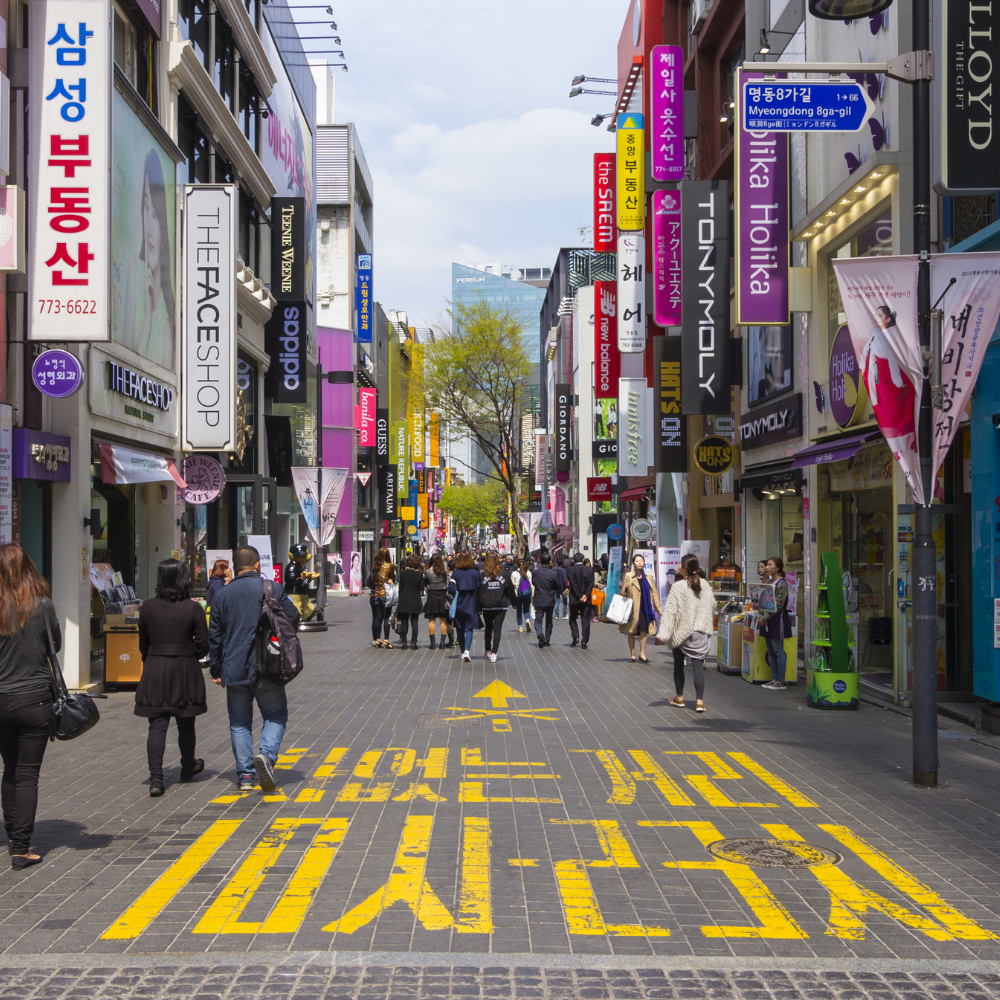
For travellers, the body aisle at an Olive Young is quietly one of the better souvenir hunts in the store — lighter to carry home than it looks, and full of formats that barely exist elsewhere.

How to Build Your Own Body Ritual
Diagnose like you would a face. Tight, flaky shins mean dry; breakouts on back and chest mean a mild BHA wash and prompt post-gym showers rather than richer creams; itching after hot showers means the water temperature is the product to change first.
Start with two products, not six. A gentle wash and one well-chosen moisturiser, applied damp, daily. Add the weekly exfoliation only after the daily habit exists, and add the sealing oil only when winter demands it. Body routines fail from ambition, not from simplicity.
Anchor it to the shower. The habit survives because it costs no separate time slot — the lotion lives next to the towel, and the two-minute application happens before the mirror fogs clear. Koreans treat this pause the way the evening face routine is treated: a small, fixed act of order at the end of the day.
Respect the special cases. Necks and chests are face-adjacent and repay facial-grade care and SPF; hands age fastest and are the reason Korean hand creams are a category of their own; feet get the occlusive-plus-socks overnight treatment in dry season. And skin conditions — persistent eczema, keratosis pilaris that resists moisturising, anything spreading or itching for weeks — are medical questions, not product hunts.

Dr. Beau's Note
Move the body lotion into the bathroom if it currently lives in the bedroom. That is the entire intervention. Applied within two minutes of the shower, on damp skin, the same product delivers visibly more than it does applied ten minutes later on dry skin — and a lotion you must walk to is a lotion used twice a week, while one at arm's reach from the towel gets used daily. Most people's body skin does not need better products. It needs the products relocated one metre.