
Can You See a Skin Doctor in Seoul Without Speaking Korean?
Yes. Many Seoul dermatology clinics that see international patients have coordinators who speak English, Japanese or Chinese, and some doctors consult in English themselves. Support varies from clinic to clinic, so ask before you book which language your consultation will be in and who will interpret on the day. If a clinic has no interpreter, the government's Medical Korea Information Center (1577-7129) gives advice around the clock in six languages, including English, Japanese and Chinese, and the 1330 Korea Travel Helpline interprets by phone. A registered foreign patient agency can also arrange a clinic and language support for you. An interpreter carries your words; the diagnosis still comes from the doctor.

Do Seoul Skin Clinics Have Staff Who Speak Your Language?
Often, yes, but not everywhere and not always in the same way. Dermatology is the specialty international patients use most in Korea, and clinics that see many visitors have built language support around it. In practice it comes in three forms:
- A doctor who consults in your language. Some doctors in Seoul trained or worked abroad and consult in English directly. Japanese- or Chinese-speaking doctors are less common.
- An in-house coordinator. This is the most common arrangement at clinics used to international patients. A staff member who speaks English, Japanese or Chinese handles your booking, sits in on the consultation and interprets between you and the doctor.
- Interpretation from outside the clinic. A registered foreign patient agency that arranged your visit may provide an interpreter, and for basic questions a phone interpretation line can help.
A medical interpreter is someone who carries a conversation between a patient and medical staff accurately in both directions. In Korea the role has its own training path: the government runs a medical interpretation proficiency test, administered by the Korea Health and Welfare Human Resources Development Institute, and there is a national qualification for international medical tourism coordinators. Not every clinic coordinator holds either, so it is fair to ask about experience.
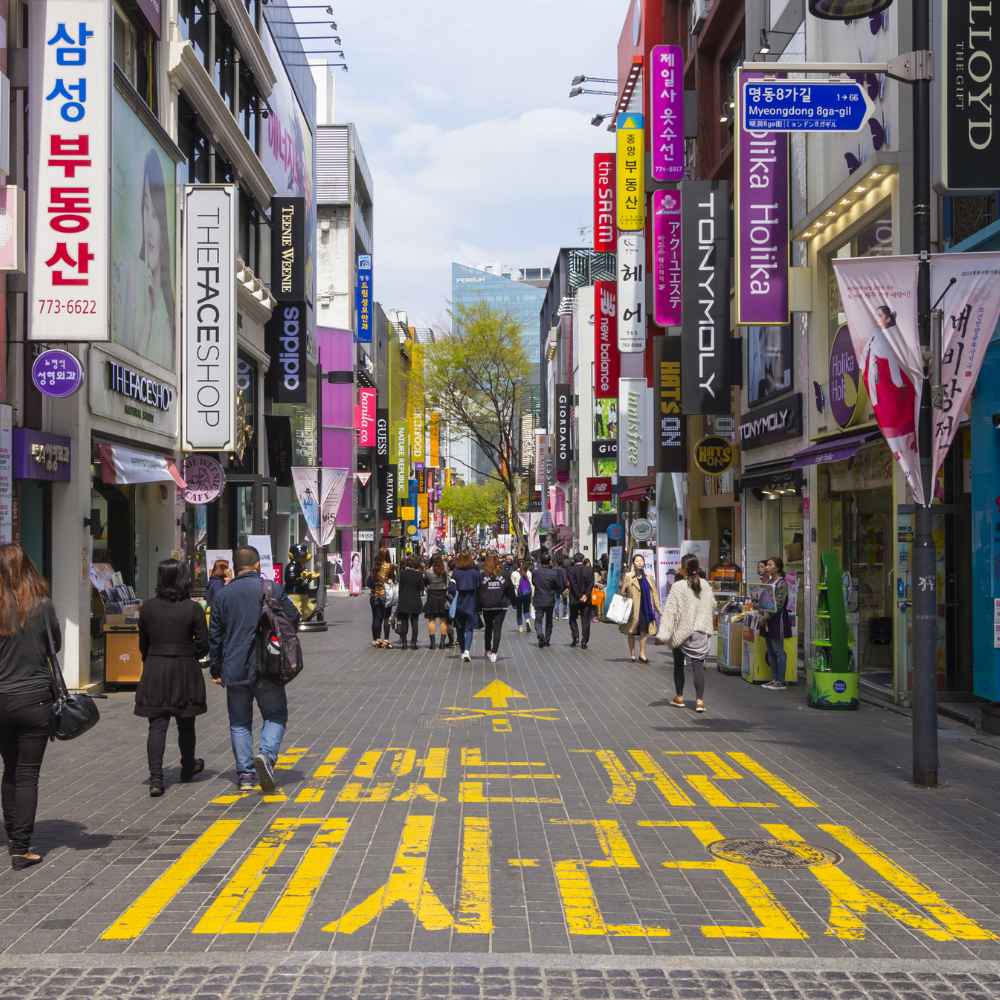
Location shapes the odds. Clinics in areas popular with visitors, such as Gangnam, Sinsa, Apgujeong and Myeongdong, are more likely to have English, Japanese and Chinese speakers on staff. Neighborhood clinics further from those areas may have none, even if their website has an English page.

How Do You Check Language Support Before You Book?
A clinic that replies to your messages in fluent English or Japanese may still hold the consultation in Korean. The person answering a messaging app is not always the person in the room. These questions in your first message get a clearer answer:
- Which language will my consultation be in on the day?
- Will the doctor speak to me directly, or will a coordinator interpret? Will that person stay with me from registration to aftercare?
- Is the language support available on the date and time I want? Coordinators work shifts, and a Saturday slot may not have the same staff as a weekday.
- Can I see the consent form and the aftercare instructions in my language before the visit?
- If something comes up after treatment, how do I reach someone who speaks my language?
You can also check a clinic's status on the official Medical Korea website, run by the Korea Health Industry Development Institute (KHIDI). It lists registered hospitals and clinics and registered facilitators, and the hospital listings show which languages each provider says it can interpret. Treat that list as a starting point and confirm the details with the clinic, since staffing changes.
Our guide to what happens at a first dermatology consultation in Seoul walks through the visit itself, from registration to the treatment plan. This guide stays with the language side of it.

What Does a Medical Interpreter or Coordinator Do?
At a Seoul skin clinic, the coordinator is often your guide for the whole visit, not just the consultation. A typical day with one looks like this:
- Before the visit: answering messages, confirming the date, and asking for your concern, photos and any medical history in advance.
- At registration: helping with the health questionnaire, which is often in Korean, and checking your passport details.
- In the consultation: interpreting what you tell the doctor and what the doctor says back, including questions, risks and alternatives.
- Around treatment: explaining what will happen next, the consent form and the aftercare instructions.
- Afterwards: passing on questions about redness, swelling or follow-up visits, often by messaging app.
One thing to keep in mind: an in-house coordinator works for the clinic. Many also explain treatment options and packages, which is part of the job but not the same as interpreting. If you feel a conversation drifting from your concern to a menu, it is fine to ask, "What did the doctor recommend, and why?" and to leave with a written plan to think over.
A good interpreter repeats your words rather than summarizing them, checks back when something is unclear, and tells you when the doctor is speaking versus when they are adding their own explanation. Speak in short sentences, pause often, and ask them to interpret everything, including the parts that sound routine.

Official Help and Registered Foreign Patient Agencies
Two public lines are worth saving in your phone before you fly:
| Service | Number | What it does |
|---|---|---|
| Medical Korea Information Center | 1577-7129 (from abroad +82-1577-7129) | Run by KHIDI. Advice on Korean medical providers and treatment, help for foreign patients after a medical accident, and complaints, 24 hours a day in Korean, English, Japanese, Chinese, Russian and Arabic |
| 1330 Korea Travel Helpline | 1330 (from abroad +82-2-1330) | Run by the Korea Tourism Organization. Travel information and interpretation by phone and chat, available 24 hours in English, Japanese and Chinese, with other languages for shorter hours |
Neither line books clinics or recommends one. They inform, interpret and take complaints.
What is a registered foreign patient agency? In Korea, bringing foreign patients to a clinic as a business is regulated by the Act on Support for Overseas Expansion of Medical Services and Attraction of International Patients, which the Ministry of Health and Welfare oversees. Under the Act, both clinics and agencies that want to attract foreign patients must register with their city or provincial government.
- A clinic must have at least one specialist for each department it registers and carry medical malpractice insurance.
- An agency must hold a surety insurance policy, meet a minimum capital requirement and have an office in Korea.
- Registration lasts three years and has to be renewed, and registered clinics and agencies must report the previous year's results to their city or provincial government by the end of February each year.
- Attracting foreign patients for a business without registration is against the law.
Registration means a provider has met these legal requirements and answers to a regulator. It is not a ranking or a quality award, and it does not mean the government recommends that clinic or agency. Under Article 8 of the Act, registered clinics must also post patients' rights in a foreign language and separately inform foreign patients of the diagnosis, the treatment method and possible side effects, a medical contract on the Ministry's form with the estimated medical costs, and the dispute resolution procedure if a medical accident occurs.
Our guide to booking a skin treatment in Seoul compares booking directly, through a platform and through an agency. BeautiPin is a registered foreign patient agency, and arranging clinics and language support is its own service: you can browse the clinics we work with or message us on Instagram in English, including about a clinic you already have in mind.

What to Prepare, and Consent Forms in Your Language
The less your interpreter has to piece together on the spot, the more accurate your consultation will be. Write these down in your own language, and ideally in English as well, and send them ahead or bring them on your phone:
- Medications and supplements, with doses. Mention acne medication such as isotretinoin, blood thinners, hormones and anything you take for your skin.
- Allergies, including to anesthetic creams, latex, antibiotics or skincare ingredients.
- Relevant history, such as cold sores, keloid scars, recent treatments, filler or threads, pregnancy or breastfeeding.
- Clear photos of your concern in daylight, plus photos of the skincare you use at home.
- Your goal in a sentence or two, described as the change you want rather than the name of a treatment.
- Your travel dates, especially your flight home, so recovery can be planned.
For many procedures, clinics ask you to sign a written consent form. Ask for it in your language, or at least ask the interpreter to go through it line by line before you sign. Check that it names the procedure, the area treated, the expected recovery, the main risks and what to do if something goes wrong. Take photos of the signed form and the aftercare sheet. If any part stays unclear, you can ask for more time; you don't have to sign that day.
For the wider system, including pharmacies, emergencies and insurance, see our guide to how foreigners get medical care in Korea.

What an Interpreter Can't Do
An interpreter can't diagnose you. They carry the doctor's words, not their own medical judgment. If an answer sounds like the interpreter's opinion, ask what the doctor said. The diagnosis and the decision to treat belong to a doctor who has examined your skin.
An interpreter can't fill gaps you leave. If you don't mention a medication or an allergy, nobody can translate it. That is why the written list matters more than fluent conversation.
A translation app isn't enough for consent. Apps help with directions, menus and small questions. With medical terms, negatives, doses and side effects, a small error can change the meaning, and you may not notice. Use an app as a backup, not as the interpreter for your consultation or your consent form.
Language support doesn't change the medicine. Even with a perfect interpreter, some concerns need a diagnosis first, some treatments need several sessions, and some conditions, such as melasma, can return and need ongoing care at home. A doctor may also advise against treatment during pregnancy, with active infection or with certain medications.
It doesn't end at the airport. Before you leave, ask how follow-up questions will be handled in your language once you are home, and keep your treatment record.

Dr. Beau's Note
The question I'd ask isn't "Do you speak English?" but "Who will be in the room with me?" A clinic can answer the first by message in seconds. The second tells you whether the consultation itself will happen in a language you understand, and that is where the important decisions are made.
If you remember one thing, make it the list: medications, allergies, history, goal. A good interpreter can only work with what you give them. This is general information, not medical advice; decide on treatment with a doctor who has examined your skin.