
Why You Never Pour Your Own Soju: Korean Drinking Etiquette for Guests
Korean drinking etiquette comes down to a few gestures of care: you pour for others rather than yourself, give and receive glasses with two hands when an elder is at the table, clink your glass slightly lower than theirs, and turn your head away as you sip. None of it is a test. Follow the spirit of it, eat as you drink, and feel free to say no.

Where the Rules Come From
Sit down at a Korean table with a green bottle of soju and you will notice something before the first sip: nobody reaches for their own glass. Someone fills yours, you fill theirs, and a small choreography of hands and glances begins. It can look like a secret code to a first-time visitor, but it is really a very old idea about hospitality, kept alive in a very modern setting.
Much of today's etiquette traces back to the Joseon Dynasty and its Confucian textbooks. Sohak, the "Lesser Learning" that shaped everyday conduct, described how to top up another person's cup: hold the bottle in the right hand and use the left hand to hold back the right sleeve so it would not trail across the table. The flowing sleeves are long gone, yet the gesture survives. When a Korean pours with the left hand lightly touching the right wrist or forearm, that is the same courtesy, several centuries on.
Joseon communities also held a formal drinking rite called hyangeumjurye, a village banquet where local scholars gathered to honor the most senior and learned among them. As Korea.net has described it, it was partly a lesson: younger people learned how to drink in the presence of elders and how to show them respect. That is why age still shapes the table today. Who pours first, who receives with two hands, and whose glass sits a little higher all depend on seniority, which is one reason Koreans often ask each other's age early on. If that custom puzzles you, our guide to how Korean age works explains why the number matters so much.
The good news for visitors is that the rules are not meant to trip anyone up. They exist to make sure everyone at the table is looked after, and a guest who makes a sincere attempt will be met with warmth, not judgment.

Pouring and Receiving: The Two-Hand Rule
The single most useful habit to bring to a Korean table is simple: pour for others, and let others pour for you. Filling your own glass is not forbidden, and among close friends nobody will gasp, but it quietly skips the point of drinking together. The polite move is to keep an eye on the glasses around you. When a neighbor's glass is empty, offer to fill it. When yours is empty, someone will usually notice.
Timing matters too. The custom is to refill a glass once it has been emptied rather than topping it up halfway. If you prefer to slow down, simply leave a little in your glass; a partly full glass signals that you are fine for now.
With someone older or more senior at the table, the gestures become a little more formal:
- Pouring: hold the bottle in your right hand and rest your left hand lightly on your right wrist or forearm, or support the bottle with both hands.
- Receiving: lift your glass toward the bottle with two hands, or hold it in your right hand with your left hand supporting underneath, and bow your head slightly.
- Returning the favor: after an elder pours for you, it is natural to offer to pour for them in turn.
Among friends of the same age, most of this relaxes into one-handed pouring and easy laughter. The underlying habit, watching out for one another's glasses, stays the same. It is the drinking version of the generosity you see at a Korean meal, where dishes arrive at once for the whole table to share rather than one plate per person.

Geonbae and the Head Turn
The first round is usually poured for everyone before anyone drinks, and then someone raises a glass for a toast. The words you will hear most are geonbae (roughly "cheers," literally "dry cup") and the playful jjan, the sound of glasses meeting. At company dinners and family gatherings, the most senior person often says a few words first, and the table answers together.
When you clink glasses with someone older, hold yours slightly lower so that the rim of your glass touches below theirs. It is a small, gracious signal of respect, and people notice and appreciate it when a visitor does it.
Then comes the gesture that surprises visitors most. When drinking in front of an elder, a younger person turns their head to the side, often raising a hand to partly screen the glass, and sips facing slightly away. The idea is modesty: not drinking face-to-face with someone you respect. It takes a second, looks graceful, and is one of the easiest ways to show that you have taken the trouble to learn local manners.
You may also hear calls of "one shot," an invitation to finish the glass in one go, especially after the first toast. Treat it as a friendly cheer rather than a requirement. Taking a sip and setting the glass down is perfectly acceptable, and in today's Korea it is increasingly common for people to pace themselves or drink something else entirely.

Anju, Pace, and the Second Round
In Korea, drinks almost always come with food. The dishes eaten alongside alcohol are called anju, and many restaurants are built around the pairing: pork belly with soju, a crisp scallion pancake with a bowl of milky makgeolli on a rainy afternoon, or fried chicken with cold beer, a combination so popular it has its own nickname, chimaek. Eating steadily is part of the etiquette, not a break from it, and it keeps an evening relaxed and conversational.
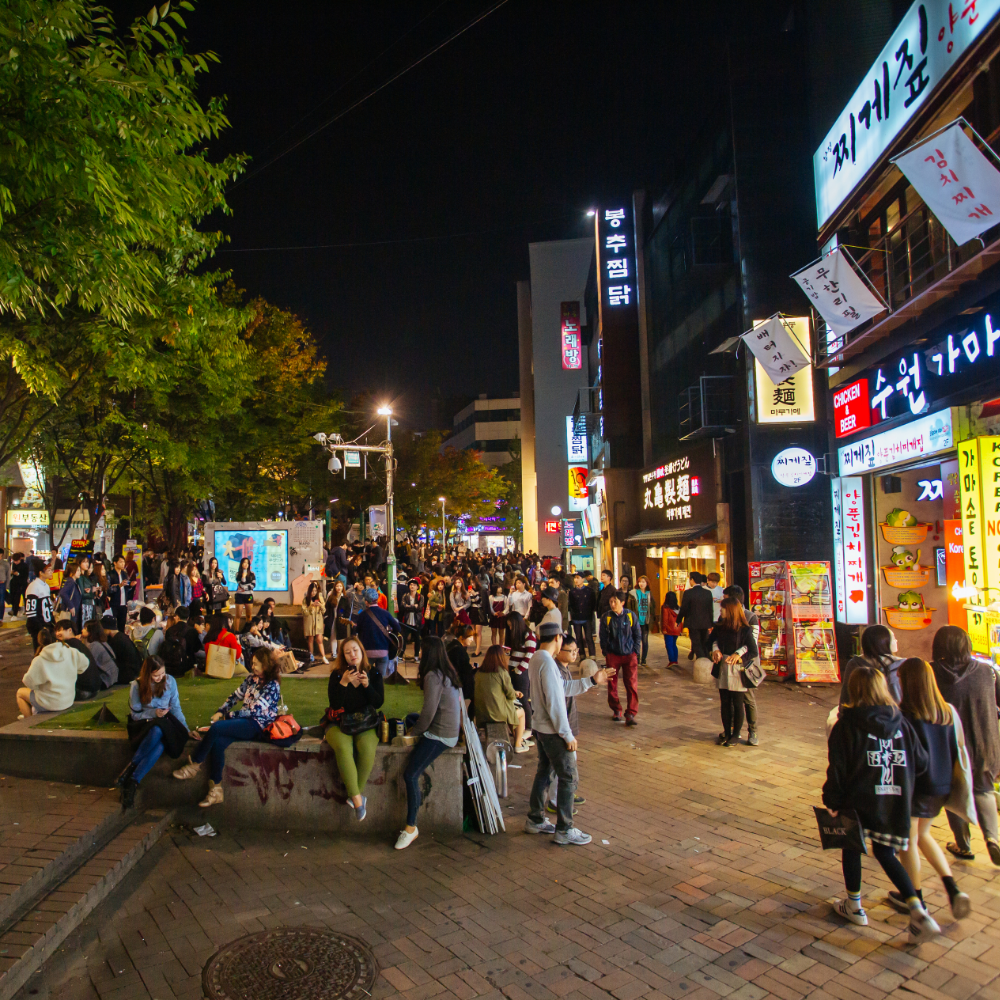
Evenings are often counted in rounds. The first round, or ilcha, is usually dinner. If the mood is good, the group may move on to a second round, icha, at a pub, a tent bar or a chicken shop, and sometimes to a third for singing; our first-timer's guide to noraebang covers what that last stop is like. Each move is optional. Saying you will head home after the first round is completely normal.
If you do not drink, you are still welcome at the table. Fill your glass with soda, tea or water and raise it with everyone else; the toast is about being together, not about what is in the glass. A friendly "I'm not drinking tonight" is enough, and many Korean hosts will happily order a non-alcoholic option. If you would like to stop partway through, leave your glass partly full, turn it gently aside, or simply say that you have had enough. The same courtesy that governs pouring also means nobody should press you.
Approached this way, a Korean drinking table is less about alcohol and more about attention: noticing an empty glass, lowering your rim for someone older, passing the last piece of pancake. Those small gestures are what visitors tend to remember long after the trip.

Dr. Beau's Note
What I like most about these customs is how they slow a table down. When you cannot refill your own glass, every drink becomes a small conversation, and a quiet evening of three glasses feels more generous than a fast one of ten. My personal habit is to keep a glass of water beside the soju and let someone pour that too, and to lean on the anju. Skin, sleep and the next morning's plans all tend to thank you.
If your face flushes easily after a small amount of alcohol, take that as a signal to go gently or switch to a soft drink; anyone with a medical condition or on medication should follow their own doctor's advice about alcohol.