
Korean Socks: Where to Buy Seoul's Favorite Little Souvenir
Korean socks are one of the easiest souvenirs to bring home from Seoul: light, inexpensive and made in endless designs, from cartoon faces and stripes to cozy winter knits. The best places to buy them are the sock stalls of Myeongdong and the city's markets, underground shopping centers such as Goto Mall at Express Bus Terminal, and Korean design sock brands sold in select shops. For something traditional, look for beoseon, the white cotton socks worn with hanbok.

Why Are Korean Socks Such a Popular Souvenir?
Ask friends who have been to Seoul what they brought back, and socks come up again and again. They are small enough to fill the corners of a suitcase, cheap enough to buy for everyone at the office, and Korean shops sell them in a range of designs that is hard to find anywhere else: cartoon animals, tiny embroidered fruit, pastel checks, slogans, stripes in every width, and thick winter knits.
Part of the appeal is how ordinary socks are in Korea. You take your shoes off at home, in many restaurants with floor seating, at temples and in guesthouses, so your socks are on show far more often than in many countries. Koreans treat them as a small, cheerful accessory rather than an afterthought, and sock stalls and shops are everywhere as a result.
What you will find, broadly:
- Cute and character socks: ankle socks with animal faces, food, cartoon characters and little embroidered details, usually sold in sets.
- Pattern and design socks: stripes, ribbed knits, color-blocking and seasonal prints from Korean sock brands.
- Everyday basics: plain cotton ankle and crew socks in multi-packs, often the best value.
- Winter socks: fleece-lined, fuzzy and wool-blend socks that appear in shops from late autumn.
- Traditional beoseon: the white cotton socks worn with hanbok.

Where to Buy Socks in Seoul: Street Stalls, Markets and Underground Malls
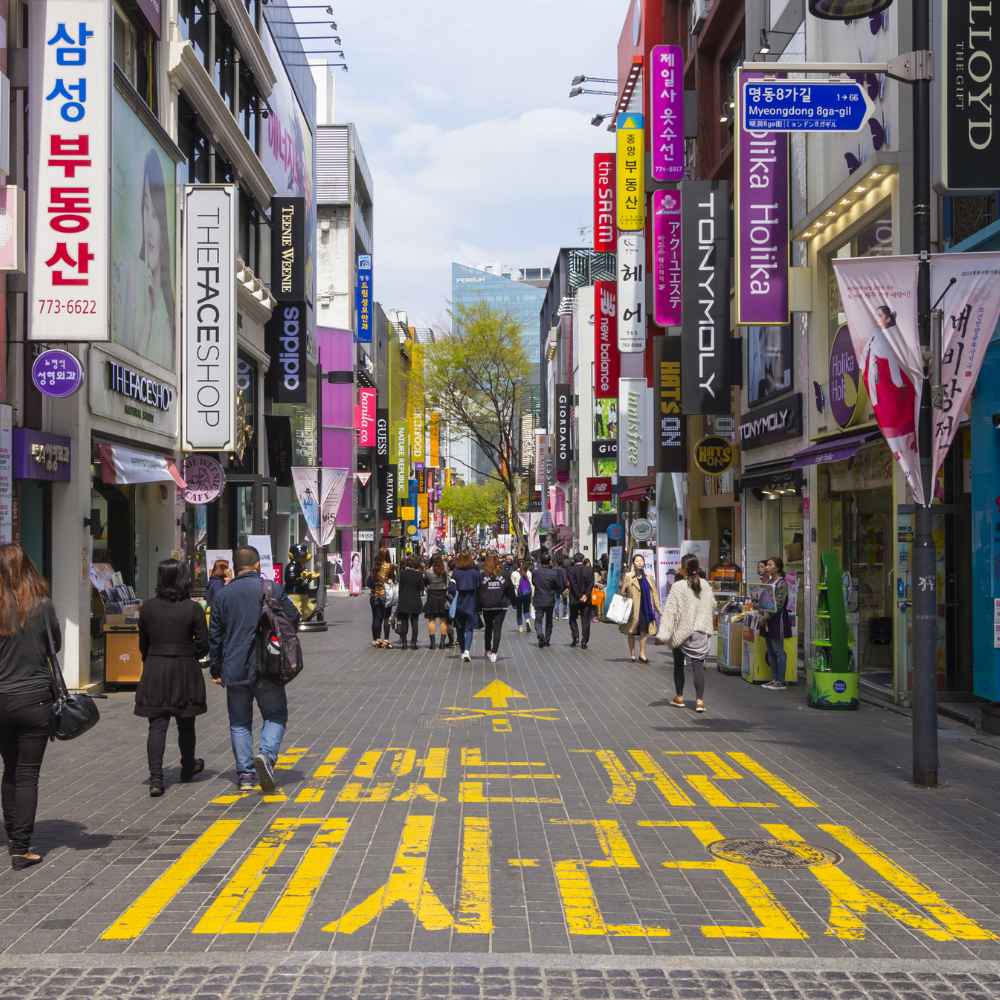
The classic place to start is Myeongdong. Sock stalls stand along the main shopping streets, and shops there sell racks of character and pattern socks in bundles. In 2023 the city and the local merchants' association introduced price labeling across Myeongdong, so prices are generally marked on the goods and you can compare stalls before you buy.
Seoul's traditional markets are the next stop. Namdaemun Market, a short walk from Myeongdong, has whole aisles of socks, gloves, scarves and other small accessories, with many shops selling in bundles. If you are already heading there for winter accessories, our guide to Namdaemun Market's scarf stalls covers how the market is laid out.
Underground shopping centers are where many Seoul locals buy everyday socks. Goto Mall, under Express Bus Terminal Station in Gangnam, is a long underground arcade of small shops selling clothes, accessories, home goods and plenty of socks, and it is easy to reach by subway. Smaller underground arcades run beneath stations such as Myeongdong and Hoehyeon as well.
A few tips before you start filling a bag:
- Buy in bundles. Many stalls price socks better when you buy several pairs, which makes it easy to bring a set home for friends.
- Check the size. Korean socks are usually labeled in millimeters of foot length, often around 220 to 250 for women and 250 to 280 for men, and many are free size.
- Bring cash and a card. Most shops take cards, but cash is handy at the smallest stalls.
- Logo socks are not official. Socks printed with famous fashion brand logos at street stalls are not products of those brands. If you want a real brand, buy it from that brand's own store.

Korean Sock Brands and Select Shops
If you want socks that feel more like a design object than a bargain, look for Korean sock brands. These labels design their own patterns each season, from fine stripes and ribbed knits to collaborations with illustrators, and they are stocked in select shops and department stores around Seoul.
I Hate Monday is one of the best known. The Seoul brand began with the simple idea of making Monday mornings a little brighter with good socks, and today it also makes scarves, gloves and hats. According to the brand, it runs a showroom on Sowol-ro near Namsan, and its socks are also carried by select shops such as Boon the Shop and the Sangsangmadang store in Hongdae.
Other good places to browse:
- Department stores and fashion malls: sock and accessory floors carry a mix of Korean brands, and many offer tax-free shopping for visitors.
- Character and design shops: stores built around Korean characters often sell socks alongside stationery and plush toys. Our guide to Seoul's character shops lists the big ones.
- Budget stores: Daiso and supermarket clothing aisles stock cheap everyday socks in multi-packs, useful if you just need warm pairs for the trip.
Tax refunds for visitors work at shops that display a Tax Free sign. You can claim a refund when you spend at least 15,000 won in one store, which is easy to reach with a few pairs of brand socks. Street stalls do not offer tax refunds.

Beoseon: Traditional Korean Socks
Korean socks have a much longer history than the cartoon ankle sock. Beoseon are the traditional socks worn with hanbok: white cotton, with a seam running along the top of the foot and a toe that curves gently upward, a shape that echoes the curved tips of traditional Korean shoes and roof eaves. They were made to fit snugly, and a neat, slim foot in white beoseon was once considered part of dressing well.
Children's versions, called tarae-beoseon, are padded and decorated with colorful embroidery and little tassels, and they are still given as gifts for a baby's first birthday. Today beoseon are worn mostly with hanbok on holidays, at weddings and for traditional performances.
Where to find them: hanbok shops sell beoseon to go with their outfits, and craft and souvenir shops in neighborhoods with traditional crafts sometimes carry embroidered versions made as gifts. Modern Korean sock brands also borrow the beoseon shape and embroidery for everyday socks, an easy way to bring home something with a little Korean history in it.
If you are putting together a bag of small gifts, socks pair well with food souvenirs. Our list of Korean snacks to bring home covers what travels well.

Haru's Note
Socks are the souvenir nobody plans to buy. You go to Myeongdong for skincare, and you come back with five pairs of ankle socks with dumplings on them because the stall was right there and it was cold.
My advice is to buy one pair for yourself and wear it on the trip. A souvenir you wear while traveling stops being a souvenir and becomes part of the story, and every time it comes out of the drawer at home you will remember the street where you found it.