
Namdaemun Market's Viral Scarf Stall: How to Find It and What Else to Buy
The scarf stall everyone is filming is Hanyangsa, a small shop in the central lanes of Namdaemun Market, a few minutes from Hoehyeon Station Exit 5. Six scarves cost about 10,000 won, the seller jokes that you shouldn't buy any, and stock can be gone by early afternoon. Go on a weekday morning, then spend the rest of the visit on noodles, hotteok and the market's accessory lanes.

Why a Scarf Stall Has Seoul Queuing
Namdaemun Market has sold scarves for decades, and six for 10,000 won is an ordinary price here. What turned one stall into a destination in autumn 2026 is the man behind the table. The seller at Hanyangsa works the crowd like a stand-up comic who happens to be surrounded by fabric. "Don't spend your money," he tells shoppers. "Just look around and go." Pick one up and he may tell you it doesn't suit you.
Short clips of that reverse sales pitch spread across YouTube and Instagram, and the stall's regulars, mostly women in their fifties and sixties who had enjoyed his banter for years, were suddenly joined by visitors from other cities and from abroad. By November the story had been picked up by newspapers and broadcasters outside Korea, and the line began forming before the shutters went up.
The appeal is easy to understand once you are standing there. You get a bundle of scarves for the price of a coffee and a few minutes of live comedy with it. Fans call it a two-for-one deal. You don't need Korean to enjoy the rhythm of it, though a Korean-speaking friend will make the jokes land.

How to Find the Stall and When to Go
Take Seoul Subway Line 4 to Hoehyeon Station and leave by Exit 5, which opens straight into the market. Hanyangsa sits in the central lanes a few minutes' walk in. The simplest way to reach it is to search the shop name in Korean, 한양사, in Naver Map or KakaoMap and follow the pin. On a busy day you will see the line before you see the sign.
Timing matters more than directions. The stall keeps no fixed public schedule. In late October the seller paused sales for a few days because the crowd had outgrown the lane, then reopened with extra staff to keep the line orderly. Since then stock has sometimes sold out by early afternoon. Closures and reopenings are posted on the stall's Instagram account, Namdaemun Dadaguri, so check it on the morning you plan to go.
A few habits make the visit smoother:
Arrive on a weekday morning, close to 10 a.m. Saturdays are the most crowded, and most of the market is closed on Sundays. Bring cash in 10,000-won notes, since small stalls prefer it. Decide quickly when your turn comes, take your bundle and step out of the lane so the line keeps moving. The seller himself asks people not to rush.
If the shutters are down, you have lost nothing. The same six-for-10,000-won bundles are sold at other accessory stalls nearby, and the market around them is the real reason to come.

What Else to Buy at Namdaemun Market
Records of licensed shops on this site go back to 1414, and the market today counts more than 10,000 stores, stalls and wholesalers. Much of what Seoul's smaller shops sell is bought here first, which is why prices stay low and why vendors happily sell in bundles.
Start with accessories. The lanes around the scarf stall are full of hair clips, socks, hats and bags, and buying several pieces usually earns a better price. The children's clothing buildings supply shops across the country and are worth a look if you are shopping for gifts. Opticians along the main lane can make up a pair of glasses in about an hour. You will also find red ginseng and other health foods, kitchenware, dried seaweed and snacks that pack flat in a suitcase.
A little gentle bargaining is normal when you buy more than one item. Larger shops take foreign cards and some display a Tax Free sign, while small stalls generally want cash. If you are comparing Seoul's markets before a trip, this guide to Korea's traditional markets explains how each one differs.
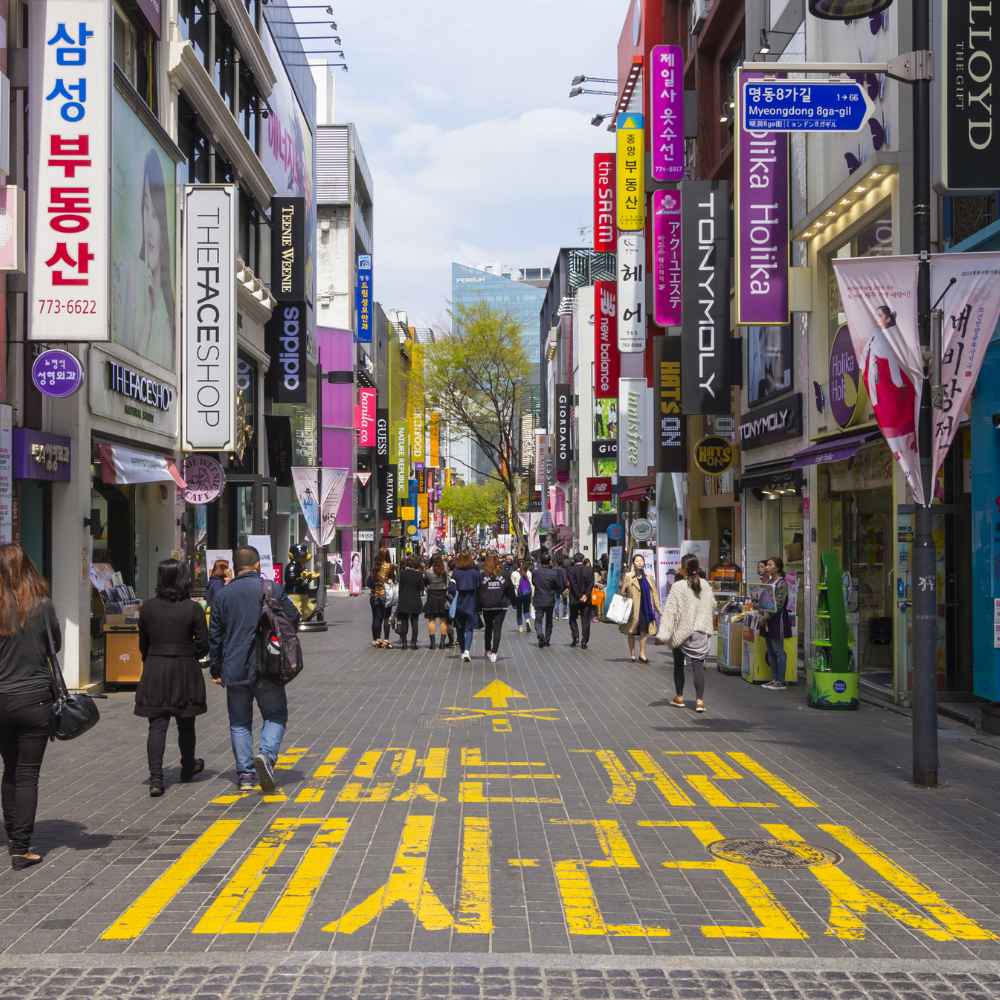
Namdaemun also fits neatly into a wider day. Myeongdong is a 10 to 15 minute walk away, and Seoul Station is one subway stop in the other direction, so the market slots easily into a three-day Seoul itinerary.

What to Eat Between Stalls
Shopping here is hungry work, and the market feeds you well for very little. Kalguksu Alley is a covered passage of counter seats where hand-cut wheat noodles arrive in a mild, steaming broth, usually for under 10,000 won a bowl. The cooks tend to add a small serving of something extra, and the stools turn over fast, so a short line moves quickly.
Around the corner, Galchi Jorim Alley specializes in hairtail braised with radish in a spicy red sauce. It is a shared dish, and most restaurants ask for an order of at least two portions, at roughly 12,000 to 15,000 won per person.
For something to eat while walking, look for the vegetable hotteok stall near Gate 2. Unlike the sweet version, this pancake is stuffed with glass noodles and vegetables and costs around 2,000 won. If it wins you over, there is a full guide to hotteok in Seoul for the rest of your trip.

Sol's Note
Treat the scarf stall as the opening act. Queue if the line is short, laugh at the jokes, and leave with your six scarves. If the line is long, walk on without regret. Namdaemun rewards people who wander: turn down any lane that smells good, and plan to eat twice.
One practical thought. A market this old runs on its regulars, so the best souvenir is good manners. Keep bags close in narrow lanes, ask before filming a vendor, and pay with small notes.