
Myeongdong Reimagined: Inside Korea's Most Iconic Street
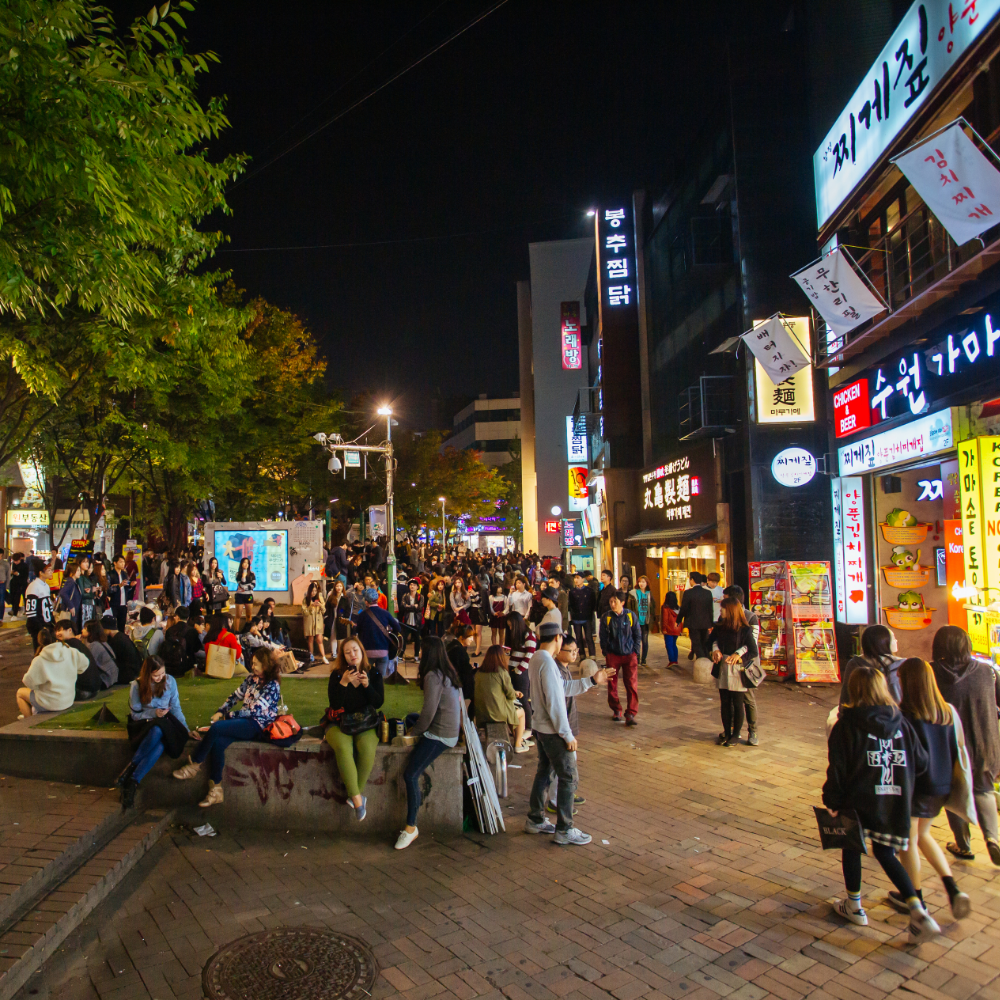
Myeongdong runs on a daily rhythm worth planning around: mornings belong to unhurried K-beauty shopping with testers and instant tax refunds, late afternoon brings the food carts that turn the main streets into a night market, and the evening crowd is the spectacle itself. The district emptied out during the pandemic years and has come back dense and busy. Come with your passport for refunds, cash for the carts, and one honest expectation — this is Korea's most touristed street, and it is best enjoyed as exactly that.

K-Beauty Shopping, Done Properly
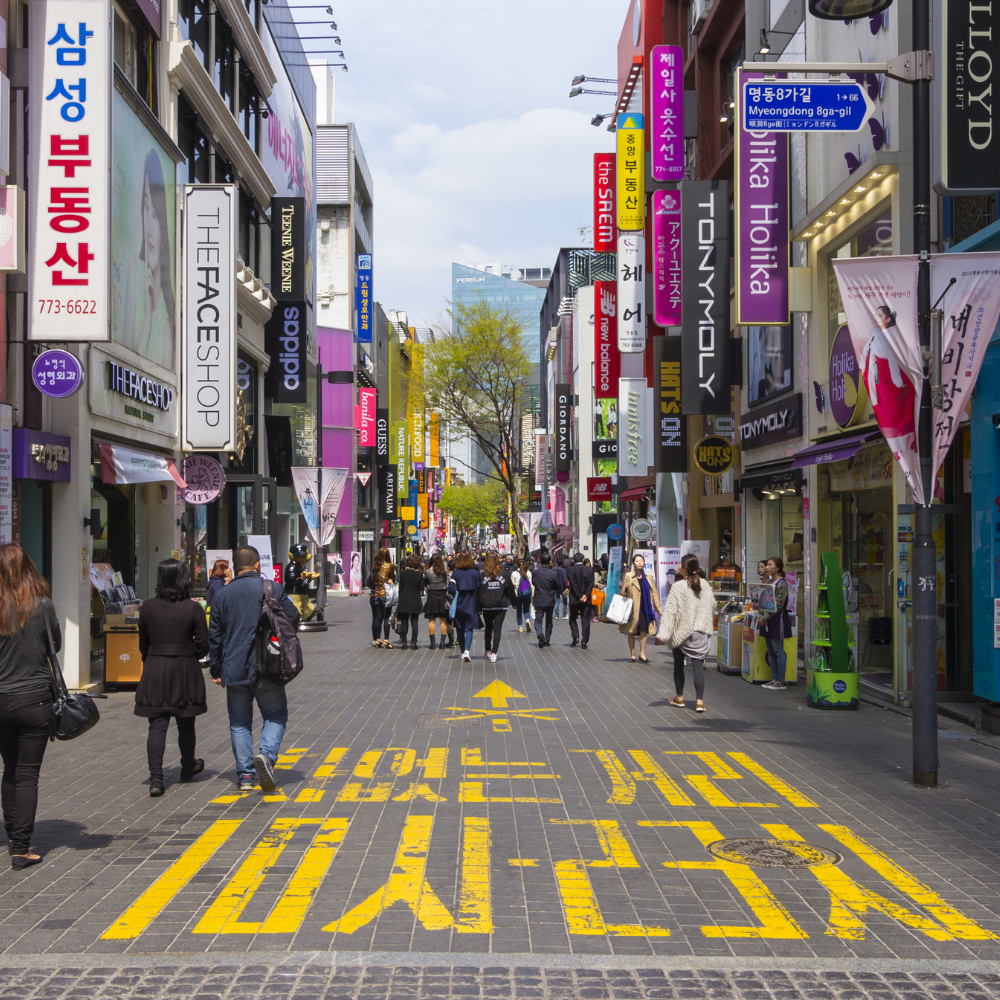
Myeongdong remains the densest beauty retail district in the country — multi-storey Olive Young branches including its flagship, single-brand road shops stacked side by side, and the cosmetics floors of the Lotte and Shinsegae department stores anchoring either end. The question is not where to shop but how, because the district rewards method.
Test before you commit. Every store runs testers, and staff expect you to use them; many branches in this district have multilingual staff precisely because the clientele is international. Test base products on your jawline in daylight near the door, not under interior lighting.
Understand the deal signage. The 1+1 and 2+1 stickers are genuine buy-one-get-one promotions and they rotate constantly, which is why locals check several branches of the same chain — promotions can differ between stores a street apart. Sheet masks, the classic bulk buy, are at their cheapest here in multipack promotions.
Use the instant tax refund. For retail purchases above the minimum spend in a single transaction, most large beauty stores deduct the tax on the spot when you show your passport — no airport queue involved for those items. Carry the physical passport; a photo does not qualify. For larger hauls and department store purchases, keep receipts and allow time at the airport refund desks instead.
Know what Myeongdong is not. It is the widest selection and the best promotion-hunting in the city, but not automatically the cheapest place for any single item — and if your list is long, comparing one or two prices against your home market before flying tells you how hard to shop here.

The Night Market: What to Eat
From late afternoon — carts typically set up from around four and run into the night — the central streets convert into Seoul's most famous open-air food market. It is tourist-priced by street food standards and unapologetically theatrical, and it is still worth an evening.
The reliable classics to look for:
- Gyeranppang — the warm egg bread, sweet and savoury at once, and the item most worth eating immediately off the griddle.
- Tteokbokki and eomuk — rice cakes in chilli sauce and fish cake skewers with cups of broth, the baseline of Korean street eating.
- Hotteok — brown-sugar filled pancakes, with savoury japchae-stuffed versions alongside.
- Grilled skewers — from tornado potatoes to lamb and chicken, plus the flame-torched cheese-topped lobster that became one of the street's signatures.
- Fruit and dessert carts — strawberry mochi, candied fruit skewers, and whatever shape the current dessert trend takes; this end of the market changes fastest.
Practical notes: bring some cash — card and mobile payment have spread through the carts but are not universal — eat standing near the stall rather than walking with food through the crush, and bin your skewers at the stall you bought them from. Queue length is honest advertising here: the carts locals and repeat visitors favour show it.

Beyond the Shopping Streets
Myeongdong's reputation as pure retail sells it short by exactly three stops.
Myeongdong Cathedral is the district's soul and one of the most important buildings in modern Korean history — the Gothic brick cathedral consecrated in 1898, mother church of Korean Catholicism, and a sanctuary for the democracy movement in the 1970s and 80s, when the state did not enter its grounds. The interior is open outside services, and the plaza and garden above the main streets are the district's best quiet retreat when the crowds win.
Nanta has run in its Myeongdong theatre for decades: the non-verbal kitchen-percussion performance that became Korea's longest-running show precisely because it needs no Korean to enjoy. It slots perfectly into the evening between shopping and the night market, and same-week tickets are usually available.
The edges reward a short walk. Namdaemun Market, ten minutes on foot, is the working wholesale counterpart to Myeongdong's polish — we cover it in our guide to Seoul's traditional markets. In the other direction, the cathedral side drifts toward Euljiro's old alleys, and the department store end connects underground toward Seoul Station's shopping concourses. Myeongdong also remains one of the most practical places to stay in Seoul — central, dense with hotels at every price, and connected by airport bus routes that stop on its edges.

Timing, Money and Survival Tips
- Time it deliberately. Before noon is the calm window for shopping with testers and conversation; late afternoon onward belongs to the carts and the crowd. If you want both moods, that is two visits or one long afternoon bridging them.
- Navigate by exits. Myeongdong Station (Line 4) exits 6 and 8 put you directly into the main shopping streets; Euljiro 1-ga (Line 2) serves the northern end. The district is compact — everything in this article is within a ten-minute walk of everything else.
- Change money here if you need to. Myeongdong's licensed money changers are a Seoul institution, and their rates are typically the best casual travellers will find in the city — better than airport counters. Compare the posted boards of two or three; they cluster together.
- Carry the passport. Instant tax refunds require it, and you will be asked more than once a day here.
- Offload the bags. Lockers around the subway stations and luggage services let you shop without hauling; if your hotel is in the district, drop purchases between rounds.
- Weekday evenings beat weekends if the full cart experience matters to you but shoulder-to-shoulder crowds do not. Rain thins the market but does not stop it.
- Watch your pace. The combination of crowds, neon and constant sampling is genuinely tiring. The cathedral garden is the built-in recovery room — use it.

Dr. Beau's Note
Shop Myeongdong like a return visitor: walk the whole street once buying nothing, then come back for the three things that survived the lap. The district's genius is sensory pressure — testers, samples, a clerk with a basket at every doorway — and first-lap purchases are how you end up flying home with four cushion compacts in the same shade. The one-lap rule costs twenty minutes and reliably halves the bag of regrets. What survives the lap is what you actually wanted.