Korean Toner Pads: The Skincare Shortcut Loved by Koreans
Toner pads are pre-soaked pads that turn a liquid skincare step into something you can do in five seconds or wear for five minutes — and the single most useful thing to know is that they are not one product category but four. Hydrating and soothing pads are daily-safe; exfoliating pads are a two-to-three-times-a-week treatment wearing the same convenient format. Match the pad to the job, swipe gently or press it on as a mini mask, and close the lid properly — the format's biggest enemy is its own evaporation.

What Toner Pads Actually Are
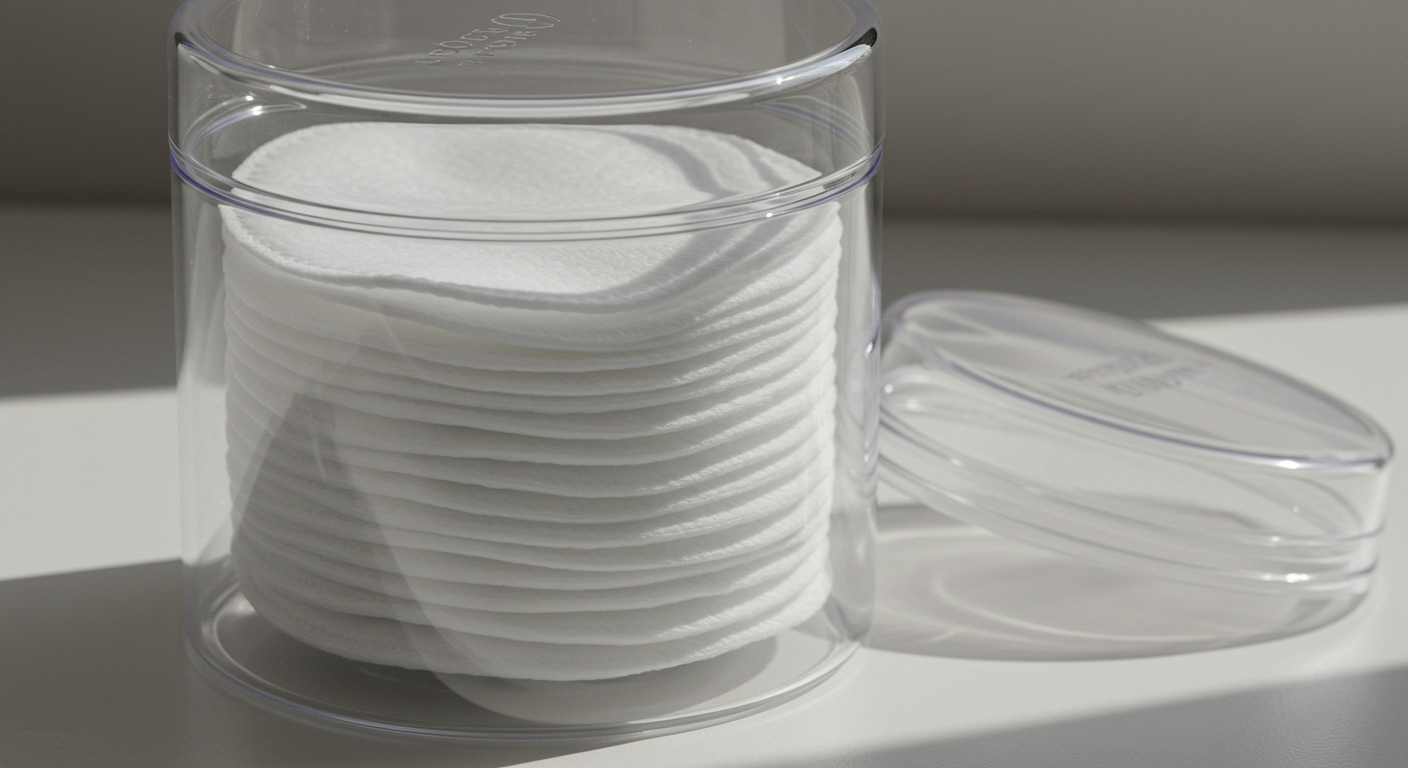
A toner pad is a soft pad — usually a quilted or embossed non-woven fabric — pre-soaked in a toner, essence or treatment liquid, packed by the dozens in a sealed tub with tweezers under the lid. The format solves three small problems at once: dosage (each pad carries a consistent amount of product), application (the pad spreads liquid evenly in a way fingers do not), and friction (a purpose-made pad is gentler than a dry cotton round dragged across the face).
The idea took over Korean routines because it collapses steps. One pad can be a toner swipe after cleansing, a light physical sweep that lifts residual dead skin, and — pressed onto the face and left for a few minutes — a targeted mini mask, which Koreans call using it as a pack. That last use is the format's quiet superpower and the reason a tub of pads can replace a shelf of single-use sheet masks for everyday purposes.
What a toner pad is not: a wipe. Makeup-removing wipes are a different, harsher category, and using toner pads to scrub off makeup both wastes the product and abrades the skin. Cleansing comes first; the pad comes after.

The Four Kinds, and Choosing Yours
Everything on the pad shelf sorts into four jobs, and mixing them up is how the format gets blamed for irritation it did not cause.
- Hydrating pads — soaked in humectant-rich toners built around glycerin, hyaluronic acid or birch and rice waters. Daily-safe, morning and night, for every skin type. This is the default choice and the one to start with.
- Soothing pads — the calming family: heartleaf (eoseongcho), centella and madecassoside, mugwort, green tea. Also daily-safe, and the standard pick for reactive, redness-prone or post-breakout skin. These are the pads that earn their keep as five-minute packs on irritated areas.
- Exfoliating pads — soaked in acids (PHA, LHA, BHA, sometimes AHA), often with a textured side for a light physical sweep. These are a treatment, not a toner: two to three evenings a week for most skin, once for sensitive skin, and never stacked on the same night as retinoids or other acids. The comfortable format disguises the fact that you are exfoliating — which is exactly how people end up doing it twice a day.
- Brightening pads — vitamin C, niacinamide or tranexamic-acid formulas aimed at tone and glow. Generally daily-safe, though vitamin C versions can tingle on freshly exfoliated skin.
Choosing comes down to one question: what do you want the pad to do that your current routine does not? Dry and dull points to hydrating; reactive points to soothing; rough texture and clogged pores point to exfoliating, used sparingly. If the answer is "all of it," buy two tubs, not one do-everything product — the combination formulas compromise somewhere.

Names You'll See on Korean Shelves
Walk the pad aisle at any Olive Young and a few names repeat, each representing its category well:
- Round Lab's Dokdo pad — the archetypal gentle hydrating pad, built on the brand's mineral-water line.
- Abib's heartleaf spot pad — the best-known face of the soothing category, routinely used as a calming pack.
- Mediheal's madecassoside pads — barrier-focused soothing, from the brand that made its name in sheet masks.
- Neogen's gauze peeling pads — the classic textured exfoliating pad, and a good illustration of why this category stays at a few uses a week.
- Goodal's green tangerine vitamin C pads — the brightening category's familiar entry.
These are reference points rather than a ranking — the category is crowded, formulas are reformulated often, and the right choice depends on your skin rather than a leaderboard. Two practical shopping notes: pads are among the most promotion-driven items in Korean beauty retail, so the 1+1 deals genuinely matter here; and check the ingredient list for fragrance if your skin is reactive, because pleasant-smelling pads are common and fragrance is the most frequent irritant in the category.

Technique: Swipe, Pack, and the Cautions
The swipe: after cleansing, glide the pad outward across the face with no more pressure than the pad's own weight — the product does the work, not the friction. Use the embossed side, if there is one, only where texture needs it, and finish by pressing the pad's remaining liquid in with your palms rather than discarding it wet.
The pack: the technique that separates users from owners. Take one or two pads, split or unfold them, and lay them on the areas that need help — cheeks after sun, chin during a breakout, anywhere tight or flushed — for three to five minutes, then remove and moisturise. It delivers most of a sheet mask's calming effect at a fraction of the cost, and it is the correct response to skin that is irritated rather than another active.
The cautions, which are few but real. Do not use exfoliating pads daily, on broken skin, on the eyelids, or in the same routine as retinoids and other acids. Do not scrub with any pad — the format is gentle only when the hand is. Pause all pads for the days around clinic treatments, as with any active step. And keep the tub sealed and away from sunlight; the top pads drying out is the format's one design flaw, and decanting a week's worth into a small travel tin solves both travel and evaporation at once.

Dr. Beau's Note
The tub design misleads people about frequency. When a product comes sixty to a jar with tweezers, it reads as a daily staple — and for hydrating pads it is. But the exfoliating pads sit in the same jars on the same shelf, and I regularly meet skin that is being acid-swept fourteen times a week by someone convinced they are just toning. Look at your pad tub tonight and answer one question: is there an acid in the ingredient list? If yes, it is a treatment that happens to be shaped like a toner, and twice a week is plenty.