Lifting Specialist Clinic Hongdae: What the Term Means and the Best Questions to Ask
People searching for a lifting specialist clinic in Hongdae are usually looking for a place whose daily work centers on lifting. This column explains what the phrase does and does not tell you, which lifting options such a clinic should be able to offer, how a plan is built for one face and which questions are worth asking before you book.

Key Summary
In everyday searches, a lifting specialist clinic in Hongdae usually means a clinic whose daily work centers on lifting. The label itself says little, so it helps to look at what sits behind it: whether the clinic can work at more than one layer of the face, how it measures and plans for each person, who carries out the treatment and how follow-up visits are arranged for people who live abroad.
Lifting specialist clinic Hongdae is a phrase many visitors type before a trip to Seoul, usually after noticing that the jawline looks softer in photos or that the cheeks no longer sit quite where they used to. The neighborhood around Hongdae and nearby Hapjeong holds a large number of skin clinics, and many of them describe lifting as a focus. Reading their pages one after another, it is easy to feel that every clinic says the same thing.
This column takes a step back from the label. It explains what the phrase can mean in Korea, which lifting options a lifting-focused clinic should be able to offer, how a plan is shaped around a single face and which questions help you compare clinics fairly. The aim is to give you a clear way to judge any clinic in the area, so that the one you choose suits both your face and your days in Seoul.
What Do People Mean by a Lifting Specialist Clinic in Hongdae?
People who search for a lifting specialist clinic in Hongdae are usually looking for a clinic that treats sagging and contour change every day, not a clinic that offers lifting as one item on a long menu. That wish makes sense. Lifting works on several layers of the face at once, and the choices about depth, energy and direction become more reliable when a doctor makes them often.
The wording can be confusing, though. In Korea, the word specialist on a doctor's profile usually refers to board certification in a medical specialty, earned after residency training and an examination. Lifting describes a group of treatments, not one of those training fields. So when the phrase appears in a search, it is used more loosely, and what people mean is a clinic with a strong, steady focus on lifting.
The label is a starting point; what sits behind it is what helps you choose. A lifting focus shows in concrete things: the range of devices a clinic keeps, the way skin is measured before any setting is chosen, how much time the doctor spends reading the face and how the plan continues after the first session.

It also helps to know why the face changes in the first place. Near the surface lies the dermis, which owes much of its spring to collagen. Beneath it sit fat, a fibrous support layer that links the muscles to the skin, and small ligaments anchored to bone. These layers loosen at their own pace, so one person sees heaviness along the jaw while another sees fine creasing on thinner skin. A clinic that works with lifting every day is used to telling these patterns apart.
Which Lifting Options Should a Lifting-Focused Clinic Offer?
A lifting-focused clinic should be able to offer options that reach different layers of the face, because a single device can only work in its own way and at its own depth. When only one method is available, every face tends to receive that method. When several are available, the plan can follow the face.
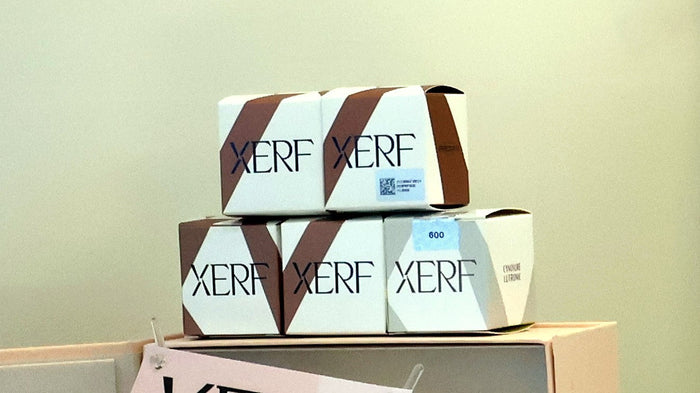
In Hongdae, the options most often discussed fall into a few groups. Focused ultrasound devices such as Ultherapy PRIME and Shurink Universe place small points of heat at chosen depths, down to the fibrous support layer. Monopolar radiofrequency devices such as Thermage FLX and XERF warm a broader volume of the dermis; XERF mixes two frequencies, 6.78 MHz and 2 MHz, with three depth settings and ten energy levels, according to the manufacturer. EMFACE pairs radiofrequency with stimulation of the facial muscles, Potenza Dia Lifting delivers radiofrequency through fine microneedles, and thread lifting holds loosened tissue along a planned direction.
The table below is a guide to what each group adds to a clinic's range. It is not a ranking.
| Group | Main layer | What it adds to a plan |
|---|---|---|
| Focused ultrasound | Deeper support layer and dermis | Points of heat at set depths for contour |
| Monopolar radiofrequency | Dermis, across a wide area | Even warming for firmness and texture |
| Radiofrequency with muscle stimulation | Dermis and facial muscles | A needle-free option for overall tone |
| Microneedle radiofrequency | Dermis, through fine needles | Heat delivered within the skin for texture and firmness |
| Thread lifting | Beneath the skin, along a direction | Support for tissue that has shifted downward |

Research describes these methods by how they work, not by brand. Carruthers et al. (2014) reviewed monopolar radiofrequency and described it as a way to tighten skin on the face and body without incisions, effective and safe when used according to recommended methods. Oh et al. (2022) studied aged animal skin and found that radiofrequency increased the density of collagen and elastic fibers compared with untreated aged skin. As an animal study, it explains the principle and does not predict what a person will see.

What these studies share is a simple point: the response follows heat reaching the right layer. That is why a wide range of devices matters only when it comes with the judgment to choose among them.
How Does a Lifting-Focused Clinic Plan Treatment for One Face?
A lifting-focused clinic plans treatment for one face by measuring the skin, reading each area from the front and both sides and then deciding which layer needs support and in which direction. The device comes last in that sequence, once the face has been understood.
The first step is usually a skin measurement, which gives each area a starting point beyond what the mirror shows. The doctor then compares the two halves of the face, gently lifts the cheeks and jawline by hand to see how the tissue moves and asks what you would like to look different in a few months. Your schedule matters too. Someone staying in Seoul for four days needs a plan that fits those days and leaves time to recover before a flight.
From there, the plan takes shape area by area. A fuller lower face with heavier tissue along the jaw often calls for focused ultrasound at a deeper setting, while thin skin over the cheeks may be better served by radiofrequency that warms the dermis evenly. Settings near the eyes are usually gentler. When tissue has clearly shifted downward, threads may be discussed, though they are often planned for a separate visit.
A good plan also looks ahead. Lifting changes build gradually, so the doctor explains when a review makes sense and what might be added then. A plan that starts with what is needed now leaves room to judge each step, which matters for visitors who may return only once or twice a year.
A Typical Case
A common situation is someone in their early forties visiting Seoul for five days who has shortlisted several clinics in Hongdae because each described itself as focused on lifting. They mention that the lower face looks heavier in photos and that the skin on the cheeks has started to look a little crepey. The measurement shows thicker skin along the jaw and thinner skin over the cheekbones. The plan pairs focused ultrasound along the jawline with radiofrequency across the cheeks on the same day, using gentler settings near the eyes. Threads are discussed but set aside, and a review is planned for their next trip, when the gradual change can be judged before anything else is added.
Which Questions Are Worth Asking Before You Book in Hongdae?
The questions worth asking before you book are the ones that show how a clinic works, since many clinics in Hongdae list similar devices. Bringing a short list to the consultation makes it easier to compare clinics on the same terms.

✓Is my skin measured before any setting is chosen? A measurement gives the plan a basis beyond appearance alone.
✓Can the clinic work at more than one layer of the face? A range of options lets the plan follow my face instead of a single device.
✓Has the doctor completed the manufacturer's training for the device being used? Official training shows familiarity with how the device is meant to be set.
✓Will the doctor who examines me also carry out the treatment? When one person plans and treats, decisions about depth and direction carry through.
✓Am I shown only what is needed now, without a bundle on the first visit? A plan that starts small is easier to judge from abroad.
Chai Clinic places particular emphasis on lifting and offers focused ultrasound, radiofrequency, EMFACE, microneedle radiofrequency and thread lifting, so a plan can follow the layer a face needs. The skin is measured with MarkVu before any plan is made, and the director handles each case from consultation to treatment without putting together packages on a first visit.
Practical details matter for visitors as well. Arranging a consultation before you fly lets you plan your days around treatment, and a clinic close to a subway station makes a review on a later trip easier. When an accurate diagnosis is needed, it is best to talk with our medical team first.
A Steady Line Comes From Practice
I started drawing faces in pencil during the pandemic years, and the first thing I learned was that a steady line does not come from talent. It comes from drawing the same structures again and again, until the hand knows where the jaw turns and how the cheek meets the eye.
Lifting has taught me the same lesson. Each day I look at faces that have changed in their own way, and each one sharpens my sense of where support has been lost and how deep it lies. That practice is what I bring to every consultation.
When you sit down with me, I will not start with a device. I will start by looking at your face, quietly and from every side, the way I would before the first line of a portrait.
I would be glad to look at it with you and decide together where to begin.
- Dr. Wonjin Jo, Director, Chai Clinic -
About Chai Clinic
Chai Clinic is a skin clinic in Hapjeong-dong, Mapo-gu, in the Hongdae area of Seoul, about 100 m from Hapjeong Station Exit 8. It has been part of the neighborhood for ten years, and its director has 18 years of medical practice. The clinic places particular emphasis on lifting, with Ultherapy PRIME, Thermage FLX, XERF, Shurink Universe, EMFACE, Potenza Dia Lifting and thread lifting among its approaches. Every consultation begins with a MarkVu skin measurement, and treatment is designed around the proportions and balance of the individual face. The director handles each case from consultation to treatment, uses genuine products in the correct amounts and does not put together packages on a first visit. You can arrange a consultation through Chai Clinic on BeautiPin.
Looking for a lifting-focused clinic in Hongdae is a sensible first step, and the questions in this column can carry you through the rest. When a clinic measures your skin, explains why one layer needs support and another does not and shows you a plan that fits your days in Seoul, you can choose with confidence. We hope your time in the city leaves you feeling at ease in your own face.
References
Carruthers J, Fabi S, Weiss R. Monopolar radiofrequency for skin tightening: our experience and a review of the literature. Dermatol Surg. 2014;40 Suppl 12:S168-173. doi:10.1097/DSS.0000000000000232
An experience-based review of monopolar radiofrequency for skin tightening.
Cited in the section on lifting options, on how radiofrequency is used.
Oh S, Rho NK, Byun KA, et al. Combined treatment of monopolar and bipolar radiofrequency increases skin elasticity by decreasing the accumulation of advanced glycated end products in aged animal skin. Int J Mol Sci. 2022;23(6):2993. doi:10.3390/ijms23062993
An animal study of radiofrequency on aged skin, reporting changes in collagen and elastic fibers.
Cited in the section on lifting options, on how tissue responds to heat.
Ling J, Zhao H. A Systematic Review and Meta-Analysis of the Clinical Efficacy and Patients' Satisfaction of Micro-focused Ultrasound (MFU) Treatment for Facial Rejuvenation and Tightening. Aesthetic Plast Surg. 2023;47(5):1806-1823. doi:10.1007/s00266-023-03384-1
A review pooling 13 studies of micro-focused ultrasound for the face.
Cited in the FAQ, on how response to focused ultrasound changes over time.
That's all from Chai Clinic. Thank you for reading.