
Non-Surgical Jawline Lifting in Hongdae
Why the jawline softens, which non-surgical options work on the lower face layer by layer, and how Ultherapy PRIME and XERF are planned for the jaw with the balance of the whole face in mind.

Key Summary
Non-surgical jawline lifting supports a softened lower face without incisions, mainly with focused ultrasound and radiofrequency. The jawline usually loosens at more than one depth, as the skin thins, fat settles lower and the deeper support layer relaxes. Each approach is matched to the layer that has changed, and results differ with laxity and fat under the jaw.
It often shows up in a photo taken from the side, or on a video call where the screen sits a little low. The line that once ran cleanly from the ear to the chin now blurs into the neck, and a small fullness has gathered along the lower cheeks.
Non-surgical jawline lifting is a frequent reason visitors look for a lifting clinic around Hongdae and Hapjeong. This guide covers why the jawline softens, which options reach which layer, how Ultherapy PRIME and XERF are planned for the jaw, and who is likely to be a good candidate.
Why Does the Jawline Soften Over Time?
The jawline softens because several supporting structures of the lower face change together. Near the surface, the dermis holds the collagen and elastic fibers that keep skin firm, and with age these fibers are renewed more slowly, so the skin over the jaw thins and springs back less readily. Skin laxity is rarely the whole story, which is why two people of the same age can have very different jawlines.
Fat is the second part of the picture. Along the lower cheeks, some of the cushioning fat under the skin can sit lower over time or gather into soft folds known as jowls. The amount of fat under the jaw and chin also varies a great deal between people, and a jawline blurred by fat calls for a different plan from one blurred by loosened skin.
Deeper still is a fibrous support layer, often called the SMAS, that connects the facial muscles to the skin and helps hold the cheeks and jaw in position. When it relaxes, the tissue above drifts toward the jawline and the edge of the jaw loses definition, at a depth that surface warming does not reach.
Most jawlines show a mix of these changes. The doctor looks at the face from the front and each side and checks how much of the fullness along the jaw is skin and how much is fat, which decides the layer each part needs.

Which Non-Surgical Options Work on the Lower Face, Layer by Layer?
Once it is clear which layers have changed, the next question is which tools can reach them. Non-surgical options for the jaw fall into four groups, each working at its own depth.
Focused ultrasound gathers energy at a set depth beneath the skin and forms small points of heat there, down to the fibrous support layer. Ultherapy PRIME belongs to this group, and so does Shurink Universe.
Monopolar radiofrequency warms a broader volume of the dermis from a handpiece resting on the skin. XERF works this way, as does Thermage FLX.

Two other groups come up less often for the jaw. Microneedle radiofrequency, used in Potenza Dia Lifting, releases heat through fine needles, a variation on microneedling. Thread lifting places absorbable threads under the skin to hold tissue that has moved lower. The table below is a reference for choosing, not a ranking.
| Option | Where it works | Often considered for the jaw when |
|---|---|---|
| Focused ultrasound | Points of heat at chosen depths, including the support layer | The jaw edge has blurred from deeper relaxation |
| Monopolar radiofrequency | Even warming across the dermis | Skin over the jaw feels thinner and looser |
| Microneedle radiofrequency | Heat released inside the skin through fine needles | Firmness and texture are both a concern |
| Thread lifting | Physical support placed under the skin | Tissue has moved lower and needs holding |
No single option reaches every layer of the jawline, so many plans pair two approaches, one for the deeper support and one for the skin above it.
How Do Ultherapy PRIME and XERF Work on the Jawline in Hongdae?
Non-surgical jawline lifting at a lifting clinic in Hongdae often centers on two devices that reach the jaw in different ways: Ultherapy PRIME, made by Merz, and XERF, made by Cynosure Lutronic. Which one is used, or whether both are planned, follows the assessment of each face.
Ultherapy PRIME uses micro-focused ultrasound to form small points of heat at set depths beneath the skin, including the fibrous support layer that helps hold the jaw in place. Because the energy lands at a chosen depth, it is used when the jaw edge has softened through deeper relaxation.

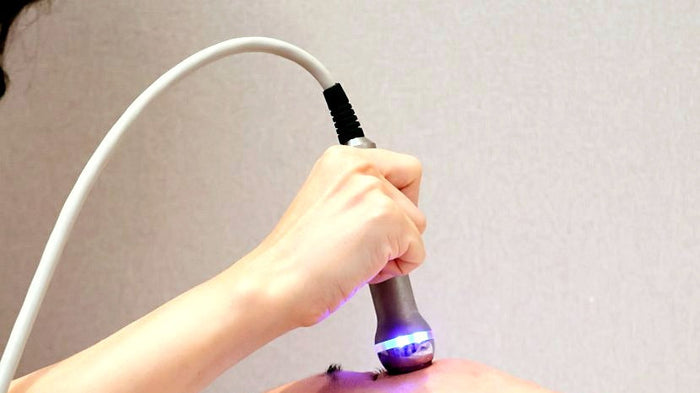
XERF uses monopolar radiofrequency and sends two frequencies, 6.78 MHz and 2 MHz, into the skin with each shot, so heat travels from the shallow dermis toward deeper layers in a single pass. Depth can be chosen from three settings and energy from ten levels, set separately for each area. That flexibility matters along the jaw, where skin thickness shifts between the chin and the angle.

Whichever device is used, the jaw is planned as part of the whole face. The jawline meets the cheeks above, the chin in front and the neck below, and pulling hard at the jaw edge alone can leave the chin looking short or the cheeks flat. When both devices are planned, focused ultrasound may be set along the deeper support of the jaw and radiofrequency across the skin of the lower cheeks, with order and spacing decided together after the skin has been measured.

In their review of monopolar radiofrequency, Carruthers et al. (2014) concluded that it tightens skin on the face, neck and body without incisions, and that it is effective and safe when the recommended technique is followed. For the jawline, this means the settings and technique chosen for each zone carry as much weight as the device itself. Our medical team follows this literature and adjusts depth and energy area by area along the jaw.
A Typical Case
Among people who ask about jawline lifting, a familiar pattern begins with a habit of turning toward the camera so that the better side shows. The thought behind it is often, 'It is a little heaviness, and it will stay like this for a while.' When the jawline is looked at while the change sits mostly in the skin, the plan can stay focused on radiofrequency settings for a few zones of the lower face. When the same concern waits several more years, the deeper support has often relaxed as well, and focused ultrasound for that layer, or a wider area that includes the neck, may need to join the plan. Neither path is a mistake, but the plan tends to grow as more layers become involved.
Who Is a Good Candidate for Jawline Lifting, and Where Are the Limits?
After the design, the natural question is whether this kind of plan suits your jawline at all, and where its limits lie.

Contini et al. (2023), a systematic review of micro-focused ultrasound for facial skin tightening, reported a measured reduction in the area under the chin, and noted that the effect was lower in people with severe skin laxity or a body mass index above 30. In other words, how far the skin has loosened and how much fat sits under the jaw shape what a non-surgical plan can do, so both are checked before any setting is chosen.
A typical candidate has a jaw edge that has started to blur from the side, perhaps with mild fullness along the lower cheeks, while the skin still has some spring. These options also have clear limits. When skin hangs in loose folds below the jaw, or when the outline depends mostly on the shape of the jawbone, energy-based treatment may not give the change you hope for, and the doctor may suggest a different route. If you are pregnant or have an implanted electronic device such as a pacemaker, tell the doctor beforehand. When an accurate diagnosis is needed, it is best to talk with our medical team first.
What Should You Check When Choosing a Clinic for Jawline Lifting in Hongdae?
Many clinics around Hongdae offer similar device names, so the differences that matter lie in how the plan is made and who carries it out. A few questions at consultation bring them into view.

✓Can the clinic choose among options that work at different depths? A jawline often needs one for the deeper support and another for the skin.
✓Is your skin measured before depth and energy are chosen? It gives each zone a starting point beyond the mirror.
✓Does the doctor look at the chin, cheeks and neck along with the jaw? These areas change how a jawline reads, and weighing them together keeps the face in proportion.
✓Does the doctor who designs the plan also carry it out? When one person assesses and treats, the zone-by-zone decisions reach every shot.
On a short stay, a clinic within walking distance of Hongdae or Hapjeong Station is simple to return to for a review on a later trip, and a plan that starts with what your jawline needs now leaves later steps open.
Seeing the Line From Ear to Chin

A pencil teaches patience with edges. In a portrait, the jaw is rarely a single stroke. It appears where the light on the cheek meets the shadow under the chin.
I have drawn faces in pencil since the pandemic years, many of them older faces where the jaw has softened. They taught me that the outline changes how the whole face reads.
That is how I approach a jawline plan. Before I choose a depth or an energy level, I look at where the line has blurred, which side has changed more and how the chin and cheeks sit around it.
My aim is not a sharper face, but your own outline, gently supported.
- Dr. Wonjin Jo, Director, Chai Clinic -
About Chai Clinic
Chai Clinic is a skin clinic in Hapjeong-dong, Mapo-gu, a short walk from Hongdae, and it has been ten years since the clinic opened. The clinic places particular emphasis on lifting, with options that work at different depths, including Ultherapy PRIME, XERF, Thermage FLX, Shurink Universe, Potenza Dia Lifting and thread lifting. Each consultation begins with a MarkVu skin measurement, and treatment is designed around the proportions and balance of the individual face. The director handles each case from consultation to treatment and does not put together packages on an initial visit. You can arrange a consultation through Chai Clinic on BeautiPin.
Once you have noticed the change along your jaw, it is easy to see it in every photo, and that attention can make it feel larger than it is. Whatever you choose during your time in Seoul, we hope you return home feeling at ease with the face you see in the mirror.
References
Carruthers J, Fabi S, Weiss R. Monopolar radiofrequency for skin tightening: our experience and a review of the literature. Dermatol Surg. 2014;40 Suppl 12:S168-173. doi:10.1097/DSS.0000000000000232
A review of monopolar radiofrequency for skin tightening without incisions.
Cited in the section on Ultherapy PRIME and XERF, on why the settings for each zone of the jaw matter.
Contini M, Hollander MHJ, Vissink A, et al. A Systematic Review of the Efficacy of Microfocused Ultrasound for Facial Skin Tightening. Int J Environ Res Public Health. 2023;20(2):1522. doi:10.3390/ijerph20021522
A systematic review of studies on micro-focused ultrasound for facial skin tightening.
Cited in the section on candidates and limits, on how laxity and body mass index shape what a non-surgical plan can do.
That's all from Chai Clinic. Thank you for reading.