
Hanok Stay in Seoul: How to Choose Between Bukchon, Seochon and Ikseon-dong
A hanok stay is a night in a traditional Korean house registered as lodging, usually on a heated ondol floor. Choose Bukchon for classic hillside alleys, Seochon for a calmer local feel and Ikseon-dong for cafes and nightlife at your door, then book a registered property and check the bathroom type, check-in time and house rules before you pay.

What Is a Hanok Stay, Exactly?
A hanok stay is overnight lodging inside a hanok, the Korean house built around a timber frame, a curved tiled roof and paper-lined lattice doors. In Seoul it is more than a style label. Hanok lodgings are registered with their district office as a hanok experience business, a category under Korea's tourism law, and that registration is what separates a licensed stay from a house that simply looks old.
Inside that category you will meet two very different products. The first is the classic hanok guesthouse: a few rooms set around a small courtyard, a host who lives on site or nearby, breakfast in some places and, often, a bathroom down the hall. The second is the private hanok, rented as a whole house. These are usually renovated with a modern bathroom, a kitchen or tea corner, and sometimes a soaking tub that opens onto the garden. Many keep the old roof beams and lattice doors and change almost everything else.
Neither is more authentic than the other. A guesthouse puts you in a shared courtyard with other travelers and a host who can point you to breakfast. A private hanok gives you the house to yourselves, which suits couples, families and groups of friends who want to sit on the wooden porch at night without strangers passing through.

Bukchon, Seochon or Ikseon-dong: Which Area Fits Your Trip?
Most hanok stays in central Seoul sit in three neighborhoods within a short ride of each other. They feel very different after dark, which is exactly when you will be there.
Bukchon fills the hillside between Gyeongbokgung and Changdeokgung palaces, a short walk from Anguk Station on Line 3. It has the densest cluster of hanok in the city and the views most people imagine, especially along Bukchon-ro 11-gil. The trade-off is daytime crowds and visiting hours in its busiest alleys, covered below. For the sightseeing side of the area, our Bukchon Hanok Village day guide walks through the streets, crafts and cafes; this guide is about sleeping there.
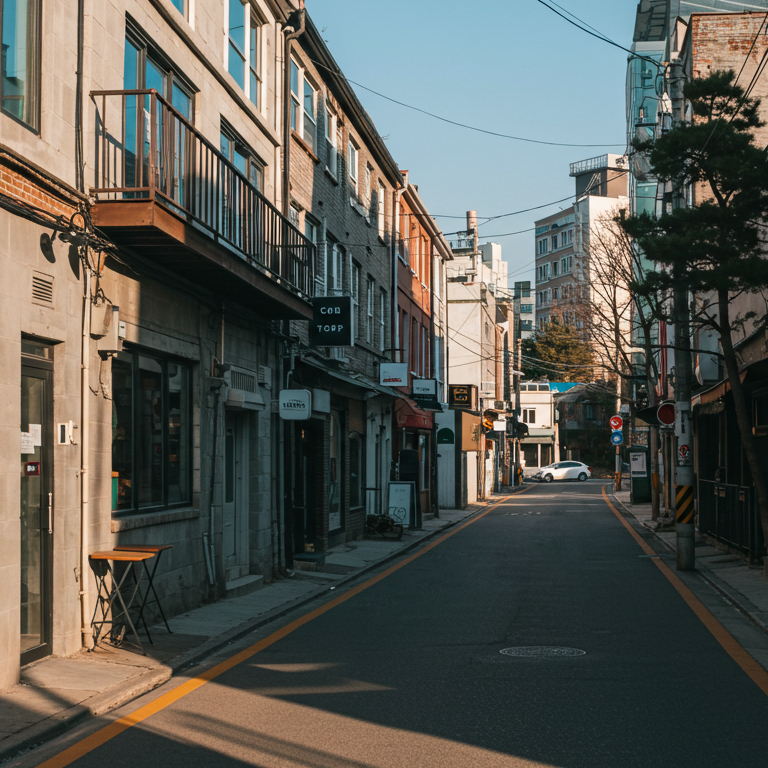
Seochon lies on the west side of Gyeongbokgung, around Gyeongbokgung Station on Line 3. Its hanok are tucked into narrow residential alleys in Nuha-dong and the streets around Tongin Market, mixed in with small bars and bookshops. It feels lived-in rather than staged, and it is the area to pick if you want quiet mornings and a short walk to the palace gates.
Ikseon-dong is a compact grid of hanok near Jongno 3-ga Station, served by Lines 1, 3 and 5. Its houses mostly date from the 1920s, and today most of them hold cafes, restaurants and small shops. Staying in or right beside it means dinner and late-night dessert a minute from your door and the best subway connections of the three. It also means more noise on weekend evenings.
| Area | Nearest station | Feel at night | Best for |
|---|---|---|---|
| Bukchon | Anguk (Line 3) | Very quiet, residential | Classic hanok views, palace mornings |
| Seochon | Gyeongbokgung (Line 3) | Quiet alleys, a few small bars | A local feel, slower days |
| Ikseon-dong | Jongno 3-ga (Lines 1, 3, 5) | Lively until late | Food, nightlife, easy transfers |

What Is It Like to Sleep on an Ondol Floor?
Ondol is Korea's floor-heating system. In the old houses, smoke from a kitchen fire ran through channels under a stone floor; renovated hanok today almost always use hot-water pipes from a boiler instead. Either way, the floor is the warm part of the room, and that is where you sleep. In a traditional room the host provides a yo, a thin cotton mattress, with an ibul quilt and a firm pillow, and the bedding is folded away into a cabinet in the morning.
Expect a firm night. If you sleep lightly or have a sore back, ask for an extra yo, which most hosts keep in the cupboard, or look for a listing that shows a bed frame. Many private hanok now have proper beds, while guesthouses are more likely to keep the floor bedding. In November and through winter, the heated floor is the best part of the stay: walk in from a cold alley and the room is warm underfoot. The flip side is dry air, so keep a cup of water by the bedding, and ask the host to turn the heat down if the floor runs hot.
Check two more things before booking. First, the bathroom. Guesthouse listings often mix rooms with private bathrooms and rooms that share one across the courtyard, so read the room type rather than the property name. Second, sound. Paper-lined doors and wooden walls are beautiful and thin. You will hear rain on the roof, birds in the morning and, in a guesthouse, the room next door.
Shoes come off at the stone step before the wooden floor, every time. Bring socks or slippers you like, because you will spend most of your time in them.

House Rules, Quiet Hours and Check-In
Hanok stays sit inside neighborhoods where people live, and the house rules reflect that. Expect quiet hours in the evening, no smoking anywhere on the property, limits on cooking strong-smelling food, and a request to keep voices low in the courtyard and the alley. Groups should read the maximum occupancy carefully; extra guests are a common reason for a cancelled booking.
Check-in is usually mid-afternoon. On the official Seoul Stay listings we reviewed, hanok properties set check-in between 2 p.m. and 4 p.m. and checkout at 11 a.m. Small hanok rarely have a 24-hour front desk, so message the host with your arrival time a day ahead. Many use a door code or meet you at the gate. Ask whether they can hold your luggage before check-in or after checkout, because these alleys are hard work with a large suitcase and there is no lobby to wait in.
In Bukchon, also plan around visiting hours. Jongno District manages the area's busiest alleys, centered on Bukchon-ro 11-gil, as a red zone where sightseeing is allowed only from 10 a.m. to 5 p.m., with a fine of 100,000 won for touring outside those hours. The rule targets sightseeing rather than people heading to a home or business inside the zone, but if you plan to arrive late, confirm with your host how they want you to come in. Parking is scarce in Bukchon and Seochon alike, where residential permits apply, so the subway and a short walk work best.

How Do You Book a Registered Hanok Stay?
Start with the official listings. Seoul Stay, run by the Seoul Metropolitan Government and the Seoul Tourism Organization, lists accommodations registered with their district under the urban stay and hanok stay categories, each with its neighborhood, check-in time, room types and bathroom details. In August, the city and the Seoul Tourism Organization named 18 properties as this year's Outstanding Seoul Stays after on-site checks of facilities, hygiene, safety and service, and eight of them are hanok. VisitKorea, the Korea Tourism Organization's site, also lists hanok accommodation across the country.
Next, look for the Korea Quality mark. It is the national quality certification run by the Korea Tourism Organization, and hanok experience businesses are one of the categories it covers; the older Hanok Stay certification was folded into it. Certified properties pass document and on-site reviews, and the certification lasts three years. Not every good hanok carries it, but it is a reliable shortcut when you are comparing many similar listings.
On price, think in terms of structure rather than a single number. A guesthouse room with a shared bathroom costs the least, a room with its own bathroom sits in the middle, and a whole private hanok costs the most per night, though the cost per person drops when a group shares it. Weekends and the spring and autumn seasons fill first. Rates must also be posted: according to the Ministry of Culture, Sports and Tourism, since August 4, 2026, a registered hanok experience business that fails to post its rates, or charges more than the posted rate, faces a five-day business suspension from the first violation.
If Seoul's alleys whet your appetite, the same kind of night is easy to find outside the capital. A Jeonju Hanok Village stay puts you among hundreds of tiled roofs in one walkable district, and a templestay trades the guesthouse courtyard for a mountain temple, a dawn bell and floor bedding of its own.

Sol's Note
Book the hanok for the hours you will actually spend in it. If your days start at 8 a.m. and end after midnight in Hongdae, a hanok is a pricey place to drop your bag, and a hotel by a big station serves you better. A hanok pays off at the edges of the day: tea on the porch at dusk, the warm floor after a cold walk, the quiet before the city wakes.
So give it one or two nights in the middle of the trip, keep that evening free, and set an alarm for 7. Seochon's alleys and the stone walls around Gyeongbokgung are at their best before the first tour bus arrives.