
Dongmyo Flea Market: A Weekend Treasure Hunt Through Seoul's Vintage Piles
Dongmyo Flea Market is a sprawl of secondhand clothing piles, vintage shops and antique stalls around Dongmyo Shrine, a short walk from Exit 3 of Dongmyo-ap Station on Seoul Subway Lines 1 and 6. Go on a weekend morning, carry small bills in cash, check every seam before you pay, and treat expensive antiques with caution; loose pieces from the clothing piles often sell for around 1,000 won.

What Is Dongmyo Flea Market?
The first thing you notice is the sound: hangers scraping along a rail, a vendor calling out a price, a tarp being shaken flat on the pavement. Then you see the piles. Sweaters, denim, windbreakers and band tees heaped on blankets, with people crouched around them, pulling one sleeve free at a time.
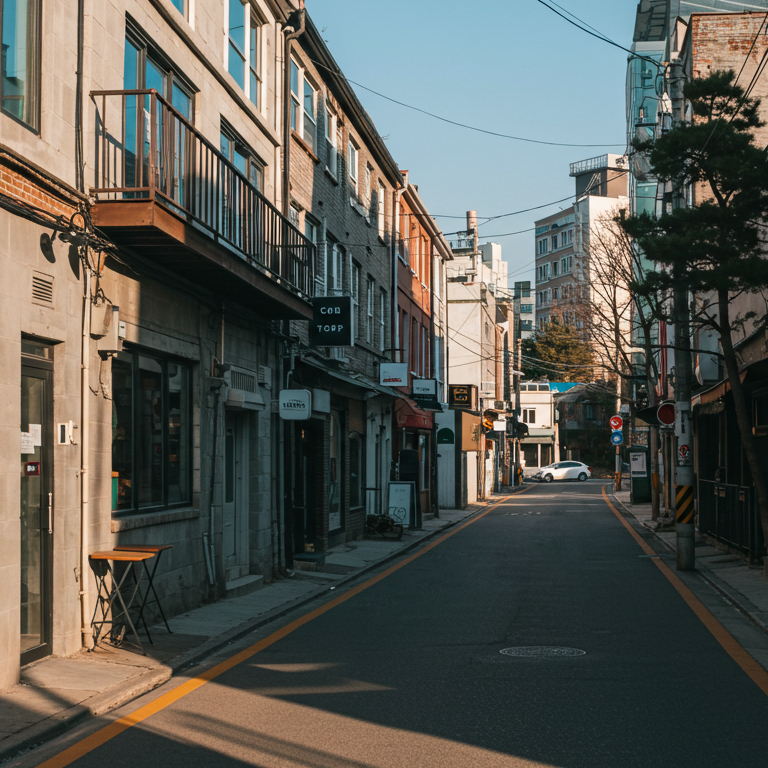
Dongmyo Flea Market is not one building but a cluster of streets in Jongno, eastern Seoul, where secondhand clothing stalls, small vintage shops, antique dealers and used bookstores sit side by side. It takes its name from Dongmyo Shrine, a Joseon-era shrine to the Chinese general Guan Yu that was completed in 1601 and is now a designated national Treasure. Some of the busiest clothing piles sit right along the shrine's tiled wall, so you get a centuries-old roofline above a sea of puffer jackets.
For years this was a neighborhood market for older Seoul residents. Lately the crowd has changed. Korean media reported in July 2026 that foreign travelers are increasingly choosing Dongmyo and nearby Sinheung Market over the usual shopping streets to hunt for cheap vintage, after posts on Instagram, TikTok, YouTube and Reddit spread the word, and the Chinese app Xiaohongshu began recommending it as a vintage stop. What draws people is simple: in a city of polished flagship stores, Dongmyo is one of the few places where you still have to dig.

When to Go: Weekend Mornings and Opening Hours
Dongmyo has no single set of opening hours. Each stall and shop keeps its own schedule, and published listings disagree, giving times that start anywhere from about 9 or 10 a.m. and finish in the early evening. What everyone agrees on is the rhythm: the market is busiest on weekends, and the best pieces move early.
That makes a weekend morning the sweet spot. Arrive in the late morning and you'll find most stalls set up, the piles still full, and enough room on the pavement to crouch and sort. By early afternoon the lanes around the shrine get shoulder-to-shoulder, and the obvious finds (good denim, a clean leather jacket, a sweater in a color everyone wants) are usually gone. Regulars talk about the early "dawn market" as the time for the best picks at the lowest prices, but for a first visit, mid-morning is easier to navigate.
Weekdays are calmer and perfectly fine for the vintage shops and antique stalls, though fewer pile vendors may be out. Some listings mention closures on certain Tuesdays, and individual vendors take days off without notice, so if you only have one chance, make it a Saturday or Sunday. Rain thins the street stalls quickly; on a wet day, the indoor vintage shops and bookstores are your best bet.
Dress for digging. Wear layers you can take off, shoes you don't mind getting dusty, and bring a tote bag, since many vendors hand over purchases in a thin plastic bag or nothing at all.

How to Dig, Pay and Haggle
Dongmyo works in two layers. The first is the street piles, where clothes are tipped out loose and priced low. Korean reporting this year put most pile clothing at around 1,000 won a piece, with fur and leather items usually somewhere in the 10,000-won range and good-condition designer pieces sometimes passing 100,000 won. Treat these as rough guides; prices shift with the item and the vendor. The second layer is the small vintage shops along the side streets, where pieces are washed, hung and sorted by style, and priced higher to match.
In the piles, work methodically. Pull an item fully out before you decide, then check it in daylight: underarms and collars for stains, zippers and buttons for function, seams and elbows for wear, and the label for fabric content and size. There are rarely fitting rooms, so a quick hold-up against your shoulders or a measuring tape in your pocket goes further than guessing. Whatever you buy, plan to wash it before you wear it.
Bring cash, ideally in 1,000-won and 5,000-won notes. Many stalls prefer cash, and paying the exact amount keeps things moving. Some indoor vintage shops take cards, but don't count on it at the street stalls.
Haggling is part of the fun, but keep it light. The easiest approach is to gather a few pieces and ask for a price for the bundle, or to ask politely if there is a small discount (in Korean, "kkakka juseyo?"). A smile and a round number work better than a hard push, and on 1,000-won items there is very little room to move. If the answer is no, a thank-you and a nod are all that's needed.

Antiques, Cameras and Books: Checking What You Buy
Walk a few minutes away from the clothing and the market changes character. Antique stalls stack brass figurines, old ceramics, wall clocks, radios, sewing machines, typewriters and boxes of loose curios. Others specialize in film cameras, wristwatches, vinyl records and secondhand electronics, and a handful of narrow bookstores are packed floor to ceiling with used Korean books, magazines and old maps.
This is where a little caution pays off. Authenticity is hard to confirm on the spot, especially for expensive antiques, watches and branded goods, so treat any big-ticket "rare" or "designer" claim as a story rather than a guarantee. A good rule is to buy what you'd be happy to own even if it turned out to be a reproduction.
For film cameras, ask to look through the viewfinder, fire the shutter at a few speeds, open the back to check the light seals, and look for haze or fungus in the lens against the light. For watches and radios, ask whether they run now, not whether they "should." For ceramics, run a finger along the rim for chips and check the base for hairline cracks. With vinyl, slide the record out of its sleeve and look for deep scratches or warping.
If you're thinking about taking an older ceramic or artifact home, keep in mind that Korea restricts the export of genuine cultural heritage items, so pieces sold as truly antique may need official clearance before they leave the country. For most market finds this never comes up, but it's worth asking the seller before you pay for anything presented as very old.

Getting There and Where to Go Next
Take the subway to Dongmyo-ap Station, which sits on Seoul Subway Line 1 and Line 6. Exit 3 puts you almost on top of the market; the stalls start within a short walk of the station stairs. From City Hall or Jonggak, Line 1 runs straight there without a transfer. Use a transit card, and keep your bag zipped in the busier lanes.
Dongmyo pairs naturally with a few nearby stops. One stop east on Line 1, Seoul Folk Flea Market in Sinseol-dong gathers vendors of clothing, antiques, electronics and everyday goods in a set of colorful buildings. According to Dongdaemun-gu, it runs from 10 a.m. to 7 p.m., its food court stays open until 10 p.m., and it closes on the second and fourth Tuesday of each month. Heading the other way, two stops west on Line 1 brings you to Jongno 5-ga for Gwangjang Market, a natural lunch stop after a morning of digging.
If Dongmyo gives you the taste for secondhand fashion but you'd like it curated, the vintage shops around Hongdae hang sorted, washed racks at higher prices. And if your haul leaves room in the suitcase for something new, our guide to Musinsa's Seoul stores covers which branch to visit and how the tax refund works.

Haru's Note
Give yourself a budget in coins rather than notes. At Dongmyo, the thrill is not finding the one perfect jacket; it's the run of small yeses, a 1,000-won scarf here, an old enamel cup there, that add up to a bag you'll keep reaching into for years.
And leave one pocket empty for the thing you didn't come for. The best Dongmyo finds are rarely what you searched for. They're the odd little object that catches your eye on the walk back to the station.