
Euljiro After Dark: How to Explore Hipjiro, Seoul's Workshop District Turned Bar Alley
Euljiro is an old workshop district in Jung-gu, central Seoul, where lighting shops, printers and tool stores still fill the lanes by day, and bars, LP bars and cafes hidden on their upper floors fill them by night. Young Koreans nicknamed it Hipjiro, from "hip" and Euljiro. Start from Euljiro 3-ga Station (Lines 2 and 3) in the late afternoon, look around the lighting shops and the 1960s Sewoon Sangga arcade while they are still open, then climb the narrow stairways to a bar and end the night with beer and dried pollack in Nogari Alley.

What Is Hipjiro, and Where Is Euljiro?
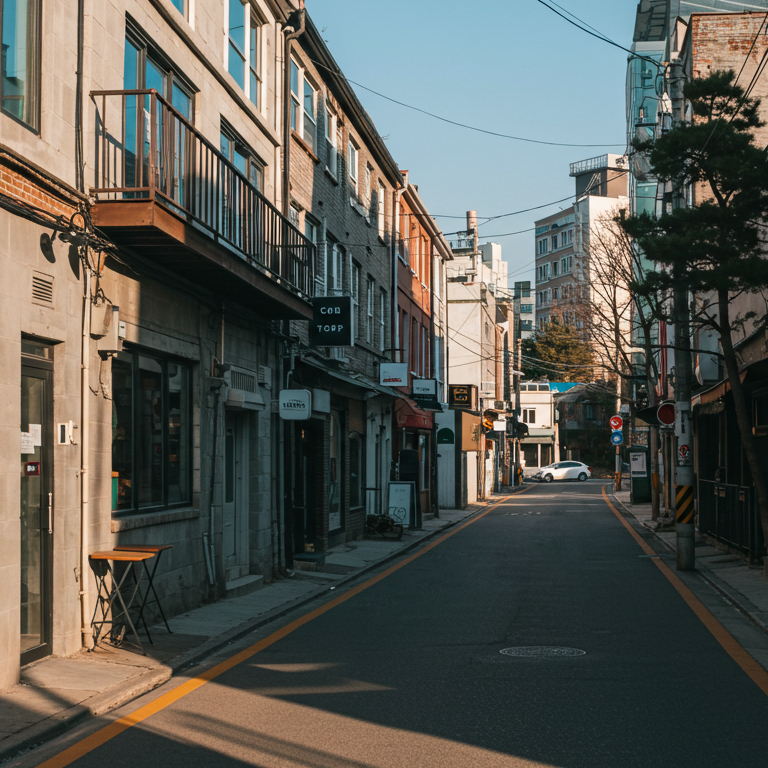
Euljiro is a long avenue and the neighborhood around it in Jung-gu, the old center of Seoul, between the Cheonggyecheon stream and Chungmuro. For decades its lanes have been full of small trades: lighting and electrical shops, printers and paper wholesalers, tile, tool and metal workshops. Many still work there today.
From the mid-2010s, young bar owners and designers began renting the cheap upper floors of these old buildings. They opened bars, LP bars, cafes and small galleries behind unmarked doors and narrow stairways, and kept the faded signs and tiled walls as they were. People started calling the area Hipjiro, a mix of "hip" and Euljiro, and the name stuck.
- By subway. Euljiro 3-ga Station on Lines 2 and 3 is the best place to start. Euljiro 4-ga Station (Lines 2 and 5) is the next stop east, and Euljiro 1-ga Station is a short walk from City Hall and Myeongdong.
- On foot. From Myeongdong, it's about a 15-minute walk north and east. From Cheonggyecheon, just walk south a block or two.
Most of what you'll want is between Euljiro 3-ga and Euljiro 4-ga stations, a walk of about ten minutes. The lanes are a maze, so keep a map app open and look up as well as ahead. Half of Hipjiro is upstairs.

What to See in Euljiro by Day
Come in the late afternoon, while the shops are still open. The daytime Euljiro is the reason the nighttime one looks the way it does.
- The lighting street. Along Euljiro near the 3-ga and 4-ga stations, shop after shop sells chandeliers, LED strips, neon and lamps of every kind. After dark, their windows light up the avenue.
- Printing alleys. Around Euljiro 3-ga and Chungmuro, small printing shops and paper wholesalers still work on the ground floors. You'll hear the presses and see stacks of paper being carted through the lanes.
- Sewoon Sangga. Built in the late 1960s as one of Seoul's first large mixed-use arcades, this long concrete building and its neighbors are still home to electronics and repair shops, with newer cafes and studios between them. The area around it is being redeveloped in stages, so expect some fenced-off walkways.
- Bangsan Market. Near Euljiro 4-ga, this wholesale market sells baking tools, packaging, ribbons and craft supplies, and it's a favorite with home bakers.
Many workshops close by early evening and on Sundays, so a weekday afternoon is the best time to see the trades at work. The workers are busy, so take photos from the street and keep out of the way of carts and delivery motorbikes.

Where Are the Hidden Bars and Cafes?
The fun of Hipjiro is finding places that don't look like anything from the street. A tiny sign, a light in a second-floor window or a steep staircase between two hardware shops is often the only clue.
- Cocktail and wine bars. Many are on the second to fourth floors of old workshop buildings, with dim lighting and short menus. Some have no sign at all, so save the address before you go.
- LP bars. Euljiro has some of Seoul's best-known record bars, where the staff play vinyl from a wall of LPs and take requests. Our guide to LP bars in Seoul explains how they work and the house rules.
- Retro cafes. Old-style tea rooms and newer cafes with vintage furniture serve coffee, cream lattes and desserts in rooms that still show their workshop past.
Bars usually open in the early evening and stay open until midnight or later, and many close one day a week. Popular places fill up on Friday and Saturday nights, so go earlier in the week, or arrive around 7 p.m. If you're new to drinking in Korea, our guide to Korean drinking etiquette covers the basics, from pouring for others to toasting.

Nogari Alley and Late-Night Food in Euljiro
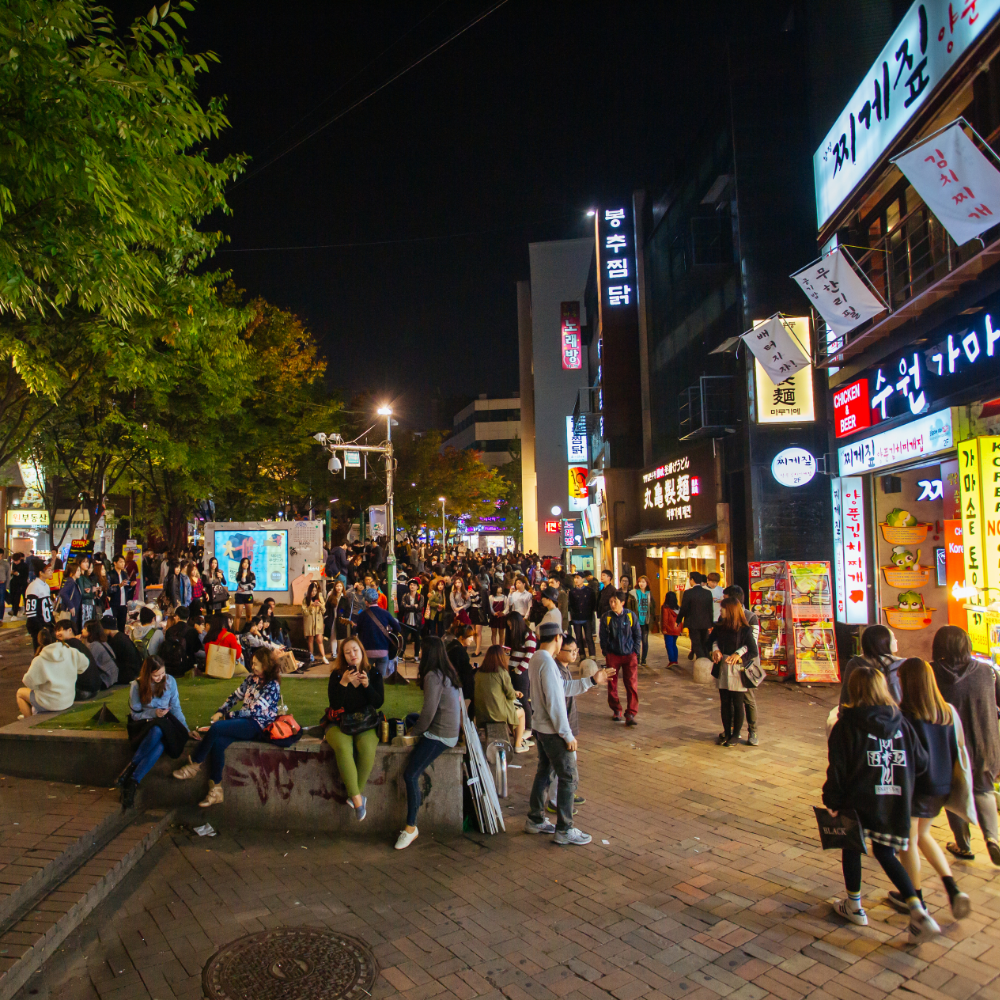
Nogari Alley, a short lane a few minutes from Euljiro 3-ga Station, is the most famous night scene in Euljiro. Beer halls line the alley, and on mild evenings their plastic tables and stools spill out into the street. The classic order is cheap draft beer with nogari, small dried pollack you dip in a spicy sauce. The alley was named a Seoul Future Heritage site in 2015.
In late November, the evenings turn cold, so expect more people inside the halls and under covers than at the outdoor tables. A hot pocha nearby is the other way to warm up, and our guide to pocha, Seoul's orange tent bars, explains how to order.
Euljiro is also known for Pyongyang-style cold buckwheat noodles. Several long-running naengmyeon restaurants are in the area, including Woo Lae Oak near Euljiro 4-ga, one of the oldest in Seoul. Expect a line at lunch.
Here's a simple plan for a weekday:
| Time | What to do |
|---|---|
| 4 p.m. | Start at Euljiro 3-ga Station and walk the lighting street and printing alleys |
| 5 p.m. | Look around Sewoon Sangga, then coffee in a retro cafe |
| 6:30 p.m. | Dinner: cold noodles, barbecue or a pocha |
| 8 p.m. | Climb the stairs to a cocktail bar or LP bar |
| 10 p.m. | Finish with beer and nogari in Nogari Alley |

Sol's Note
Euljiro rewards people who are a little curious and a little polite. If a staircase looks like it leads somewhere, it probably does, but if a door says staff only or the lights are off, it's someone's workshop, not a bar.
Come back in daylight if you can. The same lanes that glow at night are full of people cutting metal and printing posters by day, and seeing that makes the bars upstairs make sense.