

Squid Game Season 3 Ending Explained: The Hidden Message Behind the Final Game
Squid Game's final season ends with Gi-hun sacrificing himself in the Sky Squid Game so that Player 222 — a newborn — survives as the winner, the Front Man delivering Gi-hun's belongings to his daughter, and a Los Angeles epilogue, capped by Cate Blanchett's recruiter cameo, that opens the door to an American chapter of the franchise. Here is what actually happens in the finale, what the ending means, and where the story goes next.
?? This article contains full spoilers for Squid Game Season 3. We strongly recommend watching the season before reading further.
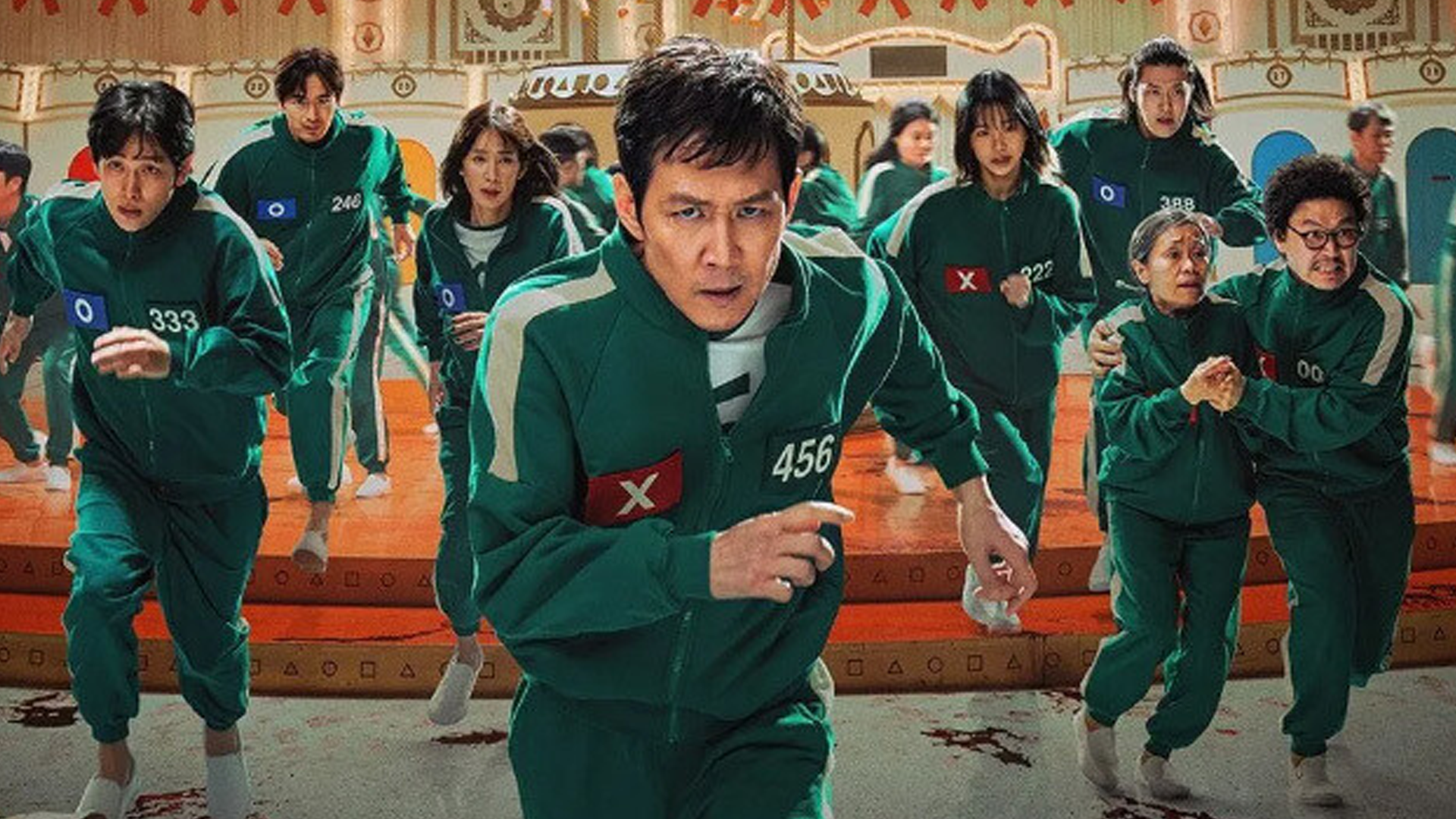
The Final Game: What Really Happened
The trilogy ends where it was always heading: with Gi-hun choosing who he is. The last game — Sky Squid Game, played on towers high above the arena — comes down to Gi-hun (Player 456), the newborn Player 222, and the baby's father Myung-gi (Player 333), who has already shown he will trade anything, including his child, for the prize. When the arithmetic of survival says the baby must die for an adult to win, Gi-hun refuses the arithmetic. He entrusts the infant's safety, speaks his final defiance, and steps off — sacrificing himself so the season's most helpless player becomes its winner.
The epilogue distributes the aftermath with deliberate quiet. The Front Man, In-ho — visibly altered by watching a man beat the game's logic without winning it — sees to the baby's future, and personally delivers Gi-hun's belongings and winnings to his daughter abroad. The games' island machinery is dismantled, but the final scene withholds comfort: in Los Angeles, a sharply dressed recruiter is slapping down ddakji tiles for a new mark. The Korean game is over. The system that built it is not.

Symbolism and Social Commentary
Gi-hun's last declaration — that the players are not horses but human beings — is the thesis of the entire franchise compressed into one line. From season one's racetrack metaphor onward, Squid Game has been about a system that converts desperate people into entertainment and calls it fair play because they "chose" to enter. Making the final winner a newborn — a player who could not consent, strategize or compete — strips the meritocratic alibi bare: the game was never a contest, only a machine for monetizing the vulnerable.
The VIPs complete the critique. Reimagined this season as swaggering tech-mogul archetypes — viewers widely read one as a Silicon Valley billionaire pastiche — they no longer hide behind gilded masks and curtains; they banter, place bets and perform their power. It's a pointed update: in the world the finale depicts, extreme wealth no longer needs anonymity. Spectacle has replaced shame, and the show's satire sharpened accordingly.

Global Reactions and What Comes Next
The finale split audiences in exactly the way lasting endings do. Fan forums and TikTok filled with debate over whether Gi-hun's death was the only honest ending or a bleak one too far, and with readings of the baby as everything from a literal heir to the prize to a symbol of whatever comes after the system. Director Hwang Dong-hyuk has been consistent about his intent: Gi-hun's story is complete, and the sacrifice is the point — the one victory the game's logic can't metabolize.
The Cate Blanchett cameo, meanwhile, turned out to be exactly the door it appeared to be. An English-language spin-off — Squid Game: America, set in Los Angeles, developed with David Fincher attached and Hwang involved — moved into production, extending the franchise to the country the VIPs came from. The symmetry is hard to miss: the story that began as Korea's critique of global capitalism now continues at capitalism's headquarters.

What It Means for Global Storytelling
Squid Game's run rewrote the assumptions of global television twice: first in 2021, when a Korean-language survival drama became the most-watched series in Netflix's history, and again at the end, by proving a culturally specific story could conclude on its own moral terms — a self-sacrificing, non-triumphant ending — and hold a global audience anyway. The franchise never localized itself; the world adjusted to it, subtitles and all.
Its finale also set a benchmark that the coming American chapter will be measured against: genre spectacle in service of an ethical question rather than the reverse. Whatever Squid Game: America becomes, the original's legacy is fixed — it demonstrated that the sharpest critique of a global system could come from Seoul, in Korean, and that the world would not only watch but argue about it for years. That's the durable kind of soft power: not admiration, but engagement.

Dr. Beau's Note
An unpopular opinion I'll stand behind: the finale's most important character is In-ho, not Gi-hun. Sacrifice from a good man is moving but expected; doubt in the system's own administrator is what actually breaks systems. The Front Man watching Gi-hun's choice — and then quietly doing one humane thing with the power he has — is the show's real answer to its own pessimism. Corrupt structures rarely fall to heroes. They erode when the people running them stop believing. That's the hidden message behind the final game.