
Seochon, Seoul: How to Spend a Day in the Quieter Hanok Village West of the Palace
Seochon is the old neighborhood on the west side of Gyeongbokgung Palace, between the palace wall and Inwangsan mountain. It is a lived-in area of hanok alleys, small cafes, bookshops and galleries, Tongin Market with its coin lunchbox, and the Sejong Village food street, and it is calmer than Bukchon across the palace. Start from Gyeongbokgung Station on Line 3, eat lunch at Tongin Market, wander the alleys in the afternoon, and finish with dinner on the food street, or climb Inwangsan for the view over the city at sunset.

What Is Seochon, and How Is It Different From Bukchon?
Seochon, literally "west village," is the cluster of neighborhoods west of Gyeongbokgung Palace, from the palace wall up to the foot of Inwangsan. It covers Tongin-dong, Nuha-dong, Ogin-dong, Hyoja-dong and their neighbors, and the area also goes by Sejong Village, because King Sejong, who created the Korean alphabet, is said to have been born here.
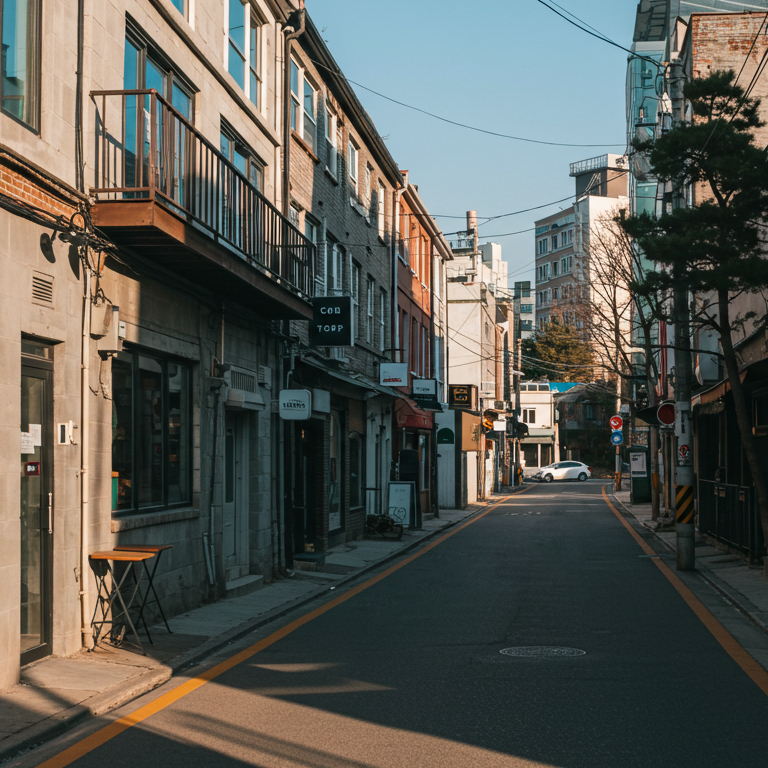
Both Seochon and Bukchon are hanok neighborhoods next to a palace, but they feel different. Bukchon is a showpiece: rows of restored houses on a hill, with crowds and quiet hours for residents. Seochon is mixed and lived-in. Hanok sit beside brick villas, a corner market and laundry shops, and the reason to come is the small places in between: a six-table cafe, a print studio, a bakery that sells out by three.
| Part of the day | Where | Why |
|---|---|---|
| Late morning | Gyeongbokgung Station Exit 2, then Jahamun-ro | Coffee and the walk along the palace's west side |
| Lunch | Tongin Market | The coin lunchbox and oil tteokbokki |
| Afternoon | The alleys of Nuha-dong and Ogin-dong | Hanok, small shops, galleries and cafes |
| Sunset | Inwangsan or Suseong-dong Valley | A view back over the palace and downtown |
| Dinner | Sejong Village Food Street | Grilled food and soju under the lights |
Getting there is easy. Take Line 3 to Gyeongbokgung Station and use Exit 2 or 3. From there, Jahamun-ro, the main road north through Seochon, leads you to Tongin Market in about 10 minutes on foot.

Tongin Market: How Does the Coin Lunchbox Work?
Tongin Market is a small covered market in the middle of Seochon, one long lane of side-dish shops, rice cake stalls and snack counters. It is best known for its coin lunchbox, or yeopjeon dosirak, a fun way to sample a little of everything.
- Buy coins and a tray. At the market's lunchbox cafe, you exchange cash for old-style brass coins, 500 won each, and get an empty lunch tray.
- Shop the stalls. Walk the lane and look for the shops with a sign showing they take coins. Pay a coin or two for each dish you like: braised beef, japchae, jeon, kimbap, fried chicken.
- Eat upstairs. Take your tray back to the cafe, where you can add rice and soup and sit down to eat.
The lunchbox cafe keeps shorter hours than the market and stops selling coins in the mid-afternoon, and it closes on some days each month. Check the market's official Instagram before you go, and aim to arrive by noon.
Before you leave, try the market's oil tteokbokki, gireum tteokbokki. Instead of the usual red sauce, rice cakes are stir-fried on a flat pan with sesame oil and either soy sauce or chili, so they come out a little crisp. You'll find it near the middle of the lane, cooked to order.

What to Do in Seochon's Alleys: Cafes, Bookshops and Small Galleries
The best of Seochon is off the main road. Turn into the alleys on either side of Jahamun-ro, especially in Nuha-dong and Ogin-dong, and walk without a fixed route. These lanes are where you'll find:
- Cafes in old houses. Many cafes here are in converted hanok or 1970s homes, with a courtyard, a rooftop or a window onto the palace roofs. Seochon cafes tend to be small, so go before 2 p.m. at weekends.
- Bookshops and design stores. Independent bookshops, stationery shops and stores selling ceramics and homeware line the lanes. Daeo Bookstore, open since 1951, is one of the oldest in Seoul and now also works as a small cafe. Hours vary, so treat it as a bonus. For more of the city's book scene, see our guide to bookstores in Seoul.
- Galleries. Small galleries along the palace side of the neighborhood change shows every few weeks and are usually free to enter.
- Public hanok. Seoul runs several restored houses here, including Sangchonjae and the Hong Geon-ik House, that you can walk into and look around.
Seochon is a residential neighborhood, so keep your voice down in the narrow lanes, don't open gates or doors, and step aside for people heading home. If you like the feel of the place, you can also stay the night: our hanok stay guide covers how to choose between Bukchon, Seochon and Ikseon-dong.

Where to Eat in the Evening: Sejong Village Food Street
Sejong Village Food Street is a short lane of restaurants and bars near Gyeongbokgung Station, at the bottom of Seochon. It used to be a market, and it still has that feel: low ceilings, plastic stools, steam from the kitchens and a mixed crowd of office workers and travelers after 7 p.m.
You'll find barbecue, chicken, stews, pancakes and seafood, much of it made to go with soju or makgeolli. Most places are casual and quick, and on cold nights, some put up clear plastic screens so you can sit outside in the warmth.
- Go a little early. The lane fills up after work on Fridays, so arrive by 6:30 p.m. or be ready to wait.
- Look for picture menus. Many places have pictures or a few English words on the menu, and pointing works well.
- Share dishes. Portions are made for sharing, so order two or three dishes for two people and add more if you're still hungry.
The station is at the end of the lane, so it is an easy last stop before you head back.

Inwangsan and Suseong-dong Valley: The View Above Seochon
Seochon sits at the foot of Inwangsan, a 338-meter granite mountain with the Seoul City Wall running along its ridge, and the walk up is one of the best short climbs in the city. From the top, you look across Gyeongbokgung, downtown Seoul and N Seoul Tower, and at sunset, the city lights come on below you.
The most popular route starts from Sajik Park, a few minutes south of Seochon, and follows the City Wall up stone steps to the summit in about an hour. It is steep in places, with some rock near the top, so wear shoes with grip. In winter, the steps can be icy after snow, and the light fades early, so start up by 3:30 p.m. and bring a headlamp or phone light for the way down.
For something gentler, walk to the top of Ogin-dong to Suseong-dong Valley, a small rocky gorge with a short trail and an old stone bridge. It takes about 15 minutes from the alleys, and in winter, the bare trees open up the view of the rocks.
After the climb, walk back down into Seochon for a warm drink, or head to the food street for dinner.

Sol's Note
Seochon rewards slowness more than any neighborhood in central Seoul. Give it a whole afternoon, not an hour between palace and shopping, and leave the map in your pocket once you're in the alleys.
If you're short on time, choose one end of the day: lunch at Tongin Market, or sunset on Inwangsan and dinner below. Both are better unhurried.